

Why IGU Replacement Can Transform Your Home’s Comfort and Energy Costs igu replacement double pane window clear view modern home interior – igu replacement IGU replacement is the process of
Why IGU Replacement Can Transform Your Home’s Comfort and Energy Costs

IGU replacement is the process of swapping out a failed or inefficient insulated glass unit — the sealed, multi-pane glass panel inside your window frame — without replacing the entire window.
Here’s a quick overview of what you need to know:
| Question | Quick Answer |
|---|---|
| What is an IGU? | Two or more glass panes sealed together with a gas-filled gap for insulation |
| When do you need to replace it? | Foggy glass, condensation between panes, drafts, or rising energy bills |
| Can you replace just the glass? | Yes — you replace the IGU unit only, keeping the existing frame |
| How much can it save? | Up to 50% on heating and cooling costs |
| How long does it last? | Typically 20–25 years with a quality dual-seal unit |
If your New Jersey home has older windows, there’s a good chance the glass — not the frame — is what’s failing. Fogged-up panes, cold spots near the glass, and higher-than-usual energy bills are all signs that the sealed unit inside your window has broken down. The good news: in most cases, you don’t need a full window replacement. Replacing just the IGU is faster, cheaper, and far less disruptive.
Modern IGUs are significantly more durable than older window glass, thanks largely to advances in dual-seal technology. A well-made unit uses a combination of materials — including a primary seal to retain insulating gas and a structural secondary seal — along with a desiccant inside the spacer to prevent internal moisture buildup. When these components fail, energy efficiency drops fast.
I’m Feiruz Gabibov, Chief Operating Officer of WindoServ, and I’ve overseen hundreds of IGU replacement projects across New Jersey — from single foggy panes in Montclair homes to full multi-window upgrades in Hoboken and Summit. That hands-on experience is what shapes everything you’ll find in this guide.
Understanding the Insulated Glass Unit (IGU)
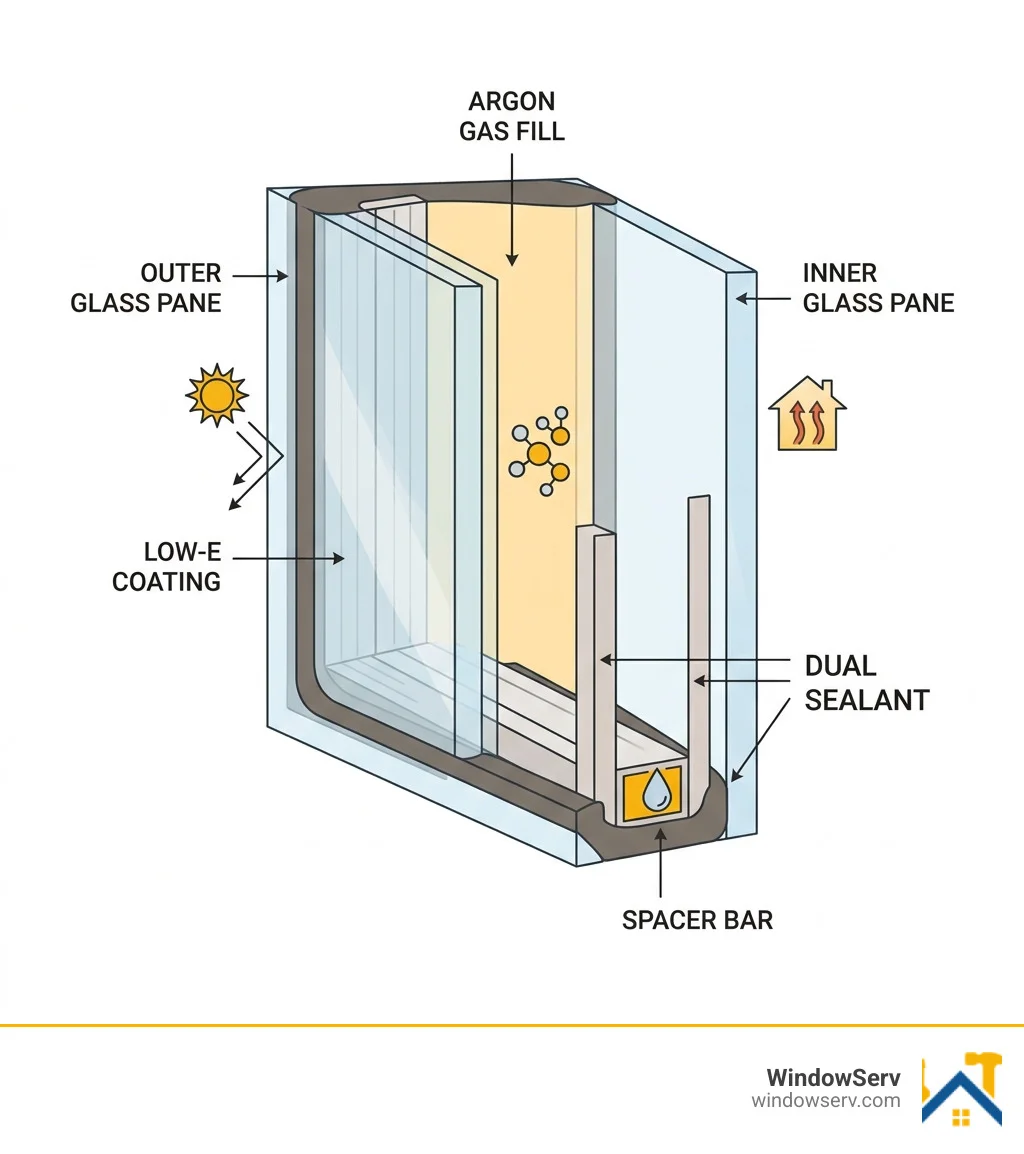
When we talk about an IGU Unit, we are looking at the “heart” of a modern window. An Insulated Glass Unit is essentially a sandwich of glass. It consists of two or more panes separated by a spacer bar and hermetically sealed to create a single, unitized component.
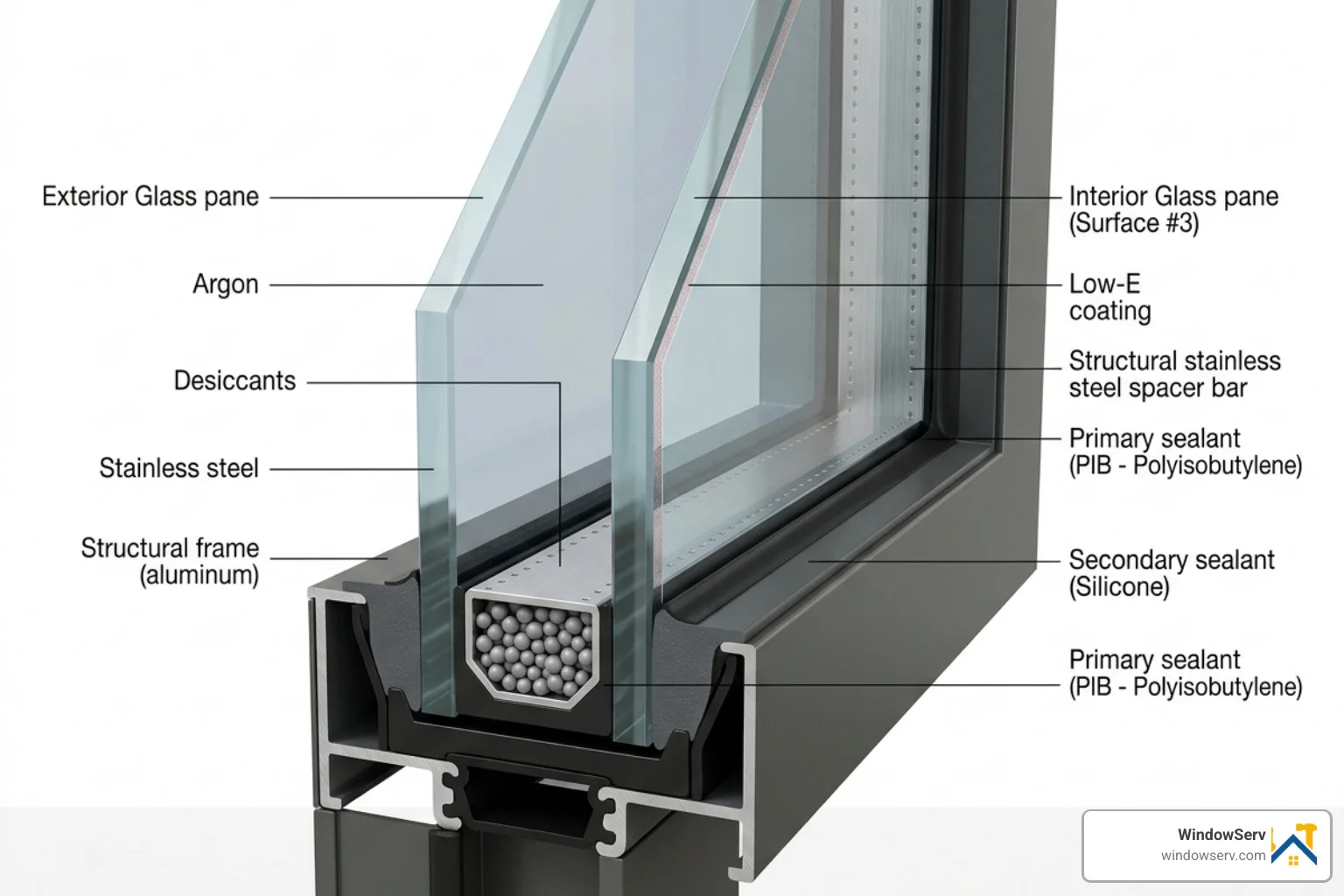
Since the late 1970s, specifically around 1978, the introduction of dual-seal silicone technology has revolutionized how these units are built. Before this, seals failed quite frequently. Today, a high-quality IGU Replacement utilizes a dual-seal system: a primary seal made of Polyisobutylene (PIB) for maximum gas retention and a secondary seal made of silicone for structural integrity.
At WindowServ, we focus on Residential Glass Replacement that prioritizes these high-performance materials. We often use stainless steel spacers because they are roll-formed to provide a larger surface area for sealants compared to plastic alternatives, which significantly reduces the risk of seal failure over time. Inside these spacers, you’ll find beaded molecular sieve desiccants. Their job is to suck up any trace amounts of moisture, ensuring the “frost point” of the unit stays below -65°F.
How an IGU Operates
The magic of the IGU lies in what you cannot see. The space between the glass panes is filled with either dehydrated air or an inert gas like Argon. Because Argon is denser than air, it moves slower, which drastically reduces the transfer of heat through the window. This creates a thermal barrier that keeps your Jersey City apartment cool in the summer and your Ridgewood home warm during those biting January nights.
This thermal resistance is measured by the U-Factor. According to the U.S. Department of Energy, the lower the U-Factor, the better the window is at keeping heat in. When you combine Argon fill with Low-E coatings, you can achieve thermal conductivity that is up to 27 times better than standard single-pane glass.
Signs You Need an IGU Replacement
How do you know when it’s time to call in the experts for Window Glass Replacement Services? The most obvious sign is “fogging.” If you see moisture or condensation between the panes that you can’t wipe away, the seal has failed.
Other signs include:
- Calcium Deposits: White, crusty streaks inside the glass caused by mineral-rich moisture evaporating.
- Visible Drafts: Feeling a breeze even when the window is locked tight.
- Distorted Views: Sometimes a seal failure causes the panes to collapse inward (collapsing), creating a “funhouse mirror” effect.
If you are dealing with these issues, you might want to read our guide on Fixing Foggy Double Pane Windows to understand the technical mechanics of the failure.
4 Quick Changes to Identify Your IGU Replacement Needs
You don’t need a degree in engineering to figure out if your windows are underperforming. We recommend these four quick “changes” in perspective to help you decide if an igu replacement is necessary.
Change 1: The Flame Test for Pane Count
One of the simplest ways to verify what kind of glass you have is the “Flame Test.” Hold a lighter or a match up to the window (carefully!) and look at the reflections in the glass.
- If you see two pairs of reflections, you have a double-pane unit.
- If you see three pairs, you’re looking at a triple-pane unit.
- If the color of one of the flames is different (usually a slightly pinkish or greenish hue), that indicates the presence of a Low-E coating.
This is a great first step before looking into Double Pane Window Repair and Replacement.
Change 2: Assessing Seal Failure
Take a close look at the corners of your glass. Modern high-quality units often have a laser marking at the bottom of the pane. This mark verifies the manufacturer and the glass type. If you see fogging but no laser mark, you might have a lower-quality unit that was destined for early failure.
Fogging patterns usually start at the edges and move inward. If you catch it early, you can plan your Foggy Window Glass Replacement before the moisture leads to permanent glass etching.
Change 3: Evaluating Energy Performance
On a particularly cold day in Tenafly or Paramus, touch the inside of your window glass. If it feels like an ice cube, your IGU isn’t doing its job. A high-performance IGU with Low-E glass should stay relatively close to the room’s temperature. If you notice your furniture or carpets are fading near the window, your current glass is likely letting in too much UV radiation. High-quality LoE coatings can block up to 99.9% of these harmful rays.
Change 4: Checking for Safety Glass Requirements
Safety is paramount. Check for a “tempered” logo etched in the corner of the glass. By building code, windows in “impact zones”—such as those near floor level, in bathrooms, or in patio doors—must be made of tempered safety glass. If your current glass isn’t tempered and it’s in a danger zone, an igu replacement isn’t just about energy; it’s about meeting modern safety standards.
Measuring and Selecting Your New IGU Replacement
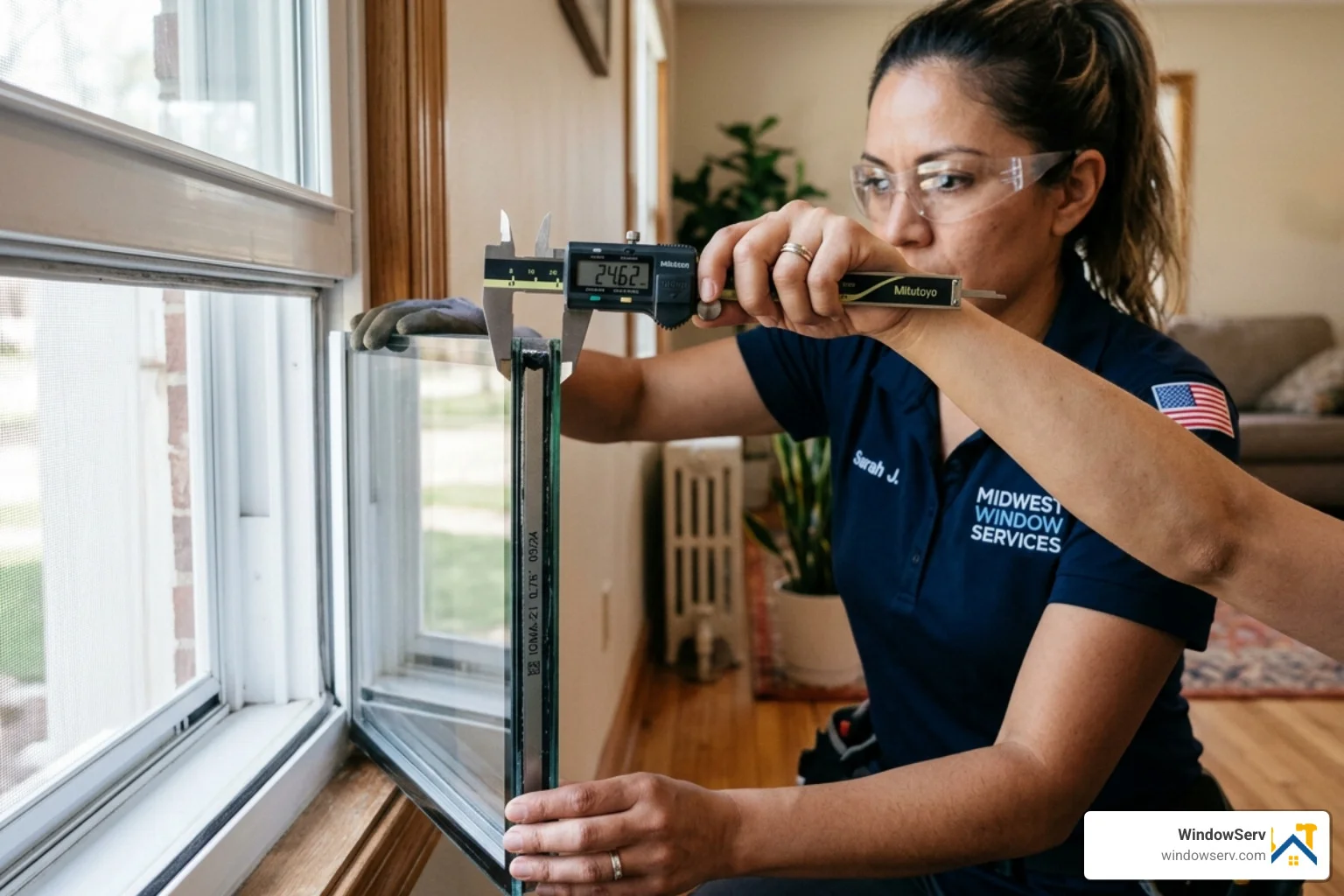
Accuracy is the difference between a window that lasts 20 years and one that fails in two. When we perform Window Glass Replacement, we measure to the nearest 1/16 of an inch.
Choosing the Right Glass Type
Not all glass is created equal. Depending on your specific needs in New Jersey, you might choose:
- LoE-366: The “all-around” champion. It offers a great balance of heat rejection and high visibility.
- LoE-i89: A coating applied to the interior surface that can give a double-pane unit the thermal performance of a triple-pane window.
- Laminated Glass: Two sheets of glass bonded with a vinyl interlayer. This is perfect for homes near busy Essex County roads or airports because it can reduce noise from 89dB down to a much quieter 50dB.
- Tempered Glass: Heat-treated to be four times stronger than standard glass.
Cost Factors for IGU Replacement
The cost of your Window Seal Replacement Cost will depend on several factors:
- Size: Units can range from tiny 4″x4″ accents to massive 96″x60″ picture windows.
- Glass Thickness: Standard units are usually 1/2″, 7/8″, or 1″ thick.
- Specialty Coatings: Low-E coatings add to the initial cost but pay for themselves in energy savings.
- Gas Fill: Argon is standard, while Krypton is more expensive but offers even better insulation for thinner units.
Argon vs. Air Fill Options
While air-filled units are common, we almost always recommend Argon. Argon is non-toxic, odorless, and provides a much better thermal barrier. Some DIYers worry about gas leakage, but with modern dual-seal technology, the rate of gas loss is less than 1% per year, meaning your unit will remain effective for decades.
Safety Precautions and Installation Best Practices
Replacing an IGU is a precise task. If you’re attempting a DIY fix, you must prioritize safety.
Essential Tools for DIY Replacement
If you’re going to tackle this yourself, you’ll need:
- Safety Glasses and Kevlar Arm Guards: Glass is unpredictable. Protection is non-negotiable.
- A Sharp Utility Knife: To cut through old sealants or glazing tape.
- Putty Knife or Chisel: For gently prying off the glazing beads (the plastic or wood strips holding the glass in).
- Suction Cups: These make handling large, heavy glass units much safer.
Handling Broken Glass Safely
If your IGU is already shattered, apply duct tape over the cracks in a “spiderweb” pattern before you try to remove it. This keeps the shards together. Always clear the area of pets and children before starting. At WindowServ, our technicians follow strict Window Glass Replacement Services protocols to ensure no debris is left behind in your home.
Frequently Asked Questions about IGU Replacement
Can I replace just the glass or do I need a new window?
In about 90% of cases, you can replace just the glass. This is the “Fix First – Replace at Worst” philosophy we live by.
| Feature | IGU Replacement | Full Window Replacement |
|---|---|---|
| Cost | 30-50% Less | Full Price |
| Time | 30-60 Minutes | 4-8 Hours |
| Mess | Minimal | Significant (Dust/Construction) |
| Frame | Keeps Original | New Frame Required |
How long does a replacement IGU typically last?
A high-quality unit should last between 20 and 25 years. We provide units backed by substantial warranties because we believe in the dual-seal silicone and stainless steel spacer combination. You can learn more about our quality standards on our IGU Unit page.
What is the typical turnaround time for a custom IGU?
While off-the-shelf sizes exist, most residential windows require custom-cut glass. Typically, the manufacturing process takes 2 to 5 business days. Once the unit arrives at our New Jersey facility, installation can usually be scheduled immediately.
Conclusion
An igu replacement is one of the smartest investments you can make for your home. By focusing on the glass—the part of the window that actually does the heavy lifting for insulation—you can save up to 30% on your energy bills while keeping your original frames intact.
Whether you’re in Westfield, Livingston, or right here in Hudson County, WindowServ is your local expert for Insulated Glass Units. We don’t just “swap glass”; we restore the comfort and security of your home with a satisfaction guarantee.
Ready to see clearly again? Contact us today for a professional assessment and let’s get those foggy windows fixed for good!