
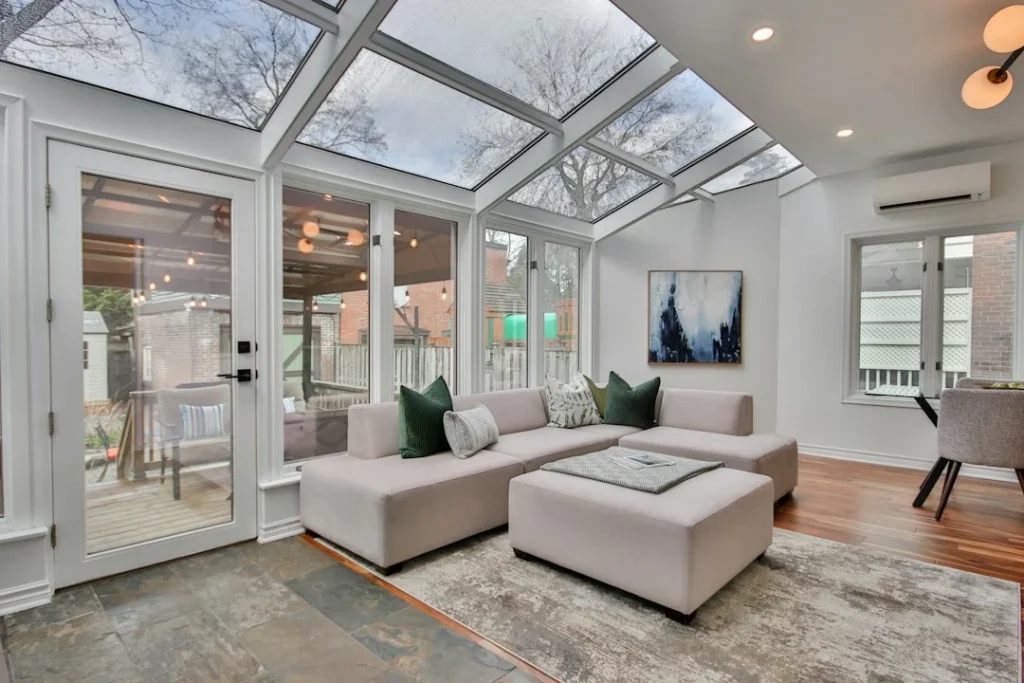
Glass, acrylic, and polycarbonate sunroom panels differ by up to tenfold in insulation value, shaping cost, clarity, and climate performance.
Choosing Panel Material Based On How You Use Your Sunroom
When a sunroom panel finally gives out, cracked, clouded, or leaking cold air at the seams, most homeowners assume the replacement is a simple swap of old glass for new glass. It isn’t quite that simple, and treating it that way is how a lot of people end up overpaying for a material that doesn’t suit how the room is used. A three-season sunroom that sits empty all winter has very different panel needs than a converted space with a reading chair that gets used every month of the year. Before you call anyone out for window glass replacement, it’s worth understanding what you’re actually choosing between.
There are three materials that dominate the sunroom replacement market: tempered or insulated glass, acrylic, and polycarbonate. Each handles clarity, insulation, weight, cost, and long-term durability differently enough that the “right” choice genuinely depends on your climate, your frame’s load capacity, and your budget. A homeowner in a region with hard winters and big heating bills is solving a different problem than someone replacing a single cracked panel on a mild-climate porch addition.
Comparing The Three Common Panel Materials
| Factor | Tempered or Insulated Glass | Acrylic | Polycarbonate |
|---|---|---|---|
| Optical clarity | Excellent, true color, no distortion | Very good, slight warm tint over time | Good, can appear slightly hazy |
| Insulation value | Highest with dual-pane/Low-E, lowest single-pane | Moderate, better than single-pane glass | Highest among plastics, strong in multiwall form |
| Weight per panel | Heaviest, 1.5 to 3 lbs per sq ft | Lightest of the rigid options | Light, roughly 40% lighter than glass |
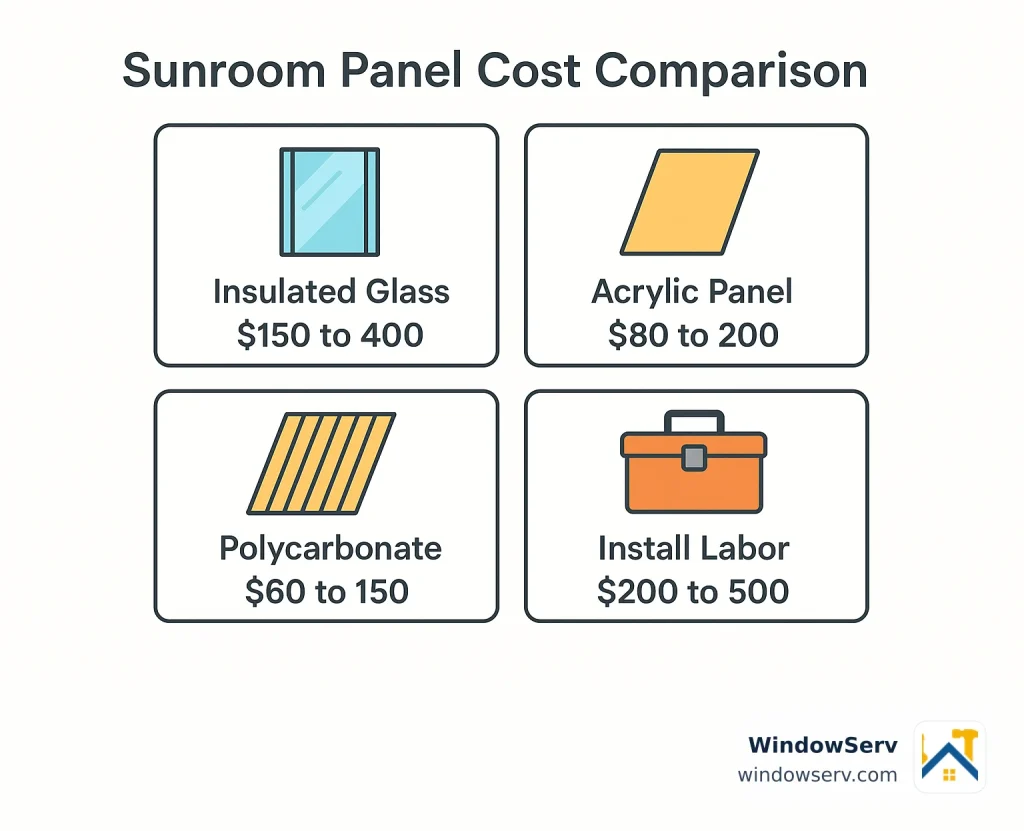
| Cost per panel | $150 to 400 installed | $80 to 200 installed | $60 to 150 installed |
| Durability | Scratch resistant, can crack under impact | Scratches more easily, won’t shatter | Highly impact resistant, can yellow with UV exposure |
Glass remains the benchmark for clarity and resale value; it’s what buyers expect to see when they picture a sunroom, and it holds up visually for decades if the seals stay intact. But single-pane glass is a poor insulator, and in colder climates it’s often the reason a sunroom turns into an unusable icebox from November through March. Upgrading to a dual-pane, Low-E coated unit solves most of that problem, but it adds weight that older sunroom frames weren’t always built to carry.
Acrylic splits the difference. It’s roughly half the weight of glass, which matters if your existing frame is aluminum and already showing stress at the corners, and it insulates noticeably better than basic single-pane glass. The tradeoff is that acrylic scratches more easily during cleaning and can develop a slight yellow or amber cast after ten or more years of direct UV exposure, something glass simply doesn’t do.
Polycarbonate, especially in multiwall form, is the toughest material of the three and the lightest practical option for larger panel spans. It’s what we recommend most often for sunrooms in hail-prone or storm-exposed areas, since a direct impact that would shatter glass or crack acrylic typically just dents or scuffs a polycarbonate sheet. Its insulation performance in multiwall configurations can actually rival insulated glass at a fraction of the weight, though the tradeoff is a slightly less crisp, “true” view through the panel, and it does require UV-protective coating to avoid yellowing.
None of these materials is universally correct. The right pick depends on three questions: how cold or stormy your climate gets, how much weight your existing frame and fasteners can safely bear, and how much of a premium you’re willing to pay for glass’s superior clarity versus the practical advantages of a lighter, tougher plastic panel. If you’re still unsure whether your panels need replacing at all versus a seal repair, our companion piece on sunroom glass problems and whether you need a seal repair or a full replacement walks through that diagnosis in detail.
If you’re ready to move forward, our team can evaluate your existing frame, your climate exposure, and your budget in a single visit and recommend a material that actually fits your situation rather than defaulting to whatever’s cheapest to stock. Reach out today to schedule a free sunroom panel assessment and get a straight answer on which material makes sense for your home.
Why Homeowners Choose Us For Sunroom Panel Replacement
A lot of glass companies will sell you whatever panel material they happen to keep in stock. We don’t operate that way, and the reason comes down to how the business is actually set up rather than a slogan we put on a brochure.
We Stock All Three Materials Instead Of Pushing One
Some installers only carry glass because that’s what their fabrication partner supplies, and they’ll talk you out of acrylic or polycarbonate regardless of whether it’s the better fit for your frame. We maintain supplier relationships for tempered and insulated glass, cast and extruded acrylic, and multiwall polycarbonate, which means the recommendation you get is based on your sunroom’s actual conditions rather than on what’s easiest for us to order. If your frame can’t support the extra weight of insulated glass, we’ll tell you that and show you what acrylic or polycarbonate would cost instead, rather than quietly upselling you into a frame reinforcement job you didn’t ask for.
Every Quote Includes A Frame Load Check
Weight is the variable most replacement quotes skip entirely, and it’s the one that causes the most expensive mistakes. Swapping single-pane glass for a heavier dual-pane insulated unit without checking the frame’s rated load capacity can lead to sagging, corner stress cracks, or fastener pull-out within a couple of years. Every quote we issue includes a documented frame assessment so you know upfront whether your structure supports your preferred material as-is, or whether reinforcement needs to be part of the project cost.
Our Technicians Carry Manufacturer Certifications
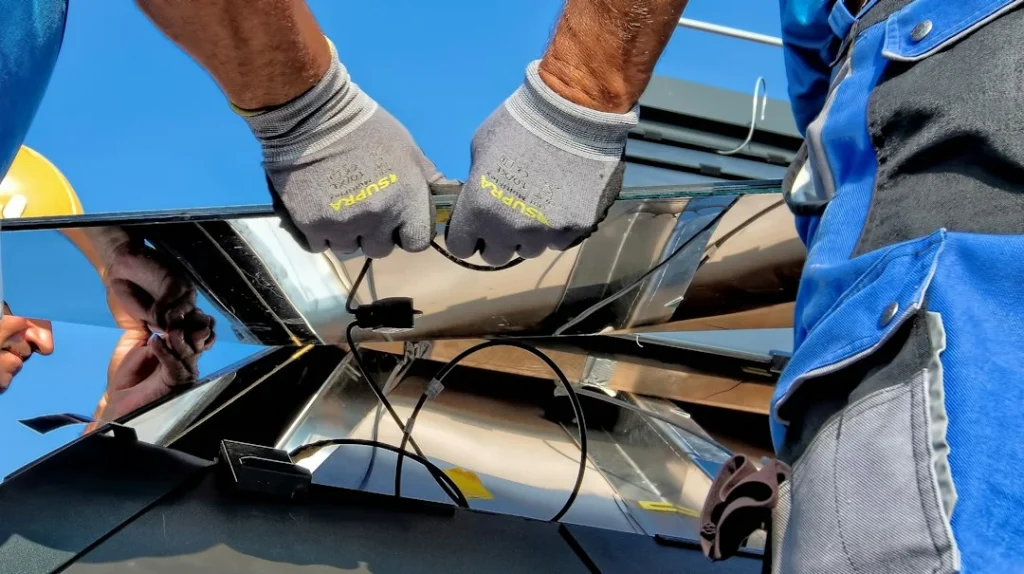
Panel installation quality depends heavily on correct glazing technique, proper seal compression, and accurate cut tolerances, details that are easy to get wrong with specialty materials like multiwall polycarbonate, which behaves differently from glass during cutting and fastening. Our installers hold manufacturer-specific training on the material lines we carry, which matters most on jobs involving acrylic or polycarbonate, where improper handling during installation is the leading cause of early panel failure.
Get A Written Material Comparison Instead Of A Sales Pitch
Every estimate we hand over includes a printed comparison showing clarity, insulation rating, weight, and cost for the materials relevant to your project, the same categories covered in this article, but calculated against your actual panel dimensions rather than generic averages. That gives you something concrete to compare if you’re getting a second opinion, and it means the decision is documented rather than based on whatever a salesperson told you verbally during a walkthrough.
Our Warranty Terms Are Material Specific
A single blanket warranty doesn’t make sense across three materials with different failure modes, so ours aren’t blanket. Glass seal failures, acrylic surface crazing, and polycarbonate UV yellowing are each covered under separate terms that reflect how that specific material actually fails over time, rather than a generic one-size warranty that quietly excludes the failure mode most likely to affect the material you chose.
We Handle The Full Job, Not Just The Glass
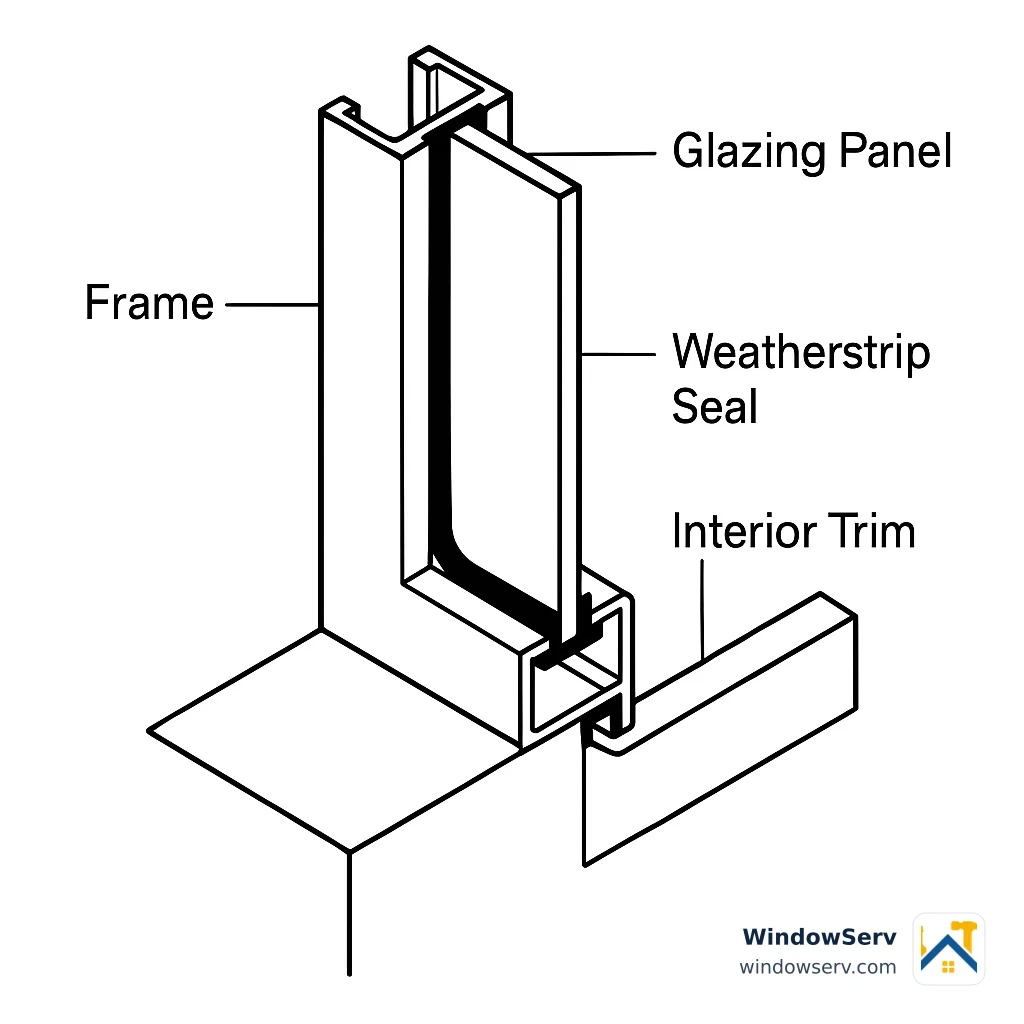
Replacing a panel properly usually touches the surrounding frame, the weatherstripping, and sometimes the fasteners holding the whole assembly together. We handle all of it in a single visit rather than swapping the pane and leaving you to find someone else for a seal that’s deteriorated or a frame bracket that’s corroded. That full-scope approach is part of why we also get called in for the kind of seal versus replacement diagnosis covered in our companion article on sunroom glass problems, and why customers tend to come back to us for other glass work around the house, including standard window glass replacement, once they’ve seen how the sunroom job was handled.
If you’re comparing quotes, ask any installer you’re considering whether they stock more than one panel material, whether they check your frame’s load rating before recommending a heavier glass option, and whether their warranty actually names your specific material. Those three questions tend to separate a company that’s solving your problem from one that’s just filling an order.
A Panel Material Recommendation Built Around Your Home
Picking a sunroom panel material from a brochure is how a lot of homeowners end up with the wrong fit. A catalog can tell you acrylic is lighter than glass or that polycarbonate resists impact, but it can’t tell you whether your specific frame, your specific roof pitch, and your specific winter are going to turn that choice into a good decision or a costly mistake five years from now. That’s the gap a site visit closes, and it’s the reason we start every sunroom glass replacement project with an in-person evaluation rather than a phone quote.
During that visit, a technician measures your existing panel openings, checks the condition and load rating of your frame, and asks how you actually use the room. A sunroom that’s mostly a spring and summer retreat has very different priorities than one that’s been converted into year-round living space with furniture and electronics that need stable temperatures. We also check for the kind of seal failure and fogging that often gets mistaken for a material problem when it’s really a sign the existing unit needs a full swap rather than a patch, a distinction we cover in more depth in our guide to diagnosing sunroom seal failure versus full panel replacement.
What You Get From A Request
Requesting a quote doesn’t commit you to anything beyond a conversation and a set of real numbers. Here’s what’s included:
- An on-site measurement of every panel that needs replacing, not an estimate based on a photo
- A frame inspection to confirm your structure can support the weight of your preferred material
- A side-by-side cost breakdown across glass, acrylic, and polycarbonate for your specific panel count
- A written timeline for ordering, fabrication, and installation
- A straight answer on whether a seal repair could solve the problem instead of a full replacement
We built the process this way because sunroom panels aren’t a commodity item you can price accurately over the phone. Panel dimensions on these structures are rarely standard, frames are often custom-built by whoever added the room originally, and the difference between a panel that fits cleanly and one that leaks air at every seam usually comes down to measurements taken on-site with the actual opening in front of you.
How To Reach Us
Call our office directly to speak with a scheduler, or submit a request through our online form and a technician will follow up within one business day to set a visit. If your panel damage is urgent, a crack that’s spreading, a seal that’s let in water during the last storm, or a pane that’s come loose in its frame, say so when you reach out and we’ll prioritize an inspection to prevent further damage to the frame or interior finishes.
There’s no obligation attached to a quote request, and there’s no pressure to choose the most expensive material on the list. Our goal is to put the right panel in your frame the first time, whether that ends up being a premium Low-E glass unit, a lightweight acrylic swap, or a storm-rated polycarbonate sheet. Contact us today and we’ll get a technician out to assess your sunroom and put real numbers in front of you within days, not weeks.
If you’re weighing a glass replacement anywhere else in the home at the same time, worth noting that a lot of the same mistakes homeowners make with sunroom panels show up in standard window work too, something we break down in our piece on common mistakes people make during window glass replacement. Bundling projects can also save on scheduling and sometimes on material costs if you’re ordering the same glass type for multiple openings.
Don’t let a damaged or failing panel sit through another season. Reach out now, get an honest material recommendation, and get your sunroom back to being a room you actually want to use.