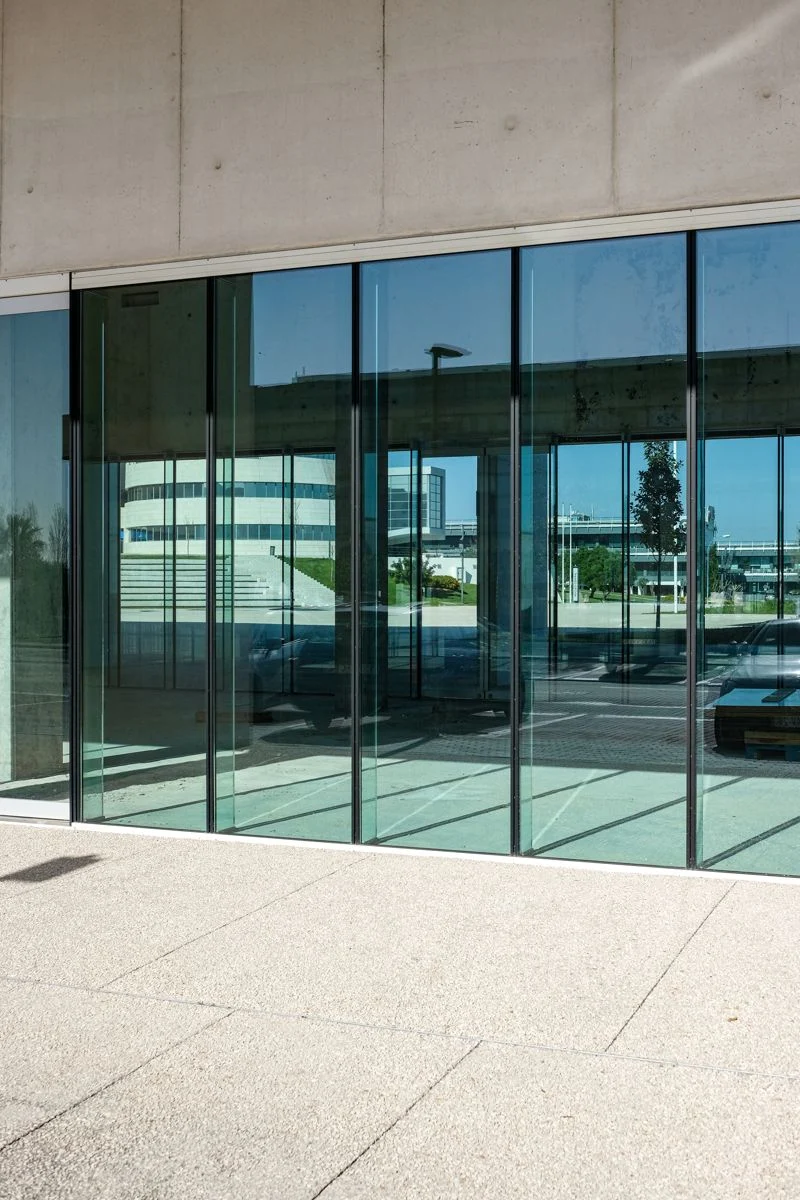
Storefront Glass Replacement

Protect your business, restore curb appeal, and cut energy costs with professional storefront glass replacement from WindowServ.

Storefront Glass Replacement

What Is Storefront Glass Replacement?

Storefront glass replacement is the process of removing damaged, deteriorated, or outdated glass panels from a commercial facade and installing new, high-performance glazing — tempered, laminated, or insulated — that meets modern safety codes, improves energy efficiency, and restores the clean, professional appearance your business depends on.

Whether you are dealing with a cracked entrance door, fogged-up display windows, or an aging storefront system that has reached the end of its service life, WindowServ handles the entire job: on-site inspection, precise measurement, custom glass fabrication, and professional installation with minimal disruption to your daily operations.

If your storefront glass is cracked, cloudy, or outdated, contact us today for a free, no-obligation estimate. The longer you wait, the more you risk — in security, energy costs, and lost foot traffic.

Quick Summary: Storefront glass replacement means removing broken or aging commercial glass panels and installing new ones — tempered, laminated, or insulated — to restore building security, lower energy bills, and maintain the professional storefront image that attracts customers.

Why Your Business Needs Professional Storefront Glass Replacement

A storefront is the first point of contact between your business and every person who walks by. Damaged, fogged, or visibly aging glass communicates neglect — and customers notice. Beyond perception, compromised commercial glass is a genuine liability: it weakens building security, inflates energy costs, and can put you on the wrong side of building codes.

Here is a closer look at the four reasons business owners and facility managers should treat storefront glass replacement as a priority, not an afterthought.

Safety and Security

Commercial storefronts are governed by strict safety glazing requirements. Under U.S. building codes — specifically ANSI Z97.1 and the International Building Code (IBC) — any glass installed within 2 feet of a door must be safety glass. That means tempered or laminated glazing that, when broken, either crumbles into small blunt fragments (tempered) or holds together on an interlayer (laminated) instead of producing the large, razor-sharp shards typical of ordinary annealed glass.

If your storefront was built or renovated decades ago, there is a real chance that some panels do not meet current safety glazing standards. Non-compliant glass is not just a code violation — it is a direct physical risk to employees, customers, and anyone who passes by your building.

Beyond code compliance, modern storefront glass is engineered to resist forced entry. Laminated glass, for example, can withstand repeated blows without fully giving way. The polymer interlayer keeps the glass fragments bonded together, maintaining a physical barrier even after the outer ply cracks. For businesses in high-traffic areas, retail corridors, or neighborhoods with elevated crime rates, this difference between a panel that shatters on first impact and one that holds is the difference between a successful break-in and a failed one.

Replacing aging or damaged glass with code-compliant, security-rated panels is one of the most effective steps you can take to protect your property, your inventory, and the people inside your building.

Energy Efficiency

Single-pane glass — still found in many older commercial storefronts — offers almost no thermal insulation. In winter, heat conducts straight through the glass surface and escapes to the outside. In summer, solar radiation pours in unimpeded, forcing air-conditioning systems to work overtime.

The result is an HVAC system that runs longer, cycles more frequently, and consumes more electricity or gas than it should. For a retail store or restaurant with a large glass frontage running climate control 10–12 hours a day, the impact on utility bills is substantial — often hundreds of dollars per month more than necessary.

Replacing old single-pane glass with insulated glass units (IGUs) or panels with Low-E coatings can reduce heat transfer by 30 to 50 percent. An IGU consists of two or three glass panes separated by a sealed airspace filled with argon or krypton gas. The gas is denser than air and conducts heat more slowly, creating an effective thermal barrier. When a Low-E (low-emissivity) coating is added to one of the interior glass surfaces, it reflects infrared radiation back toward its source — keeping heat inside during winter and outside during summer.

The upfront investment in energy-efficient glass pays for itself through lower monthly utility bills, reduced wear on HVAC equipment, and a more comfortable interior environment for customers and staff.

Curb Appeal and Brand Image

Your storefront glass is not just a building component — it is a marketing asset. Clear, clean, well-maintained glass maximizes product visibility from the sidewalk, invites foot traffic, and tells prospective customers that this is a business that pays attention to detail.

Fogged insulated glass, scratched panels, visible cracks, or temporary tape-and-board patches send the opposite message. They suggest that the business is struggling, cutting corners, or simply does not care. Research consistently shows that exterior appearance is one of the top factors influencing a consumer’s decision to enter a store. A neglected storefront costs you customers before they ever reach the door.

For retail businesses that rely on window displays — clothing boutiques, jewelry stores, bakeries, electronics retailers — the quality of the glass itself matters. Standard float glass has a faint green tint caused by iron impurities. Low-iron glass eliminates this tint, providing near-perfect optical clarity and true color rendering. If your displays are your primary marketing tool, the glass they sit behind should do them justice.

Replacing aging, damaged, or low-quality glass is one of the fastest and most visible ways to refresh your business’s exterior and reinforce a professional brand image.

Addressing Existing Damage

Glass damage does not stabilize on its own — it progresses. A hairline crack caused by thermal stress or minor impact can propagate across the entire panel when temperatures shift. A tiny chip at the edge of a tempered panel weakens the stress distribution, increasing the chance of sudden full-panel failure. A broken seal on an insulated glass unit lets moisture into the sealed airspace, causing permanent fogging that worsens over time as more condensation enters.

None of these problems can be reversed. A cracked panel cannot be un-cracked. A failed IGU seal cannot be re-sealed in the field — the entire unit must be replaced. Adhesive films and temporary patches may buy a few weeks, but they do not restore structural integrity, thermal performance, or visual clarity.

The practical reality is that delaying replacement only increases the scope of the eventual repair. A single cracked panel replaced today costs a fraction of what a full storefront overhaul costs after months of deferred maintenance, frame corrosion from water intrusion, and potential code enforcement action.

If you see damage — cracks, chips, fogging, drafts, or condensation — the right time to address it is now, not later.

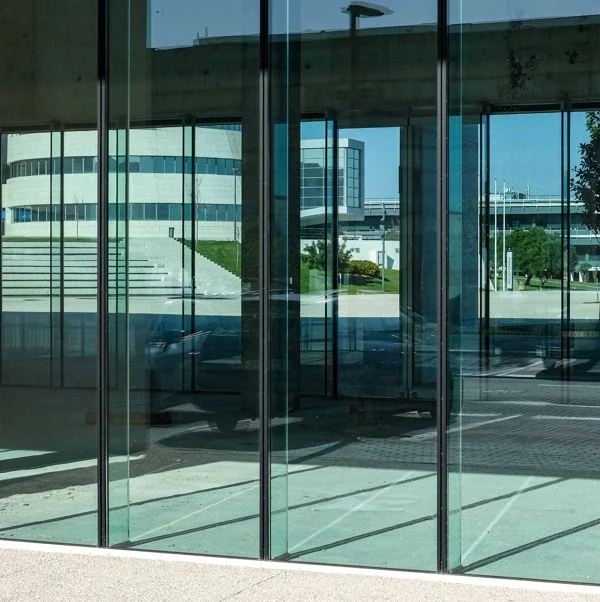
Storefront Glass Replacement

Types of Commercial Glass We Use

We select the right glass for your application — balancing safety, energy performance, acoustics, and budget.

Tempered Glass

Tempered glass is heat-treated to be four to five times stronger than standard annealed glass of the same thickness. When it does break, it fractures into small, granular pieces instead of dangerous shards — which is why building codes require it in all hazardous locations, including any position within 2 feet of a door. Tempered glass is the standard choice for storefront entrance doors, sidelights, and floor-to-ceiling display panels. It handles thermal stress well, resists surface damage, and is available in thicknesses from 1/4″ to 1/2″. One important limitation: tempered glass cannot be cut, drilled, or modified after heat treatment — every panel must be fabricated to exact dimensions before tempering.

Tempered Glass

Laminated Glass

Laminated glass consists of two or more glass plies permanently bonded together with a polyvinyl butyral (PVB) or ethylene-vinyl acetate (EVA) interlayer. When impacted, the glass cracks but the interlayer holds the fragments in place, maintaining a continuous barrier against intrusion, wind, and rain. This makes laminated glass the preferred option for high-security storefronts — jewelry stores, pharmacies, banks, and businesses in high-crime areas. Beyond security, laminated glass blocks up to 99 percent of UV radiation and provides meaningful noise reduction, with STC ratings of 34–40 depending on thickness and interlayer type.

Laminated Glass

Insulated Glass Units (IGUs)

An insulated glass unit is two or three panes of glass separated by a sealed airspace filled with argon or krypton gas. This construction dramatically reduces heat transfer compared to single-pane glass. When combined with a Low-E coating, an IGU can achieve U-values as low as 0.25, meaning it allows only a fraction of the thermal energy through that a single pane would. For commercial storefronts, IGUs are the most effective way to control heating and cooling costs. They also reduce condensation on interior glass surfaces during cold weather and improve acoustic comfort.

Insulated Glass Units (IGUs)

Low-Iron Glass

Standard float glass contains trace amounts of iron oxide that give it a subtle green tint — often invisible in small samples but clearly noticeable in large storefront panels, especially when viewed at an angle. Low-iron glass is manufactured with reduced iron content, producing near-perfect optical clarity and accurate color rendering. For retail businesses that depend on product display — fashion boutiques, galleries, showrooms, bakeries, car dealerships — the difference is visible and significant. Low-iron glass can be tempered, laminated, or incorporated into IGUs, so it does not sacrifice safety or energy performance for aesthetics.

Low-Iron Glass

Commercial Storefront Glass Replacement Cost

Feature Typical Price Range Turnaround
Single door panel — tempered, 1/4″ $250 – $600 1–3 business days
Single door panel — laminated, 3/8″ $400 – $900 3–5 business days
Fixed storefront window — tempered (per sq ft) $12 – $30 / sq ft 2–5 business days
Insulated glass unit — IGU (per sq ft) $20 – $45 / sq ft 5–10 business days
Low-iron display glass (per sq ft) $25 – $55 / sq ft 5–10 business days
Full storefront system — glass + framing $2,500 – $8,000+ 1–3 weeks
Emergency board-up + replacement +$150 – $350 fee Board-up: same day

Our Storefront Glass Replacement Process

1

On-Site Inspection and Measurement

A WindowServ technician visits your property, assesses the damage, inspects the condition of the aluminum frame and gaskets, and measures the glass opening to the nearest 1/16 of an inch. We photograph the site, note any access constraints, and confirm the correct glass type, thickness, and coating for code compliance and your performance requirements.

2

Custom Glass Fabrication

Based on the field measurements, we order or cut the glass panel to exact size. Tempered and laminated glass must be fabricated to final dimensions before heat treatment — there is no cutting or drilling after tempering. Typical fabrication lead time is 2–7 business days depending on glass type, thickness, and any special coatings or tints.

3

Professional Installation and Cleanup

On the scheduled date, our crew arrives on time, carefully removes the damaged glass, cleans the frame channel, installs new setting blocks and perimeter gaskets, and sets the new panel into position. All joints are sealed, the door or window is tested for smooth operation, and the glass and surrounding work area are cleaned thoroughly. Most single-panel replacements are completed in under two hours.

4

Final Safety Check

Before leaving, we complete a documented safety inspection — verifying that the glass is properly seated and secured, the frame is plumb and level, all hardware functions correctly, and the finished installation complies with IBC and ANSI Z97.1 safety glazing standards. We walk you through the completed work and answer any questions.

FAQ — Everything You Need to Know

Ready to Replace Your Storefront Glass?

Whether it is a single cracked door panel or a full storefront system upgrade, WindowServ delivers professional commercial glass replacement with minimal disruption to your business. Free on-site measurement. Transparent pricing. Code-compliant installation. Workmanship guarantee on every project.