
The Science of Condensation in Residential Glass How to fix foggy windows in car is a common search — but if you’ve landed here as a New Jersey homeowner, the
The Science of Condensation in Residential Glass
How to fix foggy windows in car is a common search — but if you’ve landed here as a New Jersey homeowner, the foggy glass you’re dealing with is likely between your window panes, not on a windshield. Here’s a quick answer for both situations:
To clear foggy glass fast:
-
Car windows (surface fog): Turn on the defroster, activate A/C, switch to fresh air intake, and increase heat.
-
Home double-pane windows (fog between panes): This is a failed seal — the glass unit needs professional repair or replacement. No DIY fix will work.
That misty, cloudy film on your home windows isn’t just unsightly. It’s a sign that the airtight seal in your insulated glass unit (IGU) has broken down. Moisture has crept into the space between the panes — and once it’s in, it doesn’t come out on its own.
This happens to thousands of New Jersey homeowners every year. Older windows, harsh winters, and humid summers are a tough combination for window seals.
The result? Foggy glass that blocks light, kills your view, and quietly drives up your energy bills.
I’m Feiruz Gabibov, Chief Operating Officer of WindoServ, and my work overseeing window repair and glass replacement across New Jersey has given me a front-row seat to how and why residential glass fails — including the foggy window problem that affects so many homes here. In this guide, I’ll walk you through exactly what causes it and how to fix it for good.
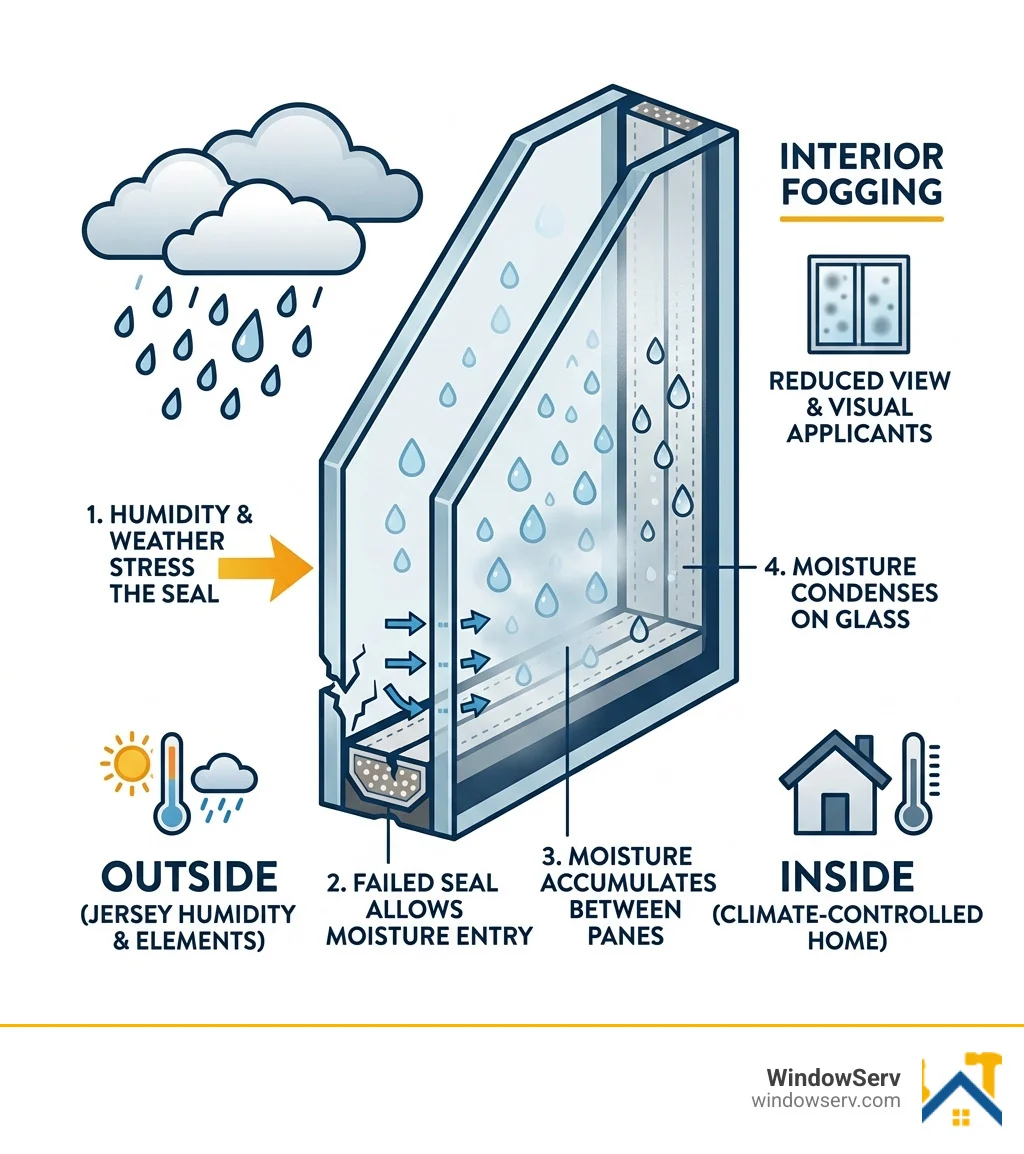
To understand why your windows look like they’re perpetually trapped in a rainstorm, we have to look at the physics of the “dew point.” Condensation occurs when warm, moisture-laden air hits a surface that is significantly cooler. In New Jersey, we see this constantly. During a humid July in Jersey City or a freezing January morning in Ridgewood, the temperature differential between your indoor climate-controlled air and the outdoor elements is extreme.
When the air reaches its saturation point—the dew point—it can no longer hold water vapor, and that vapor transforms into liquid droplets. In a healthy window, the glass stays relatively clear because the insulated glass units are designed to provide a thermal barrier.
However, when a “thermal bridge” is created due to a failing seal, the inner pane becomes cold enough to hit that dew point. While understanding condensation and air moisture is helpful for temporary surface fog, residential fogging is often more sinister. It isn’t just on the surface; it is trapped in the “dead air” space where you cannot wipe it away.
Common Misconceptions on How to Fix Foggy Windows in Car and Home
Many homeowners in places like Montclair or Paramus see a foggy window and assume the entire frame is rotted or needs to be ripped out. This is one of the biggest misconceptions we encounter. Most modern windows are built as an Insulated Glass Unit (IGU)—two panes of glass separated by a spacer bar and sealed together as one airtight “sandwich.”
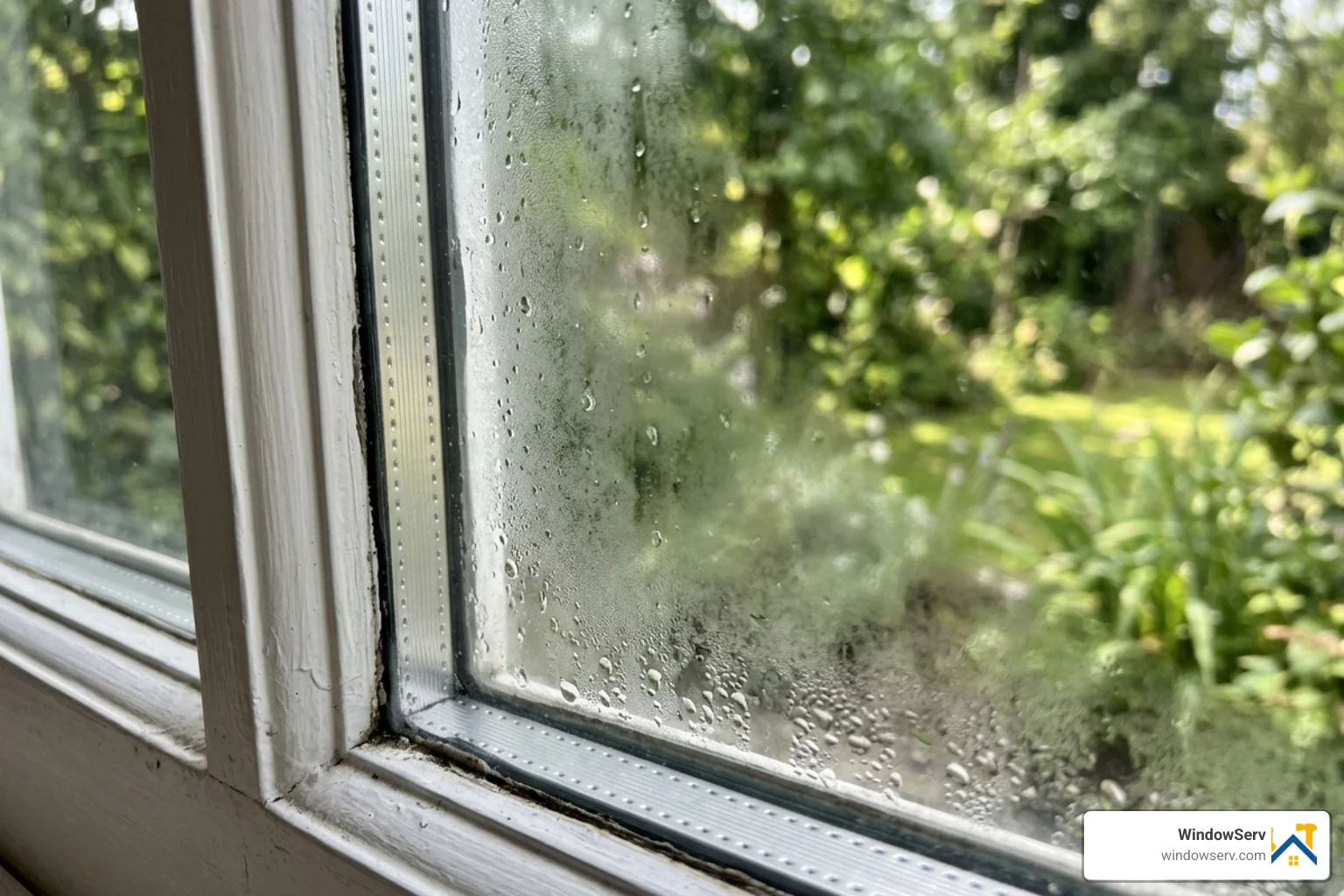
Inside that spacer bar is a desiccant—a material similar to those “do not eat” packets you find in shoe boxes—designed to absorb trace amounts of moisture. Over time, a process called “solar pumping” occurs. During the day, the sun heats the air between the panes, causing it to expand and pressure the seals. At night, the air cools and contracts. This constant “breathing” eventually causes the seal to hairline-fracture.
Once the seal fails, outside air (and humidity) is sucked in. Eventually, the desiccant becomes saturated. At that point, the “fog” becomes a permanent resident. If you are seeing this in your home, it’s time to look into double pane window repair and replacement rather than just cleaning the surface.
Why DIY Hacks for How to Fix Foggy Windows in Car Fail on Home Units
If you’ve researched how to fix foggy windows in car, you’ve likely seen suggestions like using shaving cream, vinegar, or even a hairdryer. While these might help a temporary surface issue on a single-pane windshield, they are utterly useless—and often dangerous—for residential double-pane units.
-
Hairdryers: Trying to “dry out” the inside of a double-pane window with a hairdryer can cause the glass to expand unevenly. Because many residential windows use tempered or heat-strengthened glass, this localized heat can cause the pane to shatter instantly.
-
Vinegar Solutions: Vinegar is great for cleaning dirt, but it cannot penetrate a factory-sealed IGU. If you see fog, the moisture is inside the glass. No amount of external scrubbing will reach it.
-
Drilling Holes: Some DIY “kits” suggest drilling tiny holes in the glass to vent the moisture. This destroys the insulating value of the window, removes the protective inert gases, and leaves your home vulnerable to drafts.
For real results, you need a professional approach to window repair that restores the integrity of the unit.
Professional Standards for How to Fix Foggy Windows in Car vs. Residential Glass
The standards for residential glass are significantly higher than those for temporary glass surfaces. High-quality home windows aren’t just filled with air; they often contain Argon or Krypton gas. These gases are denser than air and provide superior thermal insulation, helping you save up to 30% on energy costs.
When we perform a foggy window glass replacement, we utilize dual-seal technology. This involves a primary seal to keep moisture out and a secondary structural seal to hold the unit together. This is a far cry from the simple gaskets used in other applications. Understanding window glass issues in NJ is essential for homeowners who want to maintain their property value in the demanding Garden State climate.
Why Double Pane Seals Fail in New Jersey Homes
New Jersey presents a unique challenge for window longevity. From the salt air in Monmouth and Ocean counties to the urban heat islands of Hudson and Essex, our windows take a beating.
The primary culprits for seal failure in our area include:
-
Water Pooling: If your window’s “weep holes” (the tiny drainage holes in the frame) are clogged with debris, water can sit against the seal for weeks, eventually breaking down the adhesive.
-
Direct Sun Exposure: Windows on the south side of a home in Westfield or Livingston often fail first because they experience the most intense solar pumping.
-
Age: Most builders’ grade window seals are rated for 10 to 15 years. If your home was built in the early 2000s, you are likely in the “failure zone.”
-
Improper Cleaning: Using harsh chemicals can actually degrade the rubberized sealants over time.
When these seals go, you lose more than just your view. You lose the energy efficiency that keeps your home comfortable. This is why window glass replacement is one of the most effective home improvements for ROI.
Professional Restoration and Glass Replacement
At WindowServ, we specialize in a “glass-only” approach. Many contractors will tell you that you need to replace the entire window frame, which can cost thousands and require messy construction. We believe in saving the original frames whenever possible. By simply replacing the failed IGU, we restore the window to brand-new performance at a fraction of the cost.
Feature Glass-Only Replacement (WindowServ) Full Frame Replacement Cost 50-70% Less Expensive High Capital Investment Time Usually under 1 hour per window Full day of construction Mess Minimal to none High (drywall/siding repair) Energy Savings Restores full R-value Restores full R-value Aesthetics Keeps original matching frames Frames may not match existing
Our local NJ experts serve everyone from the historic brownstones of Hoboken and Jersey City to the modern estates in Tenafly and Cresskill. We understand the specific architectural needs of New Jersey homes.
Frequently Asked Questions about Foggy Windows
Can a foggy window seal be repaired without replacing the glass?
In short: No. Once a seal has failed and the desiccant is saturated, the glass will almost always have “calcium deposits” or “silica haze”—permanent white streaks left behind by evaporated water. Even if you could get the water out, the glass would remain stained and the insulating gas would be gone. The only reliable fix is a foggy window glass replacement.
Why does fogging only appear during certain times of the day?
This is due to the “dew point” mentioned earlier. You might notice the fog in the cool morning hours when the temperature difference is greatest. As the sun hits the window and warms the air inside the panes, the moisture may evaporate back into an invisible gas—but it’s still in there, waiting to condense again as soon as the temperature drops.
How does window fogging affect my home’s energy bills?
A foggy window is a broken window. When the seal fails, the insulating Argon gas escapes and is replaced by humid, conductive air. This means heat escapes your home in the winter and enters in the summer. Replacing these failed units can lead to up to 30% energy savings, making it a repair that eventually pays for itself.
Conclusion
Dealing with foggy windows is a frustration no homeowner should have to endure. Whether you were looking for how to fix foggy windows in car or you’ve realized your home’s double-pane glass has finally given up the ghost, the solution comes down to quality and expertise.
At WindowServ, we are proud to be New Jersey’s window experts. From Bergen to Union and everywhere in between, we provide comprehensive solutions that save your original frames while restoring your home’s beauty and efficiency. We stand behind our work with a satisfaction guarantee because we know that a clear view is more than just an aesthetic choice—it’s about the comfort and value of your home.
If you’re tired of looking through a cloud, contact us today for a professional foggy window glass replacement. Let us help you see New Jersey clearly again.