
A Window That Won’t Stay Open Is a Fixable Problem Double hung window balance spring replacement is one of the most common DIY window repairs homeowners tackle — and for
A Window That Won’t Stay Open Is a Fixable Problem
Double hung window balance spring replacement is one of the most common DIY window repairs homeowners tackle — and for good reason. When your window slides back down on its own, refuses to open smoothly, or makes grinding noises, worn-out balance springs are usually to blame.
Here’s the quick answer on how to replace them:
-
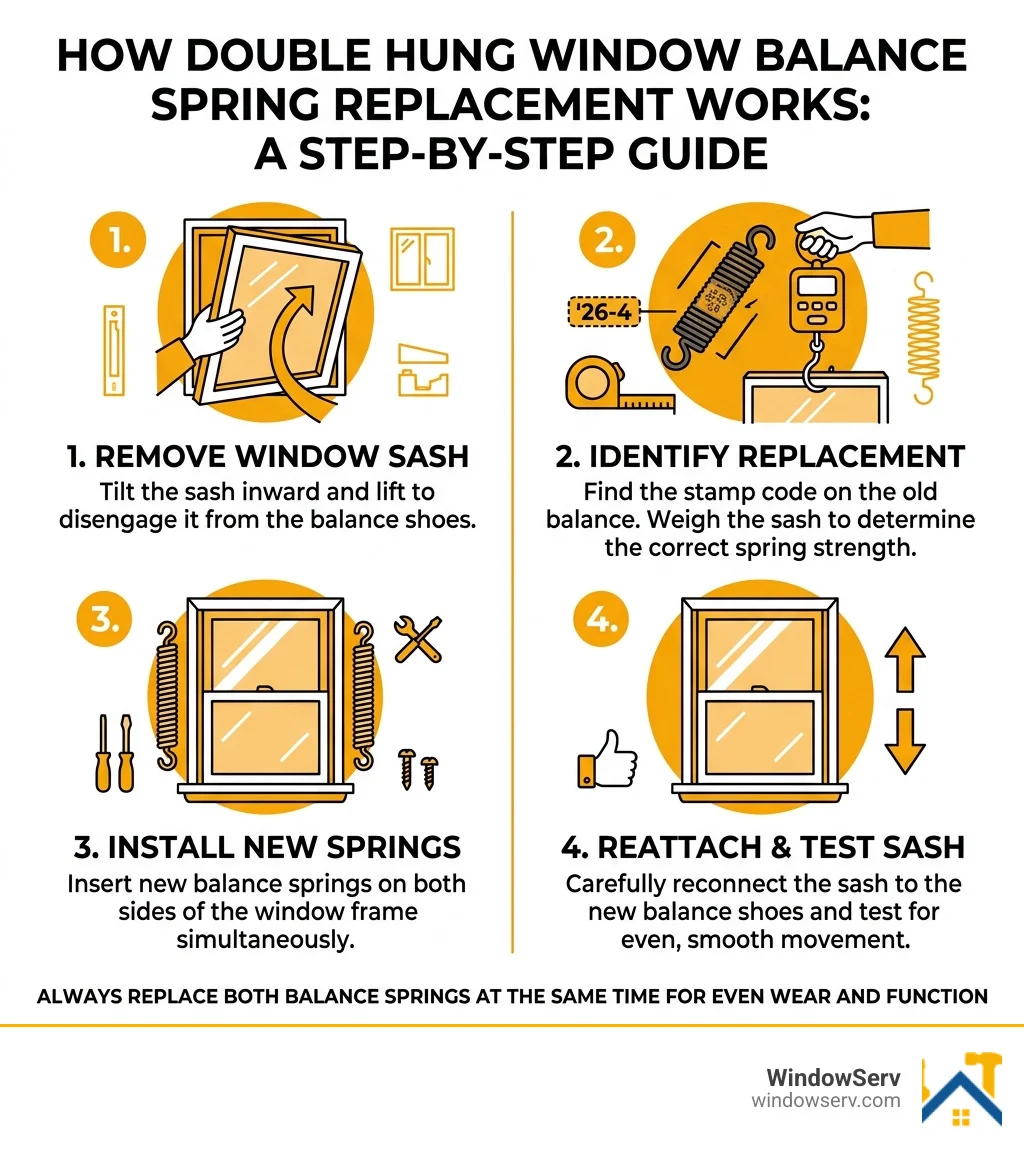
Remove the window sash by tilting it inward and disengaging it from the balance shoes
-
Identify the correct replacement spring by checking the stamp code on the old balance (e.g., “26-4″ = 26” length, #4 strength) and weighing your sash
-
Install the new balance springs on both sides simultaneously
-
Reattach the sash and test for smooth, even movement
Always replace both balance springs at the same time — mixing old and new causes uneven wear and faster failure.
Balance springs are the hidden mechanisms inside your window frame that counteract the weight of the sash, keeping it in place wherever you leave it. Over time, the springs lose tension, break, or come unseated — especially in older New Jersey homes where windows see years of humidity and heavy use.
The good news? This is a repair most homeowners can complete in a couple of hours with basic tools.
Understanding How Double Hung Window Balances Work
Before we dive into the nuts and bolts of double hung window balance spring replacement, it helps to understand what is actually happening inside your window frame. A double-hung window consists of two sashes (the glass panels) that slide up and down. Because glass and wood or vinyl are heavy, they require a counterweight system to stay open. Without a balance, that heavy sash would come crashing down like a guillotine—definitely not the “breeze” you were looking for!
There are several common types of balance systems used in New Jersey homes:
-
Spiral Balances: These consist of a metal rod spiraled like a candy cane inside a tube. They use internal spring tension that can often be adjusted with a special tool.
-
Block and Tackle Balances: A more modern system using a combination of a cord, a series of pulleys, and a heavy-duty extension spring. These are known for being very durable.
-
Constant Force (Coil) Balances: These use a stainless steel spring ribbon that uncoils as the window lowers. They are very common in newer vinyl windows because they take up very little space.
-
Spring Balancers: Often found in the header (top) of the window, these use spring-loaded strings or cables to support the sash weight.
The primary goal of any Window Spring Replacement is to ensure the tension of the spring precisely matches the weight of the sash. If the spring is too weak, the window drifts down. If it is too strong, the window might “jump” up or be difficult to close. Proper Window Repair requires identifying which of these systems your home uses.
Identifying Your Double Hung Window Balance Spring Replacement Parts
You cannot simply walk into a hardware store and grab “standard” window springs. Every window is unique. To ensure a successful double hung window balance spring replacement, you must identify four key factors: type, length, weight rating, and color/gauge.
Most balances feature “stamp codes” that act as a shorthand for their specifications. For example, a stamp like “26-3” or “2740” usually indicates the length (26 or 27 inches) followed by a weight capacity code.
To get the right parts:
-
Remove the old balance: You must see the physical part to identify it. Brands like Marvin often have specific Marvin Double Single Hung Window Balances that vary by year and model.
-
Check the Stamp: Look for numbers stamped into the metal channel or printed on the plastic.
-
Weigh the Sash: This is the most critical step. Remove the window sash and weigh it on a standard bathroom scale.
Stamp Code (Example) Sash Weight Range (lbs) Typical Length 14-2 9 – 12 lbs 15″ 26-3 13 – 18 lbs 27″ 27-4 19 – 26 lbs 28″ 33-4 26 – 30 lbs 34″
Note: These ranges vary by manufacturer. Always consult the specific weight chart for the brand you are purchasing.
For coil springs, you may notice color-coded gauges. For instance, a Red gauge might be .041 thickness, while a Purple gauge is .051 for much heavier windows. If your sash weight falls between two ratings, it is generally safer to stick with the original stamped rating rather than “upgrading” to a stronger spring, which can cause the window to pop open unexpectedly.
Tools and Materials for Double Hung Window Balance Spring Replacement
One of the perks of being a homeowner in places like Ridgewood or Montclair is that most of these tools are likely already in your garage. If not, a quick trip to the local hardware store will get you sorted.
Required Tools:
-
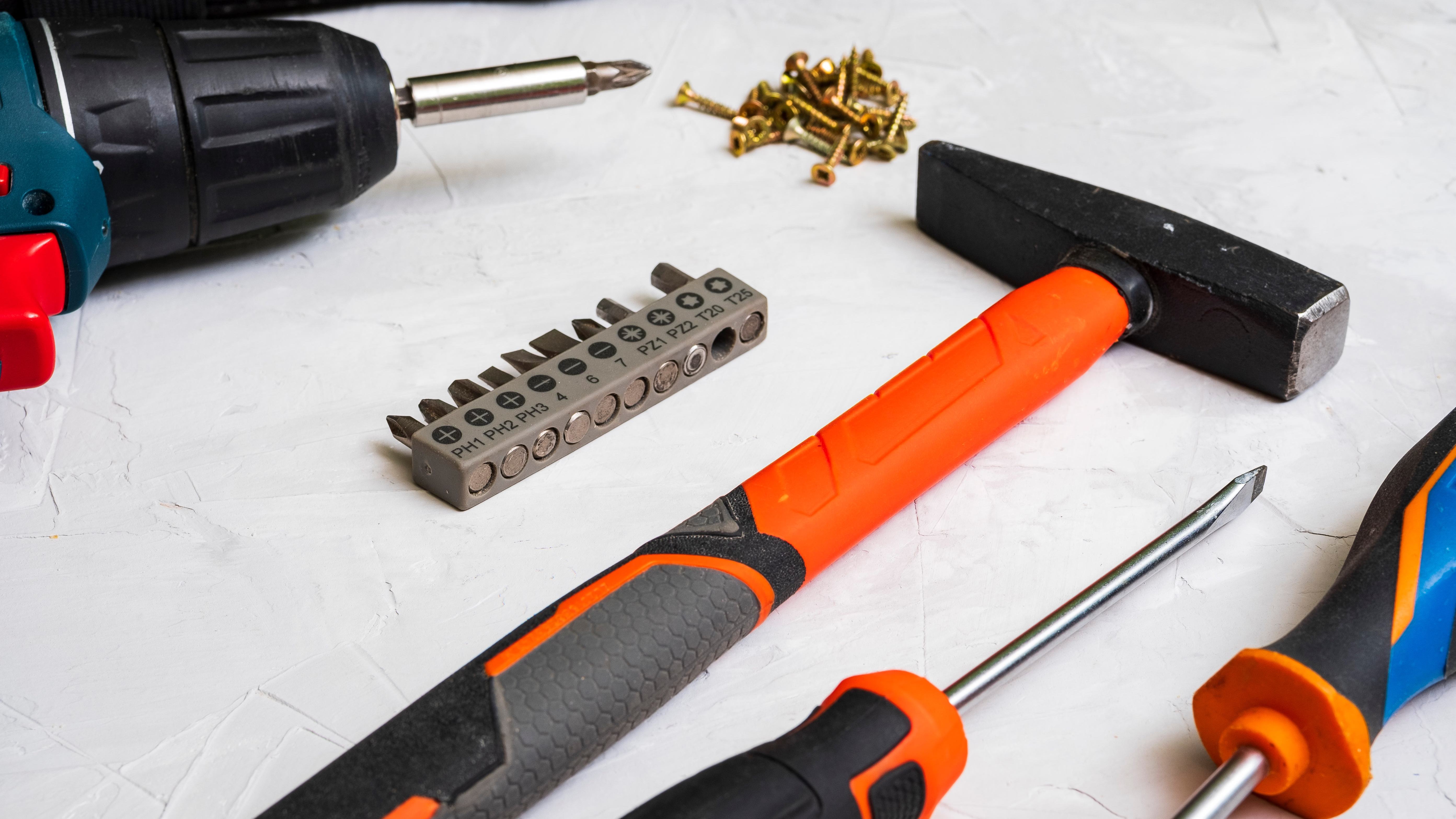
Flat-head and Phillips screwdrivers: For removing covers and mounting screws.
-
Needle-nose pliers: Essential for grabbing tensioned springs or strings safely.
-
Cordless drill: Speeds up the process of removing jamb liners or hardware.
-
Safety glasses and work gloves: To protect against snapping springs and sharp metal edges.
-
Bathroom scale: To accurately weigh the sash.
Required Materials:
-
Replacement balances: Sold in pairs (always replace both!).
-
Silicone-based lubricant: To ensure the new parts slide smoothly. Avoid oil-based lubricants as they attract New Jersey dust and grime.
-
Replacement Pivot Shoes or Bars: If you notice the plastic parts are cracked during your Window Sash Replacement, now is the time to swap them.
Sometimes, a simple Window Adjustment is all that’s needed if a part has merely come unseated, but if the spring is visibly broken or has lost its “oomph,” replacement is the only permanent fix.
Step-by-Step Guide to Replacing Your Window Springs
Ready to get to work? Follow this process to safely execute your double hung window balance spring replacement.
1. Remove the Window Sash
Start by raising the bottom sash a few inches. Locate the tilt latches at the top of the sash and slide them inward. Tilt the sash toward you until it is horizontal (parallel to the floor). Lift one side of the sash upward to disengage the pivot bar from the shoe in the window track. Set the sash safely aside on a soft surface like a rug.
2. Access the Balances
For block and tackle or channel balances, you may need to remove the jamb liners (the plastic tracks on the sides). If your window has a vinyl cover over the balances, unscrew it or pop it off with a flat-head screwdriver. If you are working on a system like the one described by This Old House, you might need to lower both sashes and remove the screws holding the jamb liners in place.
3. Disconnect and Remove Old Hardware
Using your needle-nose pliers, carefully unhook the spring or cord from the sash or the frame. Warning: These springs are under tension. Hold them firmly so they don’t snap back and damage the frame or your fingers. Unscrew the mounting brackets or remove the staples holding the old balance in place.
4. Install the New Balances
Position the new balance exactly where the old one was located. Secure it with the provided screws. If you are using a spiral balance, you may need a specialized winding tool to “charge” the spring with the correct number of turns (usually 5 to 8 turns) before hooking it into the shoe.
5. Reattach the Sash and Test
Reinstall the jamb liners if you removed them. Carefully bring the sash back to the window, insert the pivot bars into the balance shoes, and tilt the sash back into the upright position. Slide the window up and down several times. It should move with minimal effort and stay exactly where you put it.
Safety Precautions for Double Hung Window Balance Spring Replacement
We want your DIY project to be a success, not a trip to the urgent care! Keep these safety tips in mind:
-
Heavy Sashes: Large double-pane windows can be deceptively heavy. If you are working on a large window in a living room or master bedroom, make this a two-person operation.
-
Spring Tension: Window balances are essentially loaded energy. Never release a tensioned spring suddenly.
-
Glass Handling: If the glass is cracked, perform a Double Pane Window Repair and Replacement before attempting to fix the balances. A cracked sash is structurally weak and can shatter during removal.
-
Pinch Points: Keep your fingers away from the tracks and shoes while the sash is being tilted or moved.
Troubleshooting and Maintenance Tips
Even with brand-new parts, windows can sometimes be finicky. Here is how to keep them in top shape.
-
Uneven Movement: If one side of the window seems higher than the other, one of your balances might be unhooked or have less tension than the other. Re-check the connections.
-
Window Drifting: If the window still creeps down, your replacement spring likely has a weight rating that is too low for your sash. Double-check your sash weight.
-
Annual Lubrication: Once a year, clean the tracks with a damp cloth to remove grit and apply a light spray of silicone lubricant to the moving parts. This is a key part of Window Restoration that prevents premature wear on your new springs.
-
Avoid Force: If a window is stuck, don’t force it. This is how pivot bars get snapped and balances get ruined. Check for debris in the track or a misaligned shoe first.
-
Professional Help: If the frame is warped or you find significant rot, a simple spring replacement might not be enough. In these cases, Window Installation of a new unit might be the more cost-effective long-term solution.
Frequently Asked Questions about Window Balances
How long do window balance springs typically last?
In most New Jersey homes, you can expect window balances to last between 10 to 15 years. However, this varies wildly based on how often you open your windows. If you live near the coast in Monmouth or Hudson County, salt air can lead to faster corrosion of metal springs. Visible rust, frayed strings on block and tackle systems, or a “gritty” sound when moving the window are all signs that the end is near.
Should I replace both balance springs at the same time?
Yes, absolutely. Think of window balances like the tires on your car or the shoes on your feet. If you only replace one, the older, weaker spring will put more strain on the new one. This leads to “operational asymmetry,” where the sash tilts slightly, causing it to bind in the tracks. Replacing them as a pair ensures even tension and a much longer lifespan for the hardware.
What if the window still won’t stay open after replacement?
If you’ve completed your double hung window balance spring replacement and the window still fails to stay open, check the following:
-
Incorrect Weight Rating: This is the #1 cause. Ensure the “stamp” on the balance matches the actual weight of the sash.
-
Shoe Misalignment: The pivot bar on the sash must be fully seated in the U-shaped “shoe” in the track. If it’s only halfway in, the spring tension won’t transfer to the sash.
-
Frame Warping: In older homes, the window frame may have shifted, causing the tracks to bow outward. This prevents the shoes from gripping properly.
Conclusion
Restoring your windows to their former glory doesn’t always require a full replacement. By mastering double hung window balance spring replacement, you can save money, improve your home’s energy efficiency (by ensuring sashes close tightly), and enjoy the ease of a window that actually stays open when you want a fresh breeze.
However, we know that window hardware can be incredibly complex—with thousands of different parts and configurations. If you find yourself staring at a pile of springs and shoes and feeling overwhelmed, we are here to help. At WindowServ, we are your local New Jersey experts, serving communities from Paramus to Westfield and everywhere in between. We specialize in Window Balance Replacement and Repair, providing professional solutions that save your original frames while offering up to 30% energy savings.
Whether you need a quick repair in Jersey City or a full restoration in Tenafly, our team offers a satisfaction guarantee. Don’t struggle with falling windows any longer—reach out to us today and let’s get your windows sliding smoothly again!