
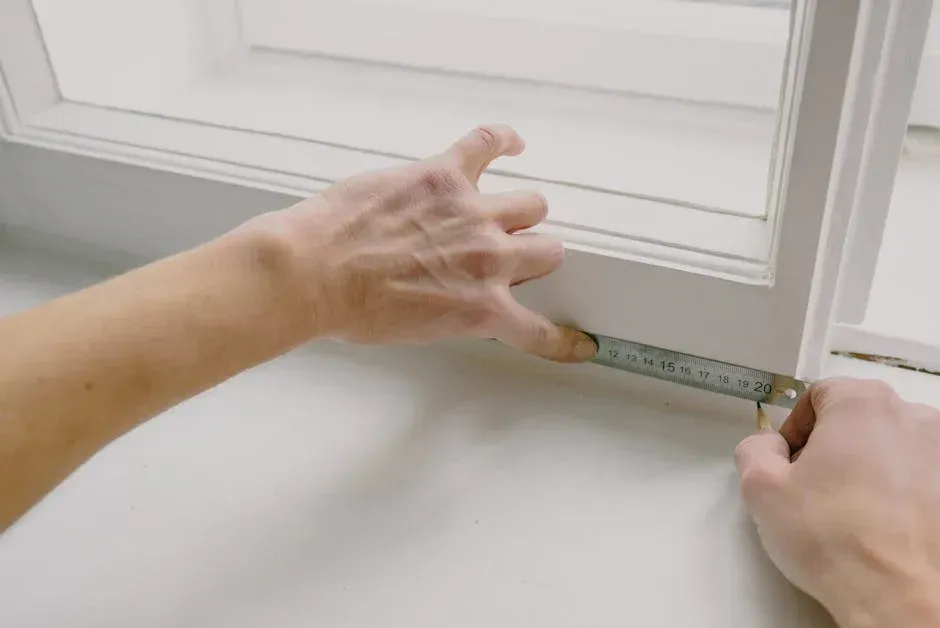
Your Old Wooden Storm Windows Are Worth Saving — Here’s Why Repairing old wooden storm windows is almost always cheaper, smarter, and more durable than replacing them. If you own
Your Old Wooden Storm Windows Are Worth Saving — Here’s Why
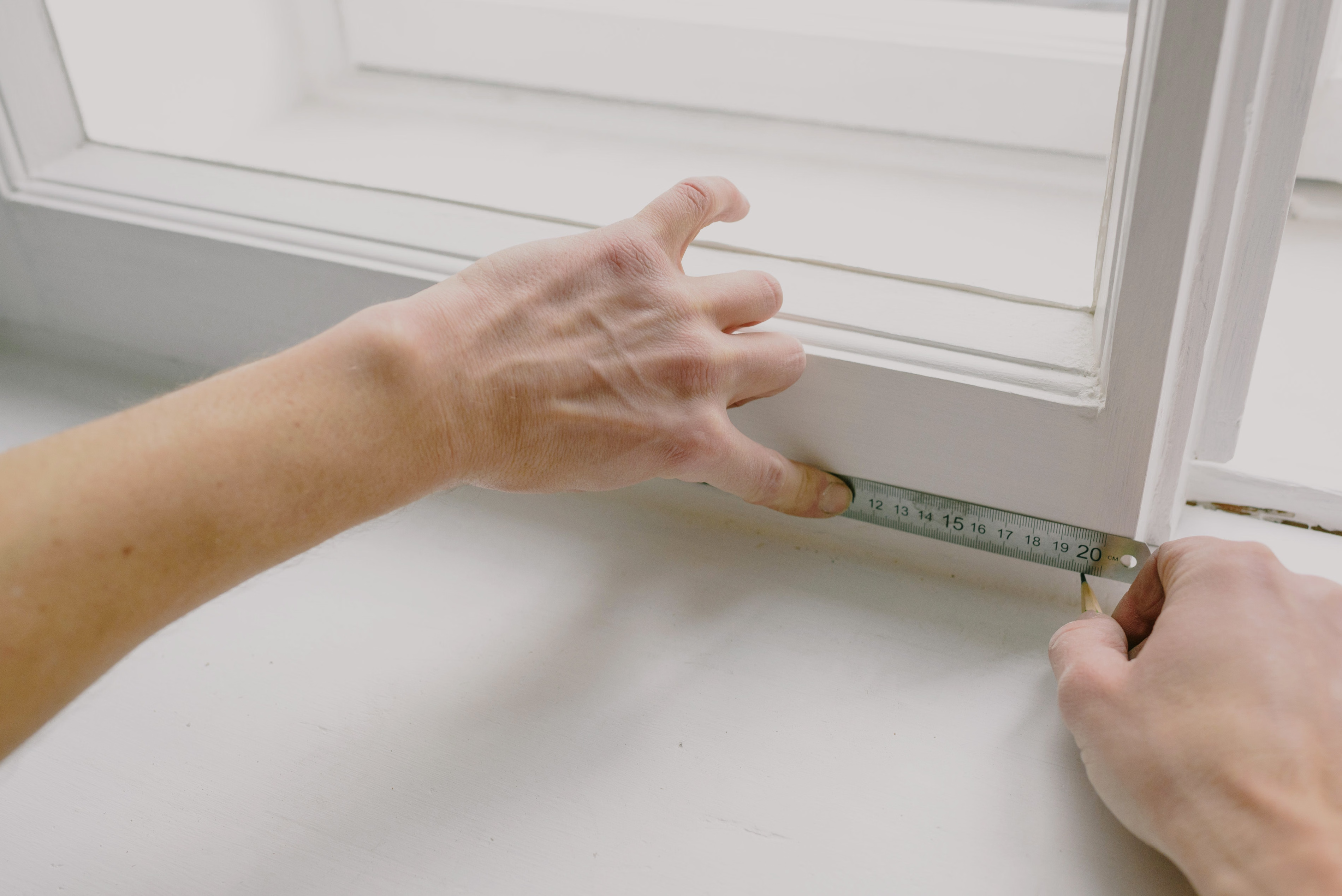
Repairing old wooden storm windows is almost always cheaper, smarter, and more durable than replacing them. If you own an older New Jersey home, those weathered wood storm windows are likely worth restoring — not tossing.
Quick answer: How do you repair old wooden storm windows?
-
Inspect for rot, cracked glazing, loose joints, and peeling paint
-
Strip old paint and glazing using a heat gun, infrared tool, or chemical stripper
-
Repair rot with a two-part epoxy filler (like Abatron) or replace severely damaged sections
-
Reinforce loose joints with waterproof epoxy glue and wood screws
-
Reglaze the glass with fresh glazing compound and new glazing points
-
Prime and paint with an oil-based exterior primer and two coats of paint
-
Add weatherstripping to improve the seal and reduce drafts
-
Rehang using original or replacement hardware (clips, thumb-turn buttons, prop arms)
Here’s something most window salespeople won’t tell you: the wood in your old storm windows is better than anything you can buy today. Historic windows were built from old-growth timber — dense, resinous, and naturally rot-resistant. With proper repairs and maintenance, old wood windows can last 200+ years. Modern vinyl replacements? Expect about 20 years before they end up in a landfill.
Unprotected wooden windows may need repainting as often as every five years. But storm windows act as a shield — dramatically extending that maintenance cycle and protecting the primary windows behind them.
The good news: if less than roughly 20% of the frame is damaged, repair almost always makes more sense than replacement. And most of these repairs are well within reach for a motivated DIYer — or a local pro like the team at WindowServ.
Why Repairing Old Wooden Storm Windows is Better Than Replacing
When we look at a house in Ridgewood or Montclair with its original wooden storm windows, we see a goldmine of high-quality material. Modern replacement windows are often marketed as “maintenance-free,” but in the industry, we have a saying: “Maintenance-free means it cannot be maintained.” When a modern vinyl window fails, it goes to the landfill. When an old wood window has an issue, you simply fix the part that’s broken.
The wood used in windows built a century ago came from virgin forests. This old-growth timber is incredibly dense and saturated with natural resins that repel water and resist decay. Modern lumber, grown quickly on plantations, is porous and “soft” by comparison. Experts in historic preservation note that these historic windows are designed to be taken apart and repaired indefinitely.
Feature Historic Wood Windows Modern Vinyl Replacements Average Lifespan 200+ Years (with maintenance) 15–25 Years Repairability High (parts can be replaced) Low (usually requires full replacement) Material Quality High-density old-growth timber Hollow PVC or low-density wood Environmental Impact Low (sustainable restoration) High (landfill waste every 20 years) Aesthetics Matches historic architecture Often bulky and disproportionate
The Financial Benefits of Repairing Old Wooden Storm Windows
From a purely financial standpoint, restoration is a winner. A full DIY restoration can cost as little as $50 per window in materials. Even if you hire professional Window restoration services, the long-term ROI is superior because you aren’t stuck in a 20-year replacement cycle.
Furthermore, preserving the original character of a home in historic districts like Hoboken or Summit can significantly bolster property value. Buyers of historic homes value authenticity, and clunky modern inserts can actually detract from a home’s market appeal.
Environmental Impact and Material Superiority
Every time a homeowner chooses repairing old wooden storm windows over replacement, they keep hundreds of pounds of glass, plastic, and metal out of New Jersey landfills. Because these windows can last for centuries, the carbon footprint of the original manufacture is spread over a massive timeline.
Additionally, storm windows act as a primary sacrificial layer. They take the brunt of the Jersey Shore’s salt air or the harsh winters in Essex County, protecting the primary sash from moisture. When the storm window takes the hit, the primary window stays dry and rot-free.
Essential Tools and Lead Safety Protocols
Before you start prying at old glazing, you need the right kit. You won’t need a massive workshop, but a few specialized tools make the job much easier and safer.
The Basic Toolkit:
-
Heat source: An infrared paint stripper (safest) or a variable-temp heat gun.
-
Scrapers: A high-quality pull scraper and a stiff putty knife.
-
Clamps: Bar clamps for squaring up loose frames.
-
Drill: For pilot holes and mechanical reinforcements.
-
Safety Gear: P100 respirator, heavy gloves, and eye protection.
Safe Handling of Lead-Based Paint
If your home was built before 1978 — which describes a huge portion of the housing stock in Jersey City and Newark — you must assume your storm windows have lead paint. Safety isn’t just a suggestion; it’s a requirement to protect your family and the environment.
We always follow strict EPA RRP (Renovation, Repair, and Painting) guidelines. This includes:
-
Containment: Laying down 6-mil plastic sheeting to catch all paint chips.
-
Wet Sanding: Never dry-sand old paint. Keep it wet to prevent toxic dust from becoming airborne.
-
HEPA Vacuuming: Use a vacuum with a true HEPA filter for final cleanup.
-
Personal Protection: Wear a P100 respirator and disposable coveralls.
If the prospect of lead paint feels overwhelming, our Window repair services team is fully equipped to handle these hazards safely and professionally.
Materials for Repairing Old Wooden Storm Windows
Choosing the right materials is the difference between a 30-year repair and a 2-year failure.
-
Primer: Use a high-quality oil-based (alkyd) primer. It penetrates the wood fibers better than water-based options.
-
Glazing Compound: Traditional oil-based putty (like Sarco or Dap 33) is the standard.
-
Glazing Points: Use “tabbed” points; they are much easier to push into hard old-growth wood.
-
Wood Treatment: Boiled linseed oil is fantastic for “feeding” dried-out wood before you apply primer.
According to How to Repair Old Storm Window Frames, treating dried-out frames with linseed oil until they are saturated helps keep the wood supple and prevents future cracking.
Step-by-Step Guide to Repairing Old Wooden Storm Windows
Restoration is a process of patience. We recommend starting with one window to get a feel for the rhythm before tackling the whole house.
1. Inspection and Diagnosis
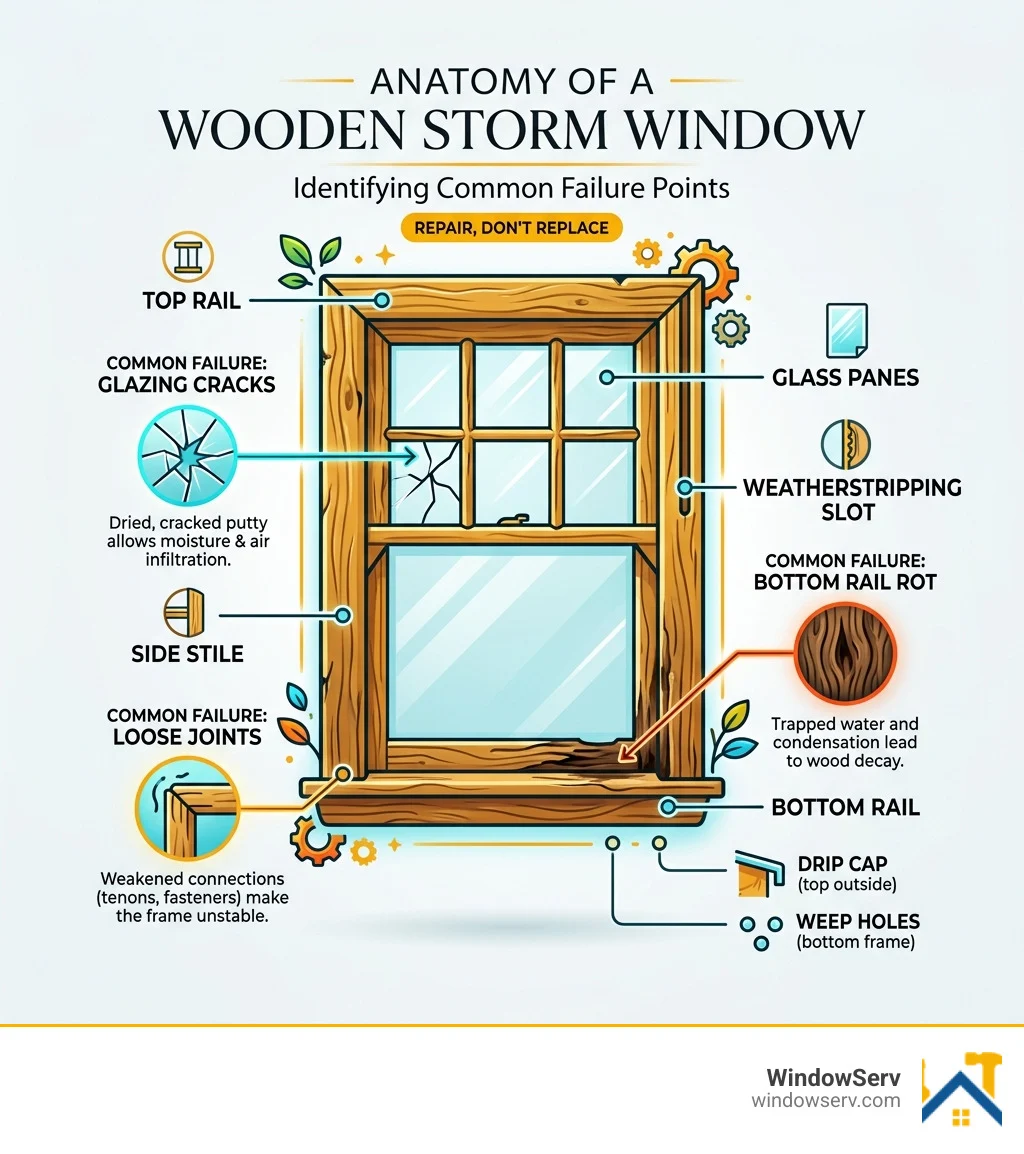
Check for “punky” or soft wood using a screwdriver. If the wood is soft, it’s rotted. Look for “rust jack” around hardware and check if the joints are pulling apart. If the glass is cracked, you’ll need Window glass replacement as part of your restoration. If a rail is completely gone, you might need a Window sash replacement for that specific part.
2. Removing Damaged Paint and Glazing
This is the most labor-intensive part. Using an infrared heat tool is the gold standard because it softens the putty and paint without vaporizing lead (as high-heat guns can).
-
Soften the putty and carefully pry it out.
-
Remove the glazing points.
-
Carefully lift out the glass (label it so it goes back in the same spot!).
-
Strip the remaining paint down to bare wood.
As noted in Restoring My Wood Storm Windows – Fine Homebuilding, stripping the frames down to bare wood allows you to see the true condition of the joinery and ensures the best possible bond for your new primer.
3. Structural Reinforcement and Hardware Sourcing
Old storm windows usually feature mortise and tenon joints. Over 100 years, the glue fails.
-
Glue and Screw: Clean out the joints, apply waterproof epoxy glue, and use bar clamps to square the frame.
-
Mechanical Fasteners: For extra strength, we often drill pilot holes and drive 3-inch wood screws through the corners to pull everything tight.
For hardware, don’t throw away those old “ID tacks” (the little brass numbers). If you’re missing pieces, you can source replacement hanging clips, thumb-turn buttons, and prop-open arms from specialty restoration hardware suppliers. If the window is sticking or out of alignment, our Window adjustment services can help get the fit perfect.
Advanced Restoration: Rot Repair and Weatherstripping
What if the bottom rail looks like Swiss cheese? Don’t panic. You don’t need to replace the whole window just because of a bit of rot.
Using Epoxy Fillers for Rotted Frames
Modern epoxy technology is a miracle for historic preservation. We use a two-part system (like Abatron WoodEpox and LiquidWood).
-
Consolidate: Brush “LiquidWood” into the punky wood. Thisaks into the fibers and hardens, turning soft wood back into a solid substrate.
-
Fill: Use the putty-like epoxy filler to rebuild missing sections. Once it cures, it can be sanded, sawn, and painted just like real wood.
-
Dutchman Repair: For larger areas of rot (more than 20%), we might cut out the bad section and “sister” in a new piece of rot-resistant wood using a “Dutchman” joint.
For more severe cases, check out our guide on Rotten window frame repair or our general Window wood rot repair page for professional techniques.
Improving Energy Efficiency with Weatherstripping
A common myth is that old windows are inherently drafty. In reality, a restored wood window with a high-quality storm window can exceed the 2012 energy code requirements.
-
Pile Weatherstripping: Can be added to the edges of the storm sash to create a tight seal against the casing.
-
Silicone Bulbs: These are great for the bottom rail where it meets the sill.
Adding weatherstripping reduces air infiltration through the sash weight cavities of the primary window. If you’re also working on your primary windows, you might need a Window spring replacement or a Window balance replacement and repair to ensure they operate smoothly behind your newly restored storms.
Frequently Asked Questions about Storm Window Restoration
Is it worth repairing storm windows with more than 20% rot?
Generally, if more than 20% of the frame is compromised or the structural integrity of the joints is gone, the cost of labor might start to rival the cost of a new custom wood storm sash. However, because these are made of old-growth wood, we often lean toward repair whenever possible.
How long do properly restored wooden storm windows last?
If you use high-quality epoxy, prime with oil-based primer, and keep up with paint maintenance, a restored storm window can easily last another 30 to 50 years before needing another major overhaul. The glass itself can last centuries!
Can I add weatherstripping to old storm windows myself?
Absolutely. The easiest DIY method is using adhesive-backed silicone bulbs or V-strip. For a more professional, permanent solution, we rout a small groove into the wood and install “leaf” or “pile” weatherstripping that stays in place for decades.
Conclusion
Repairing old wooden storm windows is an act of stewardship. By choosing to restore rather than replace, you are preserving the architectural soul of your home while saving money and the environment. These windows were built to be the first line of defense against the elements, and with a little elbow grease (and perhaps some epoxy), they will continue to protect your home for another century.
The key to longevity is moisture protection. Keep an eye on your paint every few years, clear your weep holes, and ensure your glazing isn’t cracking.
If you’re in Northern or Central New Jersey and find that your windows need more than a weekend DIY fix, WindowServ is here to help. We specialize in Professional window restoration and repair across Bergen, Essex, Hudson, and Monmouth counties. We pride ourselves on saving original frames and helping our neighbors achieve up to 30% energy savings through expert restoration.
Ready to give your historic windows the protection they deserve? Contact us today for a consultation!