
Why New Jersey Homeowners Are Upgrading from Single-Pane to Insulated Glass replace single pane glass with insulated glass If you want to replace single pane glass with insulated glass, here’s
Why New Jersey Homeowners Are Upgrading from Single-Pane to Insulated Glass
If you want to replace single pane glass with insulated glass, here’s what you need to know upfront:
| Question | Quick Answer |
|---|---|
| Can you replace just the glass? | Yes, in most cases — without touching the frame |
| How much does it cost? | $250–$550 per window installed (vs. $600–$1,500+ for full replacement) |
| How much energy can you save? | 15–25% on heating and cooling in older homes |
| How long does it take? | Custom units ship in 3–7 business days; installation is typically same-day |
| Is it worth it? | Yes — payback period is usually 5–10 years |
Older New Jersey homes are beautiful. But their original single-pane windows? Not so great at keeping the cold out, the heat in, or outside noise where it belongs.
Single-pane glass offers almost no meaningful insulation. On a cold January night in NJ, that thin sheet of glass is the only thing standing between your living room and the outside air. Heat bleeds out. Drafts creep in. Your furnace works overtime.
The good news: in most cases, you don’t need to gut your windows to fix this. Replacing just the glass — swapping that single pane for a modern insulated glass unit (IGU) — can cut your energy loss dramatically, reduce outside noise by 20–30 decibels, and cost 50–70% less than a full window replacement.
This guide walks you through everything: how IGUs work, whether your existing frames can handle the upgrade, how to measure and order, and when to call a professional instead of going DIY.
I’m Feiruz Gabibov, Chief Operating Officer of WindoServ, and I’ve overseen hundreds of projects across New Jersey where homeowners chose to replace single pane glass with insulated glass — saving money, preserving original frames, and dramatically improving comfort. In this guide, I’ll share exactly what our team has learned from doing this work every day.
Understanding the Upgrade: Single-Pane vs. Insulated Glass Units (IGUs)
To understand why this upgrade makes such a massive difference, we have to look at how these two types of glass are constructed.
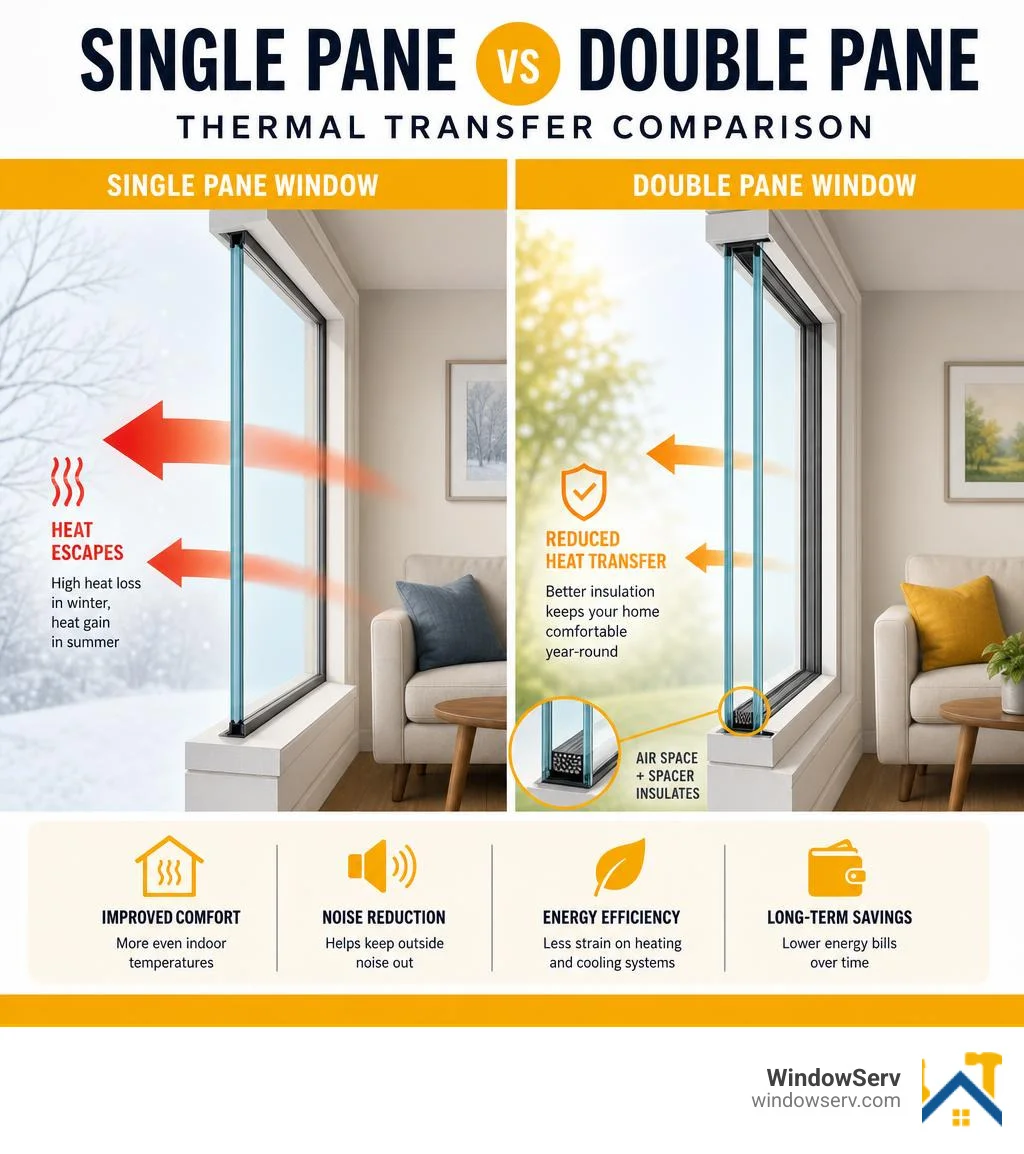
A single-pane window is exactly what it sounds like: a single sheet of glass sitting in a frame. Glass itself is a terrible insulator; heat passes through it with almost zero resistance.
An Insulated Glass Unit (IGU), often called a double-pane or sealed unit, is an engineered assembly. It consists of two (and sometimes three) panes of glass separated by a spacer bar around the perimeter. This spacer creates a sealed cavity between the panes.
The magic happens in that sealed space:
- The Spacer Bar & Desiccant: The spacer bar holds the glass panes apart. Inside the spacer is a highly absorbent desiccant material that sucks up any trace of moisture, preventing condensation from forming inside the unit.
- The Hermetic Seal: The entire outer perimeter is wrapped in a high-performance sealant (typically polyurethane or butyl) to create an airtight, moisture-proof barrier.
- The Air or Gas Pocket: The sealed space is filled with either dry air or an inert gas like argon. Because still air or gas is a poor conductor of heat, this pocket acts as a thermal barrier, drastically slowing down heat transfer.
- Sound Transmission: This dual-pane setup also acts as a sound dampener. Sound waves hit the first pane, lose energy passing through the air gap, and hit the second pane with significantly reduced volume, lowering outside noise by up to 30 decibels.
Why Replace Single Pane Glass with Insulated Glass?
When you make the swap in your home, the physical upgrades translate into tangible day-to-day benefits:
- Substantial Energy Savings: Swapping single-pane glass for double-pane IGUs can reduce your heating and cooling energy usage by 15% to 25%. If you choose units with Low-E coatings and argon gas, that thermal efficiency improvement can jump to 30% to 40% compared to standard single-pane glass.
- Enhanced Home Comfort: Say goodbye to the “cold zone” near your windows. No more drafty rooms in the winter or hot spots in the summer.
- Noise Reduction: If you live in a busy neighborhood in Jersey City or under a flight path near Newark, the noise reduction alone is life-changing. IGUs can cut outside noise by 20 to 30 decibels.
- Boosted Resale Value: Homebuyers love energy efficiency. Upgraded windows are a major selling point that appraisers and realtors notice immediately.
For a deeper dive into how energy-efficient windows perform in our local climate, check out our NJ Energy Efficient Windows Guide.
Retrofitting Legacy Frames: Glass-Only Swap vs. Full Window Replacement
One of the biggest misconceptions we encounter in Bergen, Essex, and Monmouth counties is that you must replace the entire window frame to get double-pane insulation. That simply isn’t true.
If your original wood or steel frames are structurally sound, a glass-only retrofit is highly beneficial. It preserves the historic look of your home, prevents landfill waste, and saves you thousands of dollars.
| Feature | Glass-Only Swap (IGU Retrofit) | Full Window Replacement |
|---|---|---|
| Average Cost | $250 – $550 per window | $600 – $1,500+ per window |
| Aesthetic Preservation | Retains original historic frames & trim | Replaces historic trim with vinyl or modern wood |
| Installation Time | 1–2 hours per window | 4–8 hours per window (plus drywall/trim repair) |
| Required Frame Condition | Frame must be structurally sound and rot-free | Can resolve completely rotted or damaged frames |
If your historic frames are beautiful but need some TLC before upgrading the glass, our Window Restoration services can bring them back to life. However, if the wood is extensively rotted, warped, or structurally compromised, a full Window Replacement is the safer and more durable path.
Structural Challenges When You Replace Single Pane Glass with Insulated Glass
While retrofitting is a fantastic option, it isn’t always as simple as dropping a new piece of glass into an old slot. Historic wood sashes present unique structural and operational challenges:
- Sash Weight and Balance Systems: Double-pane glass is twice as heavy as single-pane glass. In historic double-hung windows, the sashes are held up by cast-iron weights on cotton ropes inside the wall pockets, or by spring-loaded balances. If you double the weight of the glass, the original sash weights will no longer balance the window, and it will slam shut. You will need to install heavier lead or steel sash weights, or upgrade to heavy-duty spring balances.
- Rabbet Depth and Glass Bite: Single-pane glass is typically only 1/16 to 1/8 of an inch thick, fitting into a shallow groove (rabbet) in the wooden sash. A modern IGU is usually at least 1/2 inch to 1 inch thick. To make it fit, the wooden sash must be routed or “rabbeted” deeper and wider. This requires specialized tools and precision to avoid splitting the historic wood.
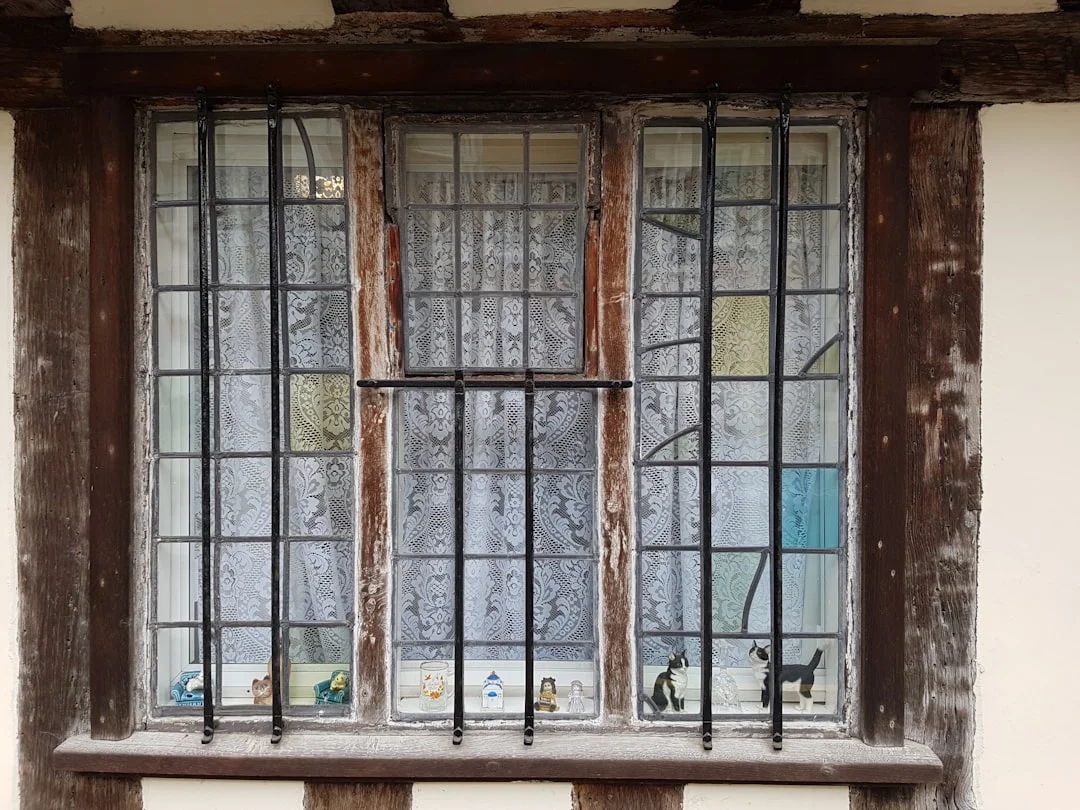
- Muntin Profiles: If your windows have “true divided lites” (individual small panes of glass separated by thin wooden grids), retrofitting IGUs into those tiny, delicate wood profiles is incredibly difficult—and sometimes structurally impossible. In these cases, we often recommend custom single-pane glass restoration paired with high-quality interior storm windows, or rebuilding the sash entirely.
For an in-depth technical analysis of these engineering challenges, read this excellent guide on Retrofitting 1/4-Inch Glass to 1-Inch IGUs in Legacy Frames.
How to Replace Single Pane Glass with Insulated Glass: Step-by-Step
Can you tackle this project yourself, or should you hire a professional? Let’s break down the reality of a glass-only upgrade:
| Task / Consideration | DIY Approach | Professional Installation (WindowServ) |
|---|---|---|
| Measurement Risk | High. A 1/16″ error means the IGU won’t fit and cannot be recut. | Zero. Covered by our fitment and satisfaction guarantee. |
| Specialized Tools | Router, glass suction cups, glazing chisels, safety gear. | All professional tools provided. |
| Historic Sash Modification | Risk of splitting old wood during routing. | Expert routing with precision templates. |
| Warranty Protection | Manufacturer warranty may be voided by self-install. | Full 10-year warranty on both the glass seal and labor. |
If you are a confident DIYer with woodworking experience, you can learn the basics from this guide on How to Replace Window Glass: Single Pane & Insulated – Engineer Fix. Below is the step-by-step process our team uses to ensure a perfect, weatherproof install.
Step 1: Precise Measurement and Ordering
You cannot cut an insulated glass unit on-site. Once the factory seals the two panes of glass together, the dimensions are locked in forever.
To measure:
- Measure the Daylight Opening (DLO)—the visible glass area—both horizontally and vertically in three different places. Use the smallest measurement.
- Determine the Glass Pocket Depth. You must measure how deep the glass sits inside the wooden sash frame (the “glass bite”).
- Add the pocket depth to your DLO measurements to find the exact width and height of the IGU you need to order. Subtract 1/8 inch from both numbers to allow for thermal expansion and setting blocks.
- Measure the Overall Thickness of the pocket to determine what size spacer bar you need (common overall IGU thicknesses are 1/2″, 5/8″, 3/4″, and 1″).
- Note if you need Capillary Tubes. If your custom glass is manufactured at sea level (like coastal New Jersey) but shipped over high-altitude mountain passes, the atmospheric pressure changes can cause the sealed unit to bow or shatter. Capillary tubes allow the pressure to equalize during shipping and are sealed with silicone once they arrive at your home.
Ready to order your custom units? Explore our custom Insulated Glass Units ordering options.
Step 2: Removing the Old Glass and Preparing the Sash
Before installing the new glass, the sash must be meticulously prepared:
- Safety First: Put on heavy-duty leather gloves and safety glasses. If the old single-pane glass is cracked, apply duct tape over the cracks to prevent it from shattering during removal.
- Remove the Glazing Putty: Use a heat gun to soften the rock-hard, decades-old glazing putty. Carefully scrape it away using a putty knife or glazing chisel.
- Pull the Glazing Points: Locate and remove the small metal triangles (glazing points) holding the single-pane glass in place.
- Extract the Glass: Gently lift the old glass pane out of the frame.
- Clean the Channels: Use a chisel to scrape away all remaining putty, dirt, and old paint down to bare wood. If the sash needs structural wood repairs, this is the time to perform them using our Window Repair techniques. Prime any bare wood to prevent it from drawing moisture out of the new sealant.
Step 3: Installing and Sealing the New IGU
Now, it’s time to drop in the high-performance double-pane unit:
- Place Setting Blocks: Place small rubber setting blocks at the bottom corners of the glazing pocket. These blocks prevent the glass from resting directly on the wood, allowing for expansion and ensuring water can drain out of the channel.
- Apply Bead Sealant: Run a thin, continuous bead of high-quality neutral-cure silicone sealant along the interior wood shoulder.
- Set the IGU: Carefully press the new IGU into the frame, ensuring it centers perfectly on the setting blocks.
- Secure with Glazing Beads: Secure the unit in place using wooden glazing beads or stops, nailed gently into the sash.
- Apply Exterior Sealant: Apply a clean bead of silicone sealant around the exterior perimeter where the glass meets the wood. Let it cure for 24 to 48 hours before painting.
For complex historic sashes, our Window Installation team can handle this entire process seamlessly.
Customizing Your New Insulated Glass Units
When you upgrade to custom IGUs, you aren’t just getting standard glass. You have the opportunity to customize the glass type, spacer material, and gas fill to match your home’s architectural style and climate needs.
Selecting Glass Types and Coatings
- Low-E (Low-Emissivity) Glass: This microscopic metallic coating reflects radiant heat. In the winter, it bounces your home’s heating back inside. In the summer, it reflects solar heat outward. For New Jersey’s four-season climate, Low-E is highly recommended. Keep in mind: the Low-E coating should face the exterior of the home (Surface #2) for maximum efficiency.
- Tempered Safety Glass: Tempered glass is heat-treated to be 4 to 5 times stronger than standard glass. If it does break, it crumbles into small, dull pebbles instead of sharp shards. By building code, tempered glass is required for windows within 24 inches of a door, close to the floor, or in bathrooms.
- Laminated Glass: Made by sandwiching a tough plastic interlayer between two sheets of glass, laminated glass is virtually bulletproof against break-ins and blocks up to 99% of UV rays, preventing your furniture and floors from fading.
- Tinted or Patterned Glass: Perfect for adding privacy to bathroom windows or reducing intense glare in west-facing rooms.
Gas Fills and Spacer Technologies
- Air vs. Argon Fill: Standard air-filled units are highly reliable and have a very long seal life. Argon gas is denser than air, improving the unit’s thermal performance by roughly 30%. However, because argon molecules are tiny, they can slowly leak out over 15 to 20 years.
- Spacer Technologies: Traditional aluminum spacers conduct cold directly to the inner pane, which can lead to condensation. Modern warm-edge spacers made of stainless steel or structural foam reduce heat transfer at the glass edges, keeping the perimeter of your window warmer and condensation-free.
Troubleshooting and Maintaining Sealed Window Units
While modern IGUs are incredibly durable, they do not last forever. Understanding how to spot failures and maintain your windows will protect your investment.
Identifying Failed Window Seals
The seal on an IGU will eventually degrade due to solar pumping (the daily expansion and contraction of the glass from temperature swings). When the seal breaks, moist air enters the gap.
Signs of seal failure include:
- Fogging or Condensation: Moisture, droplets, or fog forming between the two panes of glass that you cannot wipe away from either the inside or outside.
- Hazy or Cloudy Glass: A permanent white, powdery residue inside the window caused by minerals in the moisture etching the glass over time.
- Drafts and Cold Spots: A sudden drop in the window’s insulating ability, often accompanied by drafts.
If you are dealing with foggy windows, we can help. Learn about our Fix Foggy Double Pane Windows solutions and our specialized Foggy Window Glass Replacement services.
Maintenance and Warranty Considerations
To get the absolute longest life out of your new sealed units:
- Avoid Pressure Washers: High-pressure water can easily blow past the exterior glazing seals and destroy the IGU’s primary seal.
- Keep Weep Holes Clear: If your window frames have weep holes at the bottom, make sure they stay clear of dirt and debris so water can drain away instead of pooling around the glass seals.
- Check the Warranty: High-quality custom IGUs typically come with a 10-year limited warranty against seal failure.
If your glass is broken or foggy, swapping the sealed unit is fast and affordable. Read more about how to Replace Sealed Glass Unit or schedule a professional Window Glass Replacement.
Frequently Asked Questions about Insulated Glass Upgrades
Can you put double-pane glass in a single-pane frame?
Yes, but it depends entirely on the frame’s structural integrity and pocket depth. Because double-pane glass is thicker (minimum 1/2 inch) and twice as heavy, the wood sash must be routed deeper to accommodate the unit, and the sash weights or spring balances must be upgraded to handle the extra weight.
How much does it cost to replace single-pane glass with an IGU?
On average, a professional glass-only swap costs $250 to $550 per window, depending on the size of the glass and whether you choose upgrades like Low-E coatings, tempered glass, or argon gas fill. This is roughly 50% to 70% cheaper than replacing the entire window frame.
How long do custom insulated glass units take to ship?
Standard custom double-pane units typically take 3 to 7 business days to manufacture. If you require specialty tempered or laminated glass, production can take 7 to 10 business days. Shipping via protected custom packaging ensures your fragile units arrive completely undamaged.
Conclusion: Upgrade Your New Jersey Home with WindowServ
Upgrading your historic New Jersey home doesn’t mean you have to sacrifice its original character. By choosing to replace single pane glass with insulated glass, you get the best of both worlds: the timeless beauty of your original wood frames and the modern, draft-free comfort of 2026 energy-efficient technology.
At WindowServ, we are proud to be New Jersey’s local window experts. From Bergen and Essex to Hudson, Union, and Monmouth counties, we help homeowners preserve their historic sashes while slashing their energy bills by up to 30%. Whether you live in a historic brownstone in Hoboken or Jersey City, or a classic home in Ridgewood, Montclair, or Summit, our team delivers custom-tailored glass solutions backed by a satisfaction guarantee.
Ready to make your home warmer, quieter, and more energy-efficient? Upgrade to Custom Insulated Glass Units with WindowServ today. Contact us to schedule your professional consultation!