
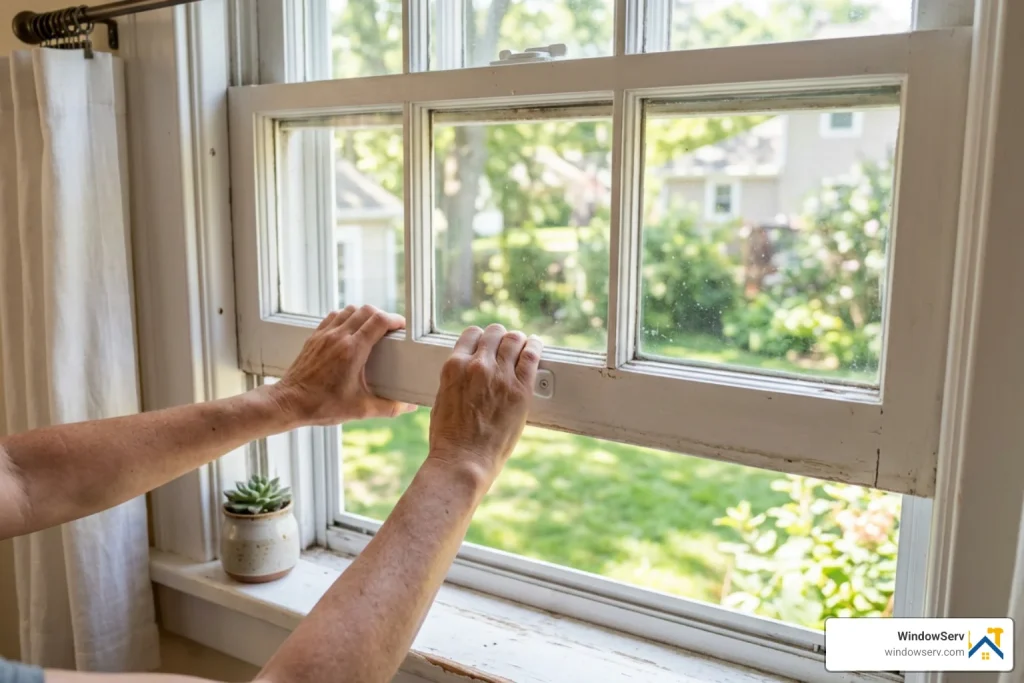
When a Window Won’t Open: What’s Going On and What to Do stuck window won’t open homeowner trying to open jammed sash If your window won’t open, here are the
When a Window Won’t Open: What’s Going On and What to Do
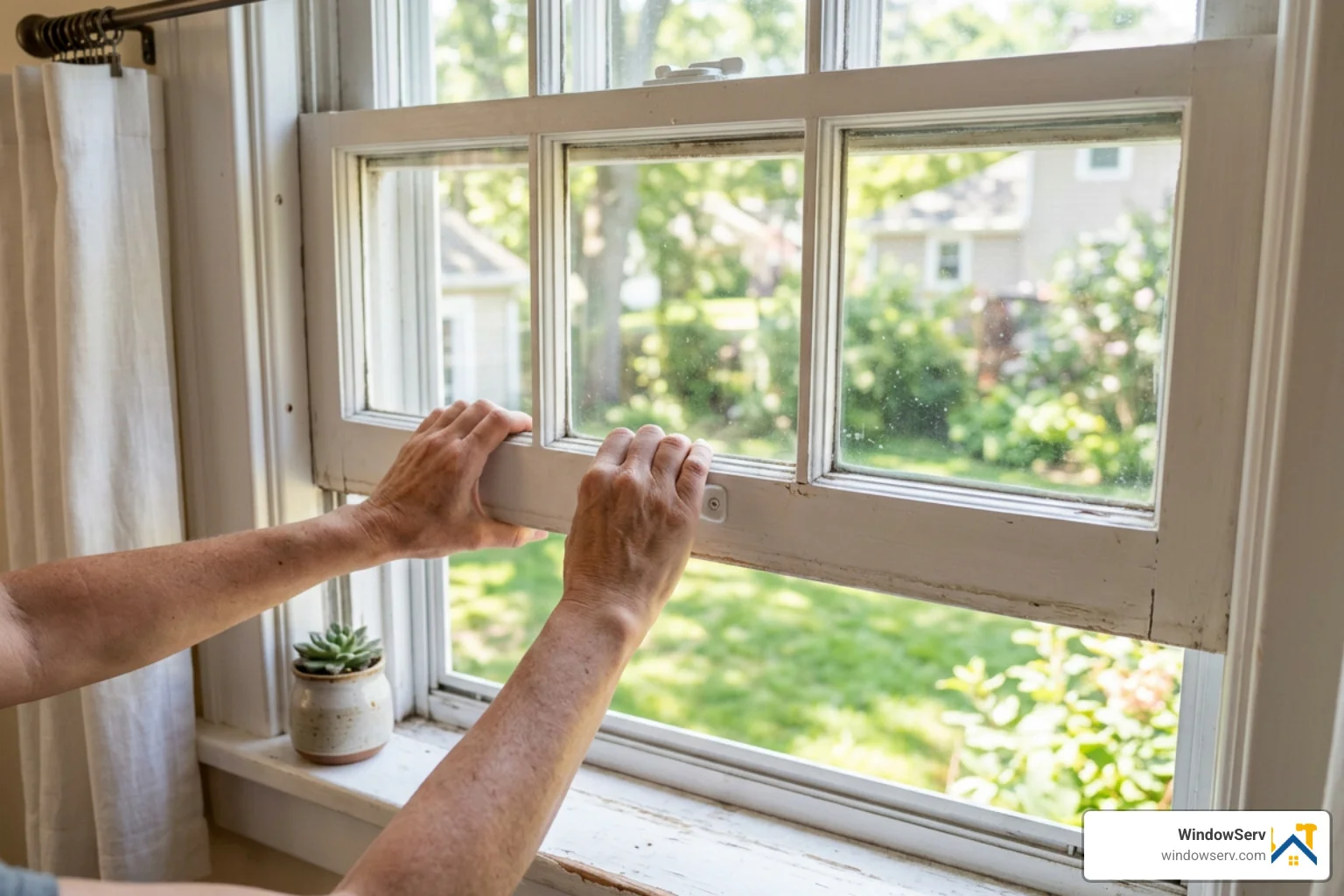
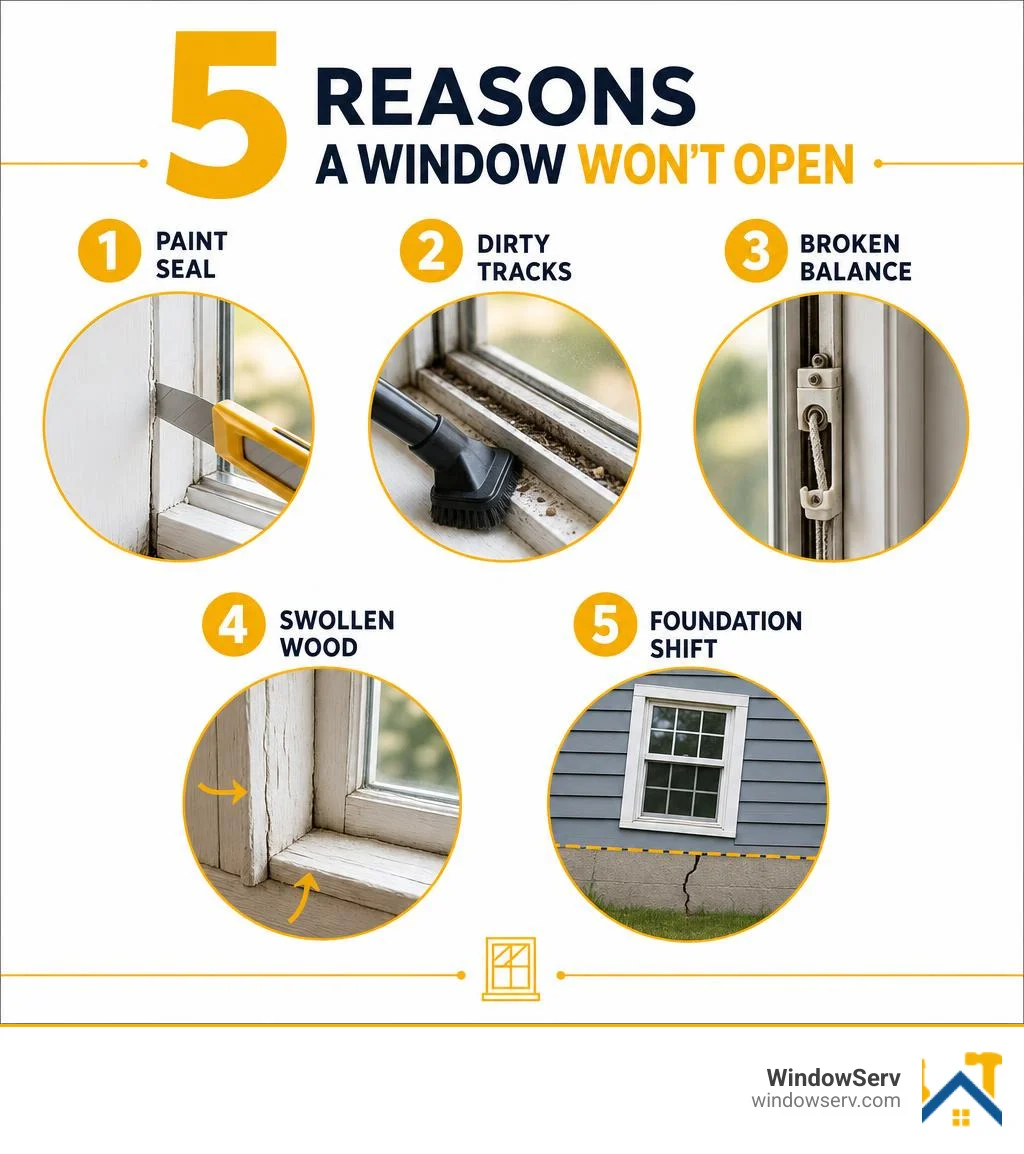
If your window won’t open, here are the most common causes and quick fixes:
| Cause | Quick Fix |
|---|---|
| Paint sealing the sash shut | Score the edges with a utility knife |
| Dirty or blocked tracks | Vacuum and clean the track, apply silicone spray |
| Broken balance or sash cord | Replace the balance mechanism ($15–$40 per balance) |
| Swollen or warped wood frame | Dry with a fan, sand tight spots lightly |
| Foundation settling | Call a professional for assessment |
A window won’t open for many reasons — and most of them are fixable without replacing the whole window.
But here’s the thing: a stuck window is more than just annoying. It can block your escape route in a fire, let cold air seep in, and make your home easier to break into. When windows stop working, everything connected to comfort, safety, and energy costs starts to slip.
The good news? Most stuck windows have one of just a handful of causes. Once you know which one you’re dealing with, the fix is usually straightforward.
I’m Feiruz Gabibov, Chief Operating Officer of WindoServ, a New Jersey-based window repair and maintenance company — and I’ve seen every version of a window won’t open problem there is, from paint-sealed sashes in older Montclair homes to foundation-shifted frames in Jersey City. In this guide, I’ll walk you through exactly how to diagnose and fix a jammed window, and tell you when it’s time to call in a pro.
Why Your Window Won’t Open: Common Culprits
When you pull or push on a window sash and it refuses to budge, it is easy to assume the worst. However, diagnosing the root cause is the first step toward restoring smooth, effortless operation. In our years servicing homes throughout Bergen, Essex, and Hudson counties, we have found that window struggles usually boil down to five main culprits: accumulated dirt, sloppy paint jobs, structural shifting, warped wood, or broken hardware.
Let’s look at how different frame materials react to these issues. Wood, vinyl, and aluminum all have unique properties, meaning they fail in different ways when exposed to New Jersey’s seasonal climate changes.
Material Sticking Risks: A Quick Comparison
| Window Frame Material | Primary Sticking Risk | Sensitivity to Moisture | Lifespan and Failure Signs |
|---|---|---|---|
| Wood | Seasonal swelling, paint binding, rot | Very High (absorbs humidity) | 30+ years; showing signs of rot, soft spots, or permanent warping |
| Vinyl | Heat distortion, track debris, broken balances | None (but highly sensitive to heat) | 15–25 years; bowing, cracking, or losing squareness |
| Aluminum | Track friction, hardware corrosion, dirt buildup | Low (corrosion on moving parts) | 20–30 years; pitting, oxidation, and dry, squeaking tracks |
Understanding your window’s material helps narrow down the problem. For example, if you have classic wood windows in a historic Tenafly home, high summer humidity is likely causing the frame to swell. If you have vinyl windows in a modern Jersey City apartment, a broken balance or built-up track grime is more likely.
The Paint Seal: The Number One Reason a Window Won’t Open
If you have recently painted your home—or bought an older home in Ridgewood or Montclair that has seen decades of coats—there is a very high probability your window is painted shut.
When painters (or ambitious DIYers) paint the window frame and sash, they often close the window before the paint has fully cured. As the paint dries, it acts as a highly effective adhesive, bonding the window sash directly to the frame. This paint seal is the absolute number one cause of stuck windows.
Fortunately, breaking a paint seal is usually a free fix that only requires a utility knife, a putty knife, and a bit of patience. If you want to see this process in action, you can watch this helpful tutorial on How to open a stuck window.
Broken Balances and Hardware Failure
Have you ever opened a window only to have it slam shut like a miniature guillotine? Or perhaps it feels incredibly heavy, as if you are lifting solid lead?
This is not a frame issue; it is a failed balance system. In double-hung and single-hung windows, balance mechanisms are hidden inside the side jambs. They counterbalance the weight of the sash so you can lift it with one finger.
Older homes in Union or Middlesex counties often use traditional cast-iron sash weights suspended by cotton ropes. Over time, these ropes rot and snap, leaving the window with no upward assistance. Modern windows utilize spring-loaded, spiral, or block-and-tackle balances. When these springs break or lose tension, the sash will refuse to stay up or will jam sideways in the track.
Replacing a broken balance is a highly cost-effective repair. Parts generally run between $15 and $40 per balance, and replacing them restores the window to brand-new functionality. To learn more about how we handle these repairs, check out our dedicated Window Balance Replacement and Repair service page, or read our step-by-step Double Hung Window Balance Repair guide.
Swollen Wood and Warped Frames
Wood is a hygroscopic material, meaning it acts like a sponge, absorbing and releasing moisture from the surrounding air. During New Jersey’s humid summer months, wooden window sashes absorb airborne water vapor and swell. This expansion tightens the tolerances between the sash and the frame, resulting in a window that is incredibly difficult to push open.
Over decades, repeated cycles of swelling and shrinking can lead to permanent warping or, worse, wood rot. When water gets trapped behind peeling paint or damaged weatherstripping, fungus takes hold, softening the wood and ruining the structural integrity of the frame.
If you suspect your wooden frames have crossed the line from temporary seasonal swelling to permanent rot, you will need targeted wood restoration. You can explore our solutions for this on our Window Wood Rot Repair and Rotten Window Frame Repair pages.
How to Safely Troubleshoot and Unstick a Jammed Window
Before you grab a hammer and start beating your window frame into submission, let’s talk about safety. Windows are made of glass, and glass breaks easily under uneven pressure. Forcing a stuck window open with brute force is a fast track to shattered glass, emergency board-ups, and potentially severe cuts.
Always wear heavy-duty work gloves and safety goggles before attempting any physical troubleshooting.

Step 1: Breaking the Paint Seal Safely
If your window is glued shut by paint, do not try to pry it open from the bottom first. This will focus all the pressure on the lower sash rail, which can easily crack the wood or break the glass pane. Instead, you need to break the paint bond systematically.
- Score the Joint: Take a sharp utility knife or a specialized scoring tool. Carefully run the blade along the seam where the window sash meets the frame. You want to cut through the dried paint layer completely. Do this on the interior and, if safely accessible, the exterior.
- Use a Spackling Knife: Insert a thin, flexible 6-to-8-inch steel spackling or putty knife into the scored joint. Gently tap the handle of the knife with a rubber mallet to drive the blade deeper into the seam, breaking any paint bonds deeper in the channel.
- Pry Gently: Once the paint seal is cut on all sides (including the meeting rail where the two sashes lock), place a wide pry bar under the bottom sash. Put a small block of wood under the pry bar to protect your windowsill from damage, and apply gentle, even upward pressure.
For modern European-style windows, the mechanisms can be slightly different. If you are dealing with a modern tilt-and-turn style frame that has jammed, check out this guide on How to fix a stuck tilt and turn window.
Step 2: Cleaning and Lubricating the Tracks
If your window is not painted shut but still drags and fights you, the culprit is likely friction caused by dirt, dust, and pet hair packed into the tracks.
- Vacuum the Debris: Open the window as far as it will comfortably go. Use a shop vac or a vacuum cleaner with a crevice tool to suck out loose dirt, dead bugs, and grit from the bottom track and side channels.
- Scrub the Track: Use a stiff-bristled brush, warm water, and mild dish soap to scrub away caked-on grime. Wipe the tracks dry with a microfiber cloth.
- Apply the Right Lubricant: Spray the tracks with a dry silicone-based lubricant. Do not use WD-40. While WD-40 feels slick initially, it is a solvent that leaves behind a sticky residue. This residue acts as a magnet for dust, eventually creating a thick, gummy paste that will jam your window worse than before.
If your window still feels slightly out of alignment after cleaning, it may need a physical adjustment to sit square in its opening. You can learn more about this process through our Window Adjustment services.
Troubleshooting a Double-Hung Window That Won’t Open
If you are dealing with a double-hung window that refuses to stay open, or jams halfway up, you are likely looking at a broken balance spring or a slipped shoe.
Modern double-hung windows use “block and tackle” or “constant force” balances housed within the side jambs. If the sash is tilted slightly, the balance terminal can slip out of its shoe, locking the window in place.
To safely troubleshoot this:
- Tilt the sash inward (most modern double-hung windows have tilt latches on the top rail).
- Inspect the metal shoes in the side tracks. They should be level with each other. If one is stuck near the bottom, it has lost its connection to the sash.
- Carefully reset the shoe using a flathead screwdriver to unlock it, slide it up to match the other side, and lock it back into place before re-engaging the sash.
For a deeper dive into these systems, check out the How to Fix a Window That Won’t Stay Open guide by the Society of Interior Designers, or read our local Single Hung Window Balance Repair Guide.
Repair vs. Replacement: When to Call the Professionals
At WindowServ, our philosophy is simple: we save original frames whenever possible. Many national window companies will tell you that a single stuck window requires a complete, expensive replacement of the entire window unit. In our experience, that is rarely the case.
However, there are times when DIY fixes and simple repairs are not enough. Here is how to decide whether to repair or replace:
When to Repair
- Single broken balance: If the window slams shut but the frame is in great shape, simply replace the balance mechanism.
- Paint-bound sashes: Easily resolved with a utility knife and patience.
- Dirty tracks or minor alignment issues: A thorough cleaning and a professional alignment will make the window slide like new.
- Localized wood rot: If the rot is confined to a small section of the sill, it can be carved out and rebuilt with structural epoxy.
When to Replace
- Severe structural warping: If the vinyl or wood frame has warped permanently due to extreme heat or structural shifting, it will never slide smoothly again. Replacing the warped sash or the entire unit is the only permanent solution.
- Advanced wood rot: If rot has eaten through the structural corners of the window frame, the unit is no longer structurally sound.
- Shifting foundation issues: If your home’s foundation is actively settling, it can squeeze the window openings out of square. While we can adjust and shim windows to accommodate minor settling, severe foundation shifts must be addressed at the structural level before new windows are installed.
- System-wide failure: If multiple windows in your home are drafty, foggy (broken double-pane seals), hard to open, and driving up your energy bills, upgrading to modern, energy-efficient replacements is the smartest financial move.
If you are trying to decide on the best path forward, you can check out our comprehensive Window Repair services, learn how to replace just the moving parts with our Window Sash Replacement Guide 2026, or read about structural frame restoration in our guide on how to Fix Window Frame.
Frequently Asked Questions About Stuck Windows
Why do my windows stick in the summer but open easily in the winter?
This is classic seasonal expansion. Wood is highly sensitive to relative humidity. During New Jersey’s muggy summer months, the wood fibers absorb moisture from the air, causing the sash to swell and press tightly against the frame. In the winter, dry indoor heating draws moisture out of the wood, causing it to shrink back to its normal size.
To prevent this seasonal battle, ensure your wooden window frames are properly painted or sealed to block moisture absorption. You can find more seasonal tips in our guide on How to Prepare Your Windows for Winter.
Can I use WD-40 to lubricate my window tracks?
No, please avoid WD-40 on window tracks. WD-40 is designed to displace water and break up rust, but it leaves behind a wet, oily film. This film is highly effective at trapping household dust, outdoor pollen, and pet hair. Over time, this mixture turns into a sticky, abrasive sludge that increases friction and can permanently damage vinyl tracks or brass rollers. Always use a dry silicone-based spray or real paraffin wax for window lubrication.
Is a stuck window considered a safety hazard?
Absolutely. A window that cannot be opened easily is a major safety violation. According to building and fire codes, every bedroom must have at least one operable emergency egress window. This window must provide a minimum of 5.7 square feet of clear opening, with a minimum width of 20 inches and a height of 24 inches, allowing occupants to escape and firefighters to enter with oxygen tanks.
If a fire breaks out and your bedroom door is blocked, a stuck window can be life-threatening. Additionally, windows that do not close or lock properly represent a massive security vulnerability for burglaries. If you are facing a jammed window and want to understand the security risks, read this guide on What to do When Your Window is Stuck.
Conclusion
A window won’t open for a variety of reasons, but in most cases, you don’t need to budget thousands of dollars for a complete window replacement. By systematically checking for paint seals, cleaning out track debris, and replacing worn-out balance hardware, you can solve the majority of window jams yourself.
However, if you are dealing with stubborn wood rot, broken double-hung balances, or frames that have warped out of square, the team at WindowServ is here to help. As local New Jersey experts serving Bergen, Essex, Hudson, Middlesex, Monmouth, and Union counties, we specialize in high-quality window restoration. We focus on saving your original frames whenever possible, delivering up to 30% energy savings, and backing all of our work with a 100% satisfaction guarantee.
Don’t spend another season wrestling with your windows. Explore our professional window services today, or contact us to schedule a professional assessment for your home!