
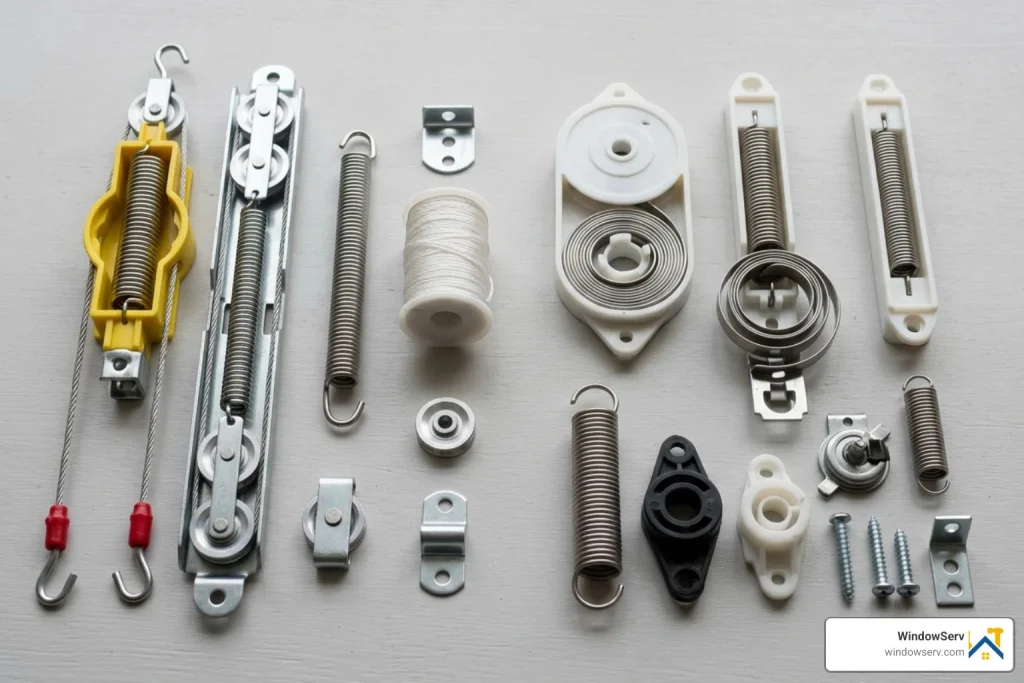
Understanding Single Hung Window Balance Spring Replacement Various types of window balances including block and tackle and coil springs – single hung window balance spring replacement To understand why single
Understanding Single Hung Window Balance Spring Replacement
To understand why single hung window balance spring replacement is so vital, we first have to look at what’s happening inside your window frame. A window balance is a hidden mechanism—usually tucked into the side jambs—that counterbalances the weight of the sash. In a single-hung window, only the bottom sash moves. Without a functional balance, that sash becomes a heavy guillotine or a stubborn weight that refuses to budge.
As of April 2026, many homeowners in areas like Jersey City and Montclair are dealing with aging window hardware that has simply reached the end of its fatigue life. Most balance springs are rated for a specific number of cycles (openings and closings). Once they hit that limit, the metal loses its “memory” or snaps entirely.
Identifying Your Single Hung Window Balance Spring Replacement Type
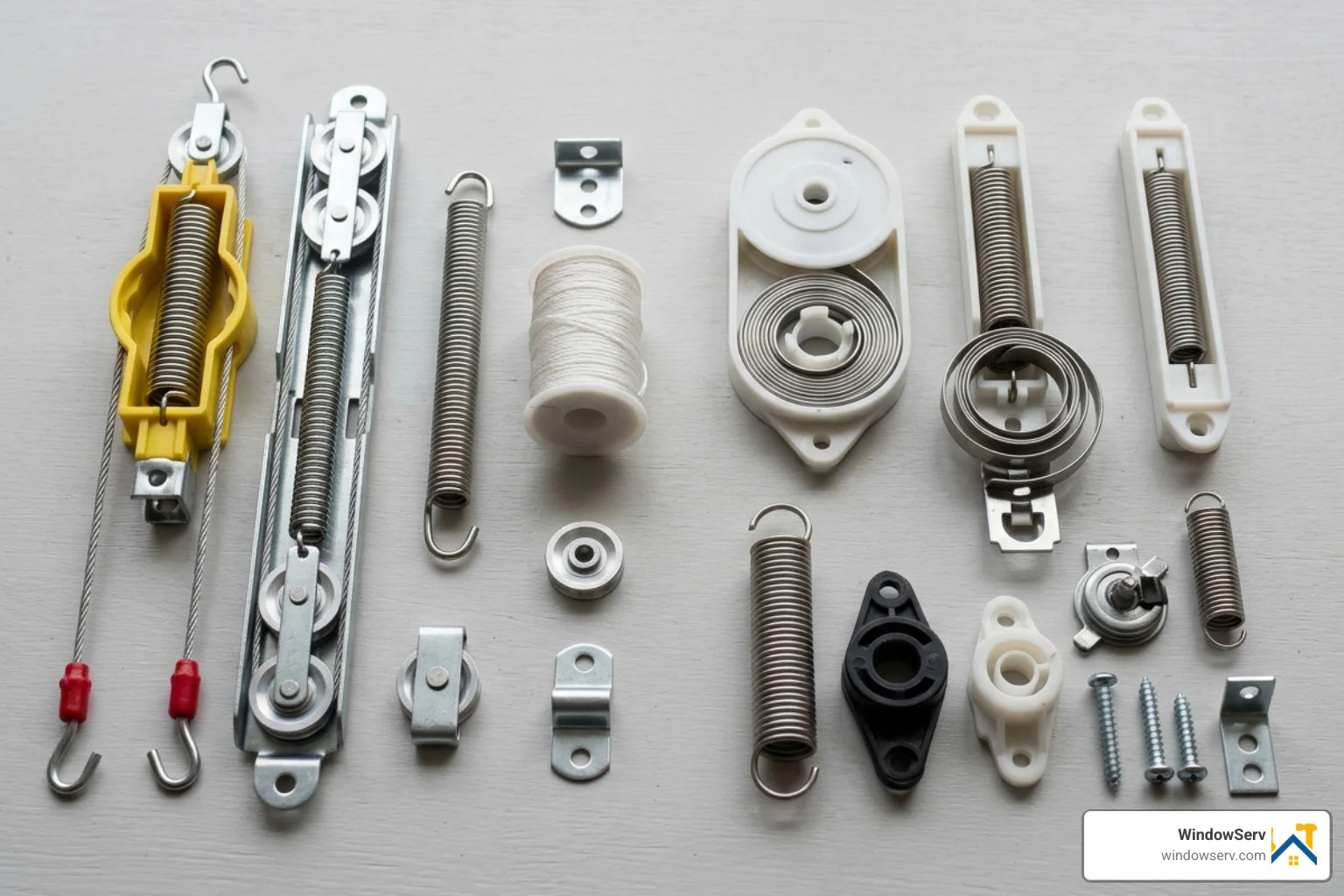
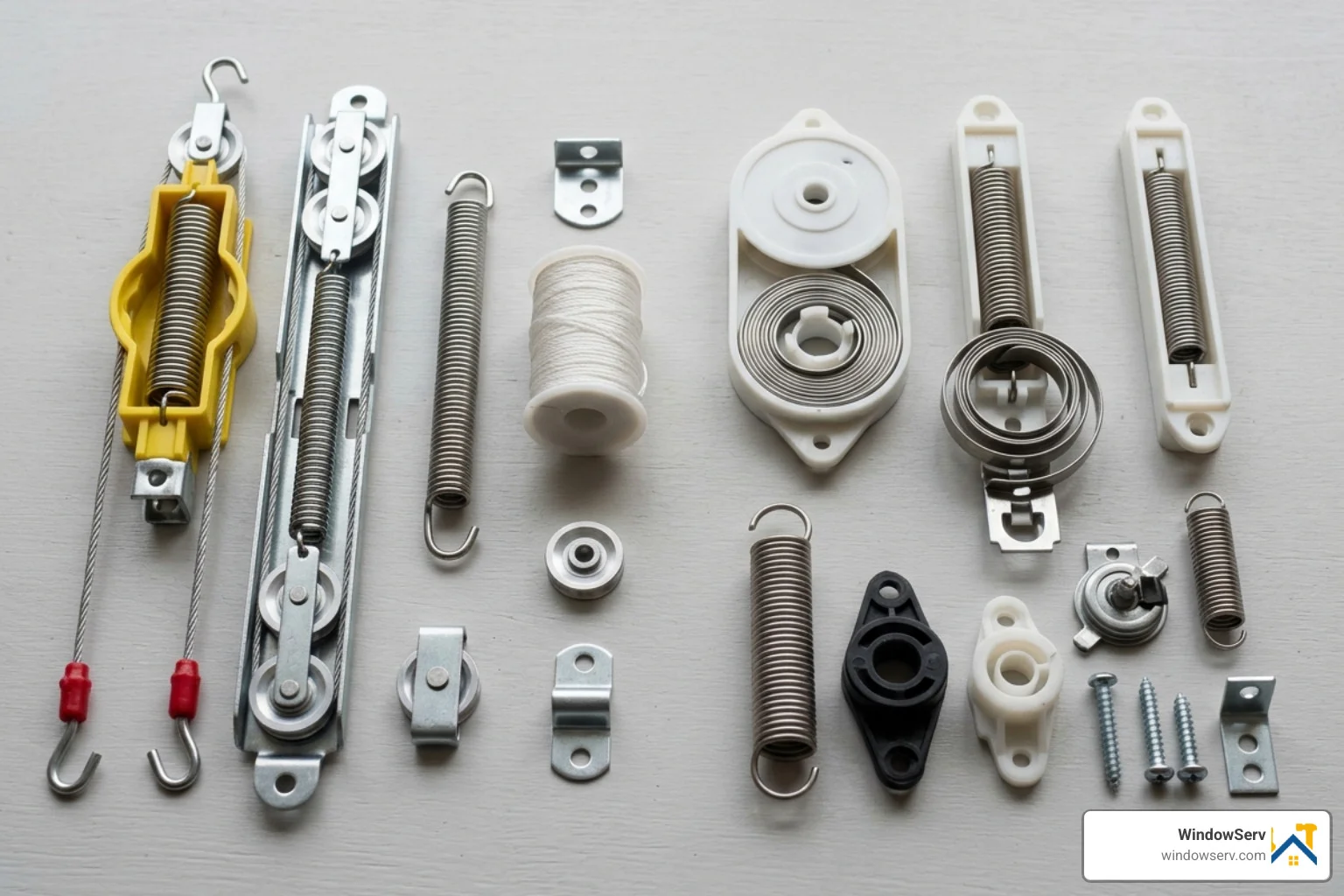
Before you can order parts, you need to know what lives inside your walls. Single-hung windows generally use one of three main systems:
- Block-and-Tackle Balances: These use a combination of a pulley, a cord, and a hidden extension spring. They are incredibly common in modern vinyl windows. You can often identify them by a metal channel (usually 1/2 inch or 9/16 inch wide) and a stamped number like “2830” or “1410.”
- Constant Force (Coil) Balances: These look like a roll of measuring tape made of stainless steel. They are popular because they provide a very smooth, consistent feel. Brands like Truth Hardware offer these in single, dual, or even triple configurations to support heavier glass.
- Spiral Balances: These are long tubes with a spiral rod inside. They are adjusted by “winding” the rod to increase tension. You’ll see these often in older aluminum or wood windows throughout Hudson and Essex Counties.
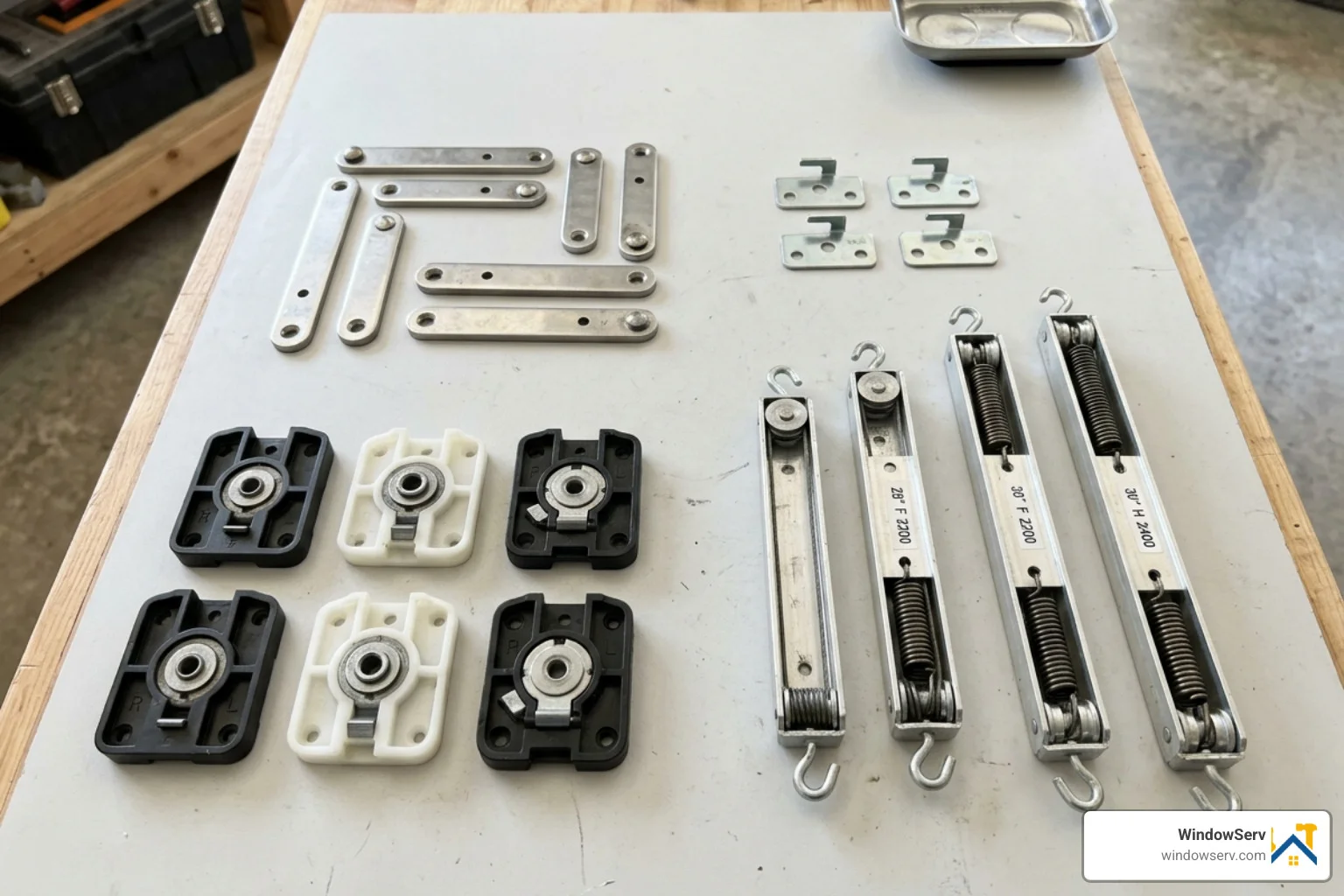
To get the right fit, look for etched numbers or stamped codes on the metal. For instance, Andersen 100 Series windows use specific codes from 1020 to 3710. Matching these numbers is the only way to ensure your sash doesn’t “drift” down after you open it.
Common Components and Accessories
When performing a single hung window balance spring replacement, the spring itself isn’t always the only culprit. We often find that peripheral hardware has failed due to the extra stress of a dying spring.
- Pivot Shoes (Pivot Locks): These are the plastic or metal blocks that the sash sits in. When you tilt the sash in, the “cam” inside the shoe rotates and locks it into the track.
- Take-out Clips: Small metal tabs in the side of the frame that allow you to “capture” the balance so the sash can be removed.
- Pivot Cams: The U-shaped parts that connect the sash to the balance.
- Sash Springs: Small tension springs used for screen retention or sash stabilization. Reflect Window & Door stocks a wide variety of these accessories, which are often replaced alongside the main balance to ensure a “like-new” feel.
Signs Your Window Balance Needs Immediate Attention
How do you know it’s time for a single hung window balance spring replacement? Your windows will usually tell you, sometimes quite loudly.
- The “Slam” Factor: This is the most dangerous sign. If you open your window and it immediately falls back down, the spring has likely snapped or the cord in a block-and-tackle system has frayed.
- The “Crooked” Sash: If one side of the window sits higher than the other, one of your two balances has failed. Since balances work in pairs, the working side is now carrying double the load and will likely fail soon too.
- Visible Debris: If you see bits of grey plastic or frayed string falling out of your side jambs, your block-and-tackle system is disintegrating.
- The “Workout” Window: If it takes two hands and a lot of grunting to lift a window that used to glide, the tension in your coil or spiral balances has vanished.
If you’re seeing these signs in Tenafly or Paramus, it’s best to address it before the glass cracks from an accidental drop. For those who prefer a professional touch, our team provides WindowServ professional repair services in New Jersey to handle the heavy lifting and precise calibration.
Step-by-Step Guide to Replacing Window Balances
Ready to roll up your sleeves? Most single hung window balance spring replacement jobs can be completed in about 30 to 45 minutes per window once you have the parts.
Required Tools:
- Flat-head and Phillips-head screwdrivers
- Needle-nose pliers
- Safety glasses (springs are under high tension!)
- A “Winding Tool” (if you have spiral balances)
- A sturdy pair of gloves
Executing the Single Hung Window Balance Spring Replacement
Every window is slightly different, but the general workflow for a standard side-load or tilt-in single-hung window goes like this:
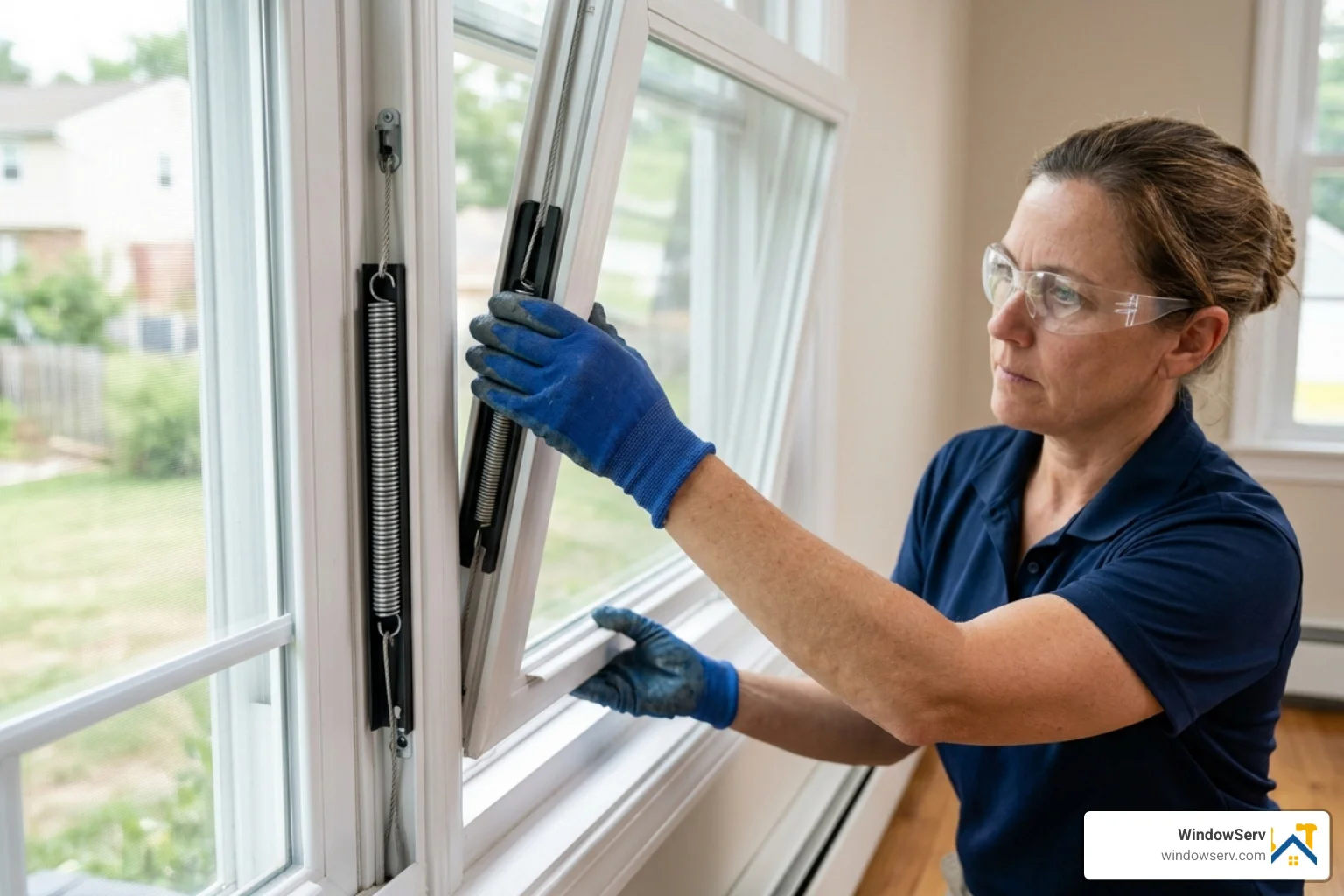
- Safety First: Wear your glasses. A snapped spring can fly with surprising force.
- Engage Take-out Clips: If your window has small metal clips on the side tracks about 6 inches above the sash, pop them out with a screwdriver.
- Raise the Sash: Lift the sash until it hits the clips. This “traps” the balance.
- Remove the Sash: Depending on the model, you will either tilt the sash toward you or shift it to one side to disengage it from the tracks.
- Uncouple the Balance: Use your pliers to carefully unhook the terminal hook or screw that holds the balance to the jamb.
- Install the New Unit: Slide the new balance into the track. If you are using professional-grade window sash coil spring balances, ensure they are stacked correctly. For example, two “B3” balances per side can support a 12 lb sash.
- Reset the Sash: Reverse the removal process. Lower the sash to disengage the take-out clips and test the movement.
For a visual walkthrough, you can see this Side-Load Single Hung Balance Spring Replacement video which covers the nuances of side-load systems common in many NJ homes.
Testing and Calibration
Once the hardware is in, don’t just walk away. Open and close the window five or six times. The sash should move with a “weightless” feel. If it feels too heavy, you may have undershot the weight capacity. If it “creeps” upward on its own, the springs are too strong.
Cost and Sourcing for Replacement Parts
Pricing for single hung window balance spring replacement parts is relatively affordable, but it varies by the complexity of the system.
| Balance Type | Estimated Cost (Per Pair) | Best For |
|---|---|---|
| Block-and-Tackle | $40 – $70 | Modern Vinyl Windows |
| Constant Force Coil | $20 – $45 | Smooth, quiet operation |
| Spiral Balance | $30 – $60 | Older wood/aluminum frames |
| Professional Labor | $150 – $300 | Guaranteed fit and safety |
You can find common sizes like the Prime-Line 29 in. Window Block and Tackle Sash Balance FA 2830 at major retailers, but for specific OEM parts for Andersen or MI Windows, you may need a specialized supplier.
Frequently Asked Questions about Window Balances
How do I find the weight of my window sash?
The most accurate way is to remove the sash and weigh it on a standard bathroom scale. However, many balances have “weight codes” stamped on them. For example, a “2830” stamp on a block-and-tackle balance often indicates a 29-inch channel that supports a sash in the 16–23 lb range. If you see a “C3” or “B5” on a coil spring, that corresponds to specific poundages (3 lbs or 5 lbs per coil).
Should I replace both balances at the same time?
Yes, absolutely. We always recommend replacing them in pairs. If one spring has failed, the other is likely at 95% of its lifespan. Installing one new spring and leaving one old one will cause the sash to travel unevenly, which can wear out your new part prematurely.
Can I upgrade from a spiral to a constant force balance?
In some cases, yes, but it often requires changing the “shoes” and possibly modifying the jamb pocket. It’s usually easier and more cost-effective to replace like-for-like unless you are doing a full window restoration.
Conclusion
A window that doesn’t stay open is more than just a nuisance; it’s a safety hazard and a blow to your home’s energy efficiency. Whether you are in a historic brownstone in Hoboken or a modern colonial in Westfield, single hung window balance spring replacement is a vital part of home maintenance.
At WindowServ, we specialize in these precise repairs. We pride ourselves on saving your original frames—which can save you thousands compared to a full replacement—while providing up to 30% energy savings through better-sealing, functional sashes. Our local NJ experts offer a satisfaction guarantee on every job, ensuring your windows glide as smoothly as the day they were installed.
Ready to stop propping your windows open with sticks? Professional window balance replacement and repair is just a call away. Let us help you bring the light and breeze back into your New Jersey home safely.