
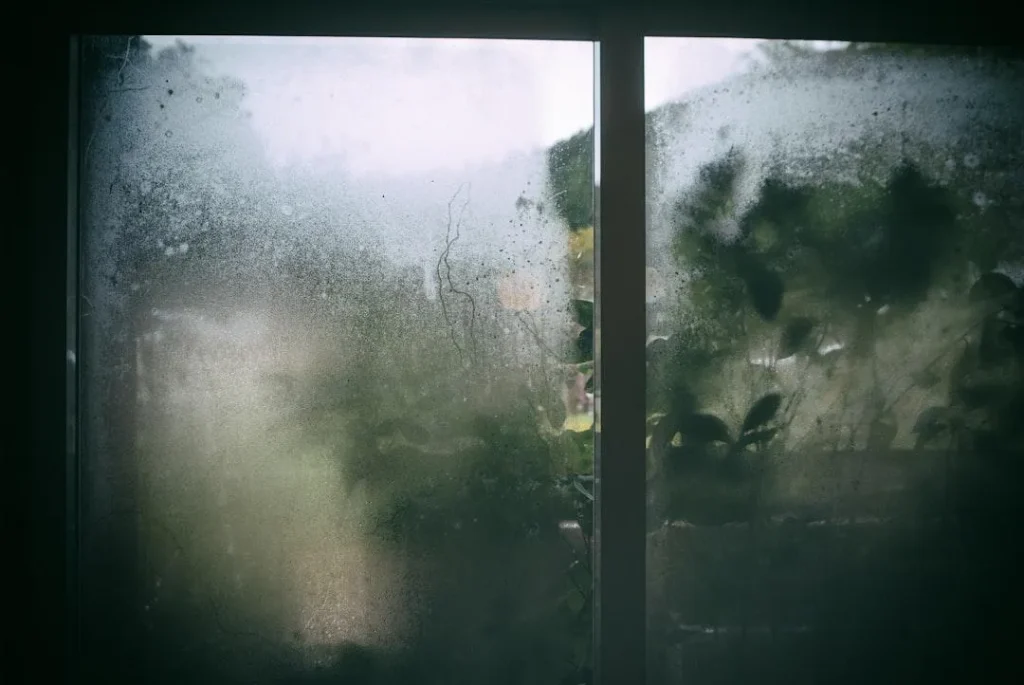
That Hazy Film Between Your Panes Is Telling You Something Fix foggy double pane windows the right way by addressing the root cause: a failed seal that lets moisture in
That Hazy Film Between Your Panes Is Telling You Something
Fix foggy double pane windows the right way by addressing the root cause: a failed seal that lets moisture in between the glass layers. Here’s a quick overview of your options:
Method Cost Restores Efficiency? Longevity DIY drilling $20–$80 No Temporary Professional defogging $150–$300 Partially 1–3 years IGU replacement ~$100/window Yes Long-term Full window replacement $700–$800 Yes Long-term
The short answer: For most homeowners, replacing just the insulated glass unit (IGU) — while keeping the existing frame — is the most cost-effective fix that actually restores clarity and energy efficiency.
Once that fog appears between your panes, you can’t wipe it away. It’s trapped inside a sealed unit. That haze isn’t just an eyesore — it’s a sign your window has lost the insulating gas that keeps your home warm in winter and cool in summer.
The good news? In many cases, you don’t need to replace the entire window.
I’m Feiruz Gabibov, Chief Operating Officer of WindoServ, a New Jersey-based window repair and glass replacement company, and I’ve helped hundreds of homeowners fix foggy double pane windows without the cost and hassle of full window replacement. In this guide, I’ll walk you through every option — from DIY hacks to professional solutions — so you can make the right call for your home.
Why Double Pane Windows Fog Up
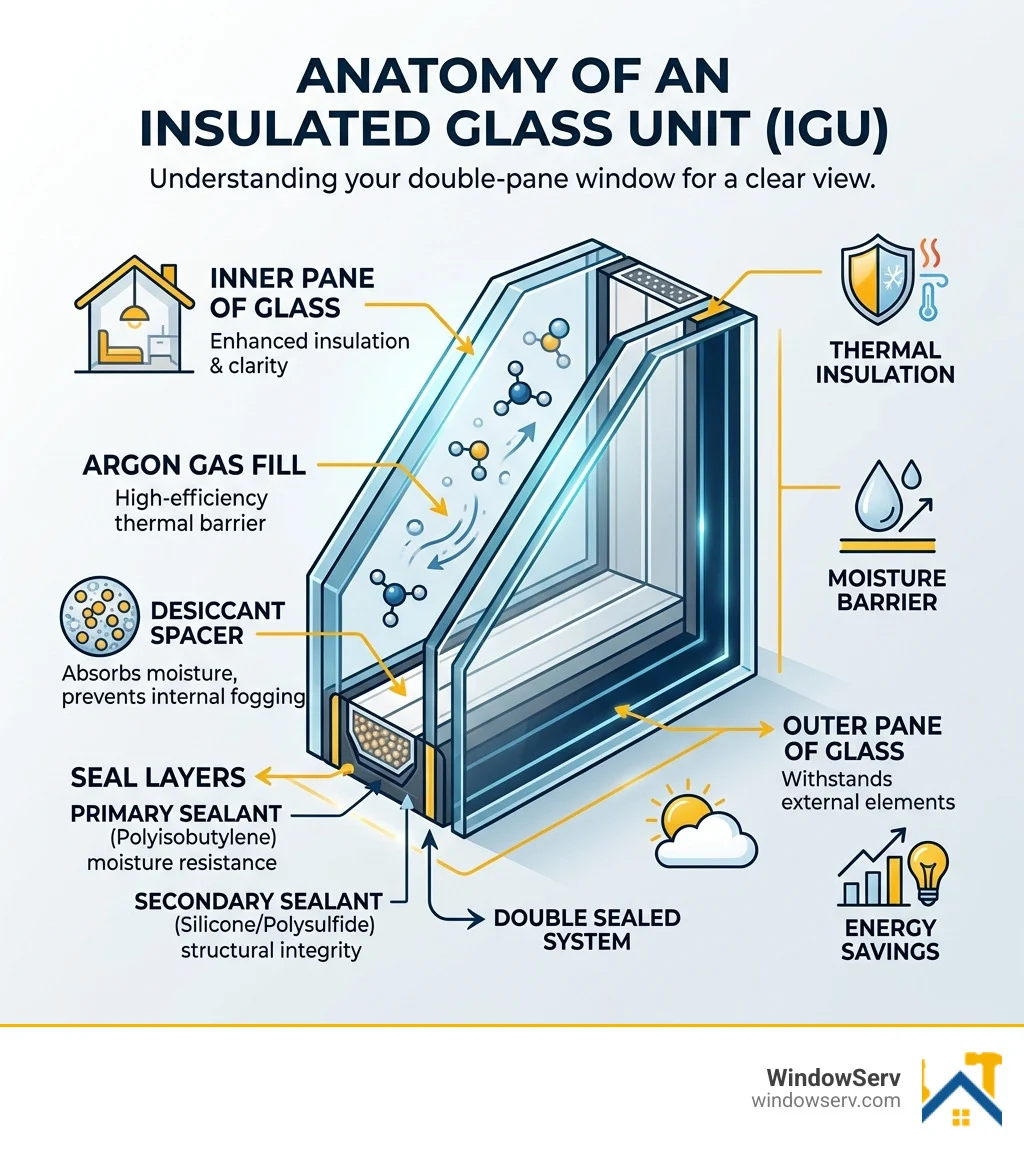
To understand how to fix foggy double pane windows, we first have to look at how they are built. Modern windows are actually “Insulated Glass Units” (IGUs). They consist of two or more panes of glass separated by a spacer and sealed into a single unit. The space between the glass is usually filled with an inert gas like argon or krypton, which provides much better insulation than plain air.
However, these units aren’t invincible. Statistics show that double-pane windows typically have a lifespan of 10 to 20 years before the seals fail. Even the best-built Insulated Glass Units naturally lose about 1% of their gas fill annually.
When the seal breaks, that expensive argon gas escapes, and moist outside air rushes in to take its place. Inside the spacer bar, there are small “desiccant” beads (think of those “do not eat” silica packets you find in shoeboxes). Their job is to absorb any tiny amounts of moisture that sneak in. But once the seal is fully compromised, the desiccant becomes saturated. It can’t hold any more water, and that’s when you see the dreaded fog.
Identifying failed window seals
Sometimes it’s obvious, but other times the signs are subtle. In our experience servicing homes from Bergen County down to Monmouth County, we look for these red flags:
-
Milky Streaks: As moisture evaporates and reforms, it leaves behind mineral deposits that look like white, cloudy streaks or “calcium haze.”
-
Water Droplets: Actual beads of water forming on the inside surfaces of the glass.
-
Distorted Reflections: If the gas has leaked out and created a vacuum, the glass panes might actually bow inward, causing reflections to look like a funhouse mirror.
-
Rainbow Patterns: Occasionally, you’ll see an oil-slick-like rainbow sheen on the glass, which indicates moisture interference.
If you notice these signs, it’s time to look into Residential Glass Replacement options before the moisture causes further damage to your window frames.
The impact of solar pumping
Why do seals fail in the first place? In New Jersey, we have a specific culprit: the “freeze-thaw” cycle and intense sun. This process is called solar pumping.
During a hot day in Jersey City or Edison, the sun beats down on your windows, causing the air/gas between the panes to expand. This puts immense pressure on the seals. At night, the temperature drops, the gas contracts, and the unit “sucks” in air. Over thousands of these cycles, the sealant (usually polyisobutylene) develops micro-fractures. Eventually, the seal gives up, and the window starts “breathing” humid outside air.
How to Fix Foggy Double Pane Windows Using DIY Methods
If you’re a “weekend warrior” or a law student on a budget (we’ve seen plenty in Hoboken!), you might be tempted to try a DIY fix. The most common “hack” involves drilling holes into the glass.

Is drilling holes an effective way to fix foggy double pane windows?
The theory behind this is simple: if the window is foggy because moisture is trapped inside, why not give that moisture a way to get out?
The DIY Process:
-
Drill: Use a small diamond-tipped drill bit to create two tiny holes in the glass (usually one in the top corner and one in the bottom corner).
-
Rinse: Some people inject isopropyl alcohol or a cleaning solution to wash away the mineral deposits.
-
Dry: You can use a hair dryer (at a safe distance!) or a dehumidifier to pull the moisture out.
-
Seal/Vent: You then install tiny “one-way” vents or plugs to allow the window to breathe without letting more moisture in.
Does it work? Cosmetically, yes. It can clear up the fog. However, it is a “band-aid” fix. You are essentially turning your high-tech insulated window into a single-pane window with a glass shield.
If you’re looking for a temporary way to Window Repair until you can afford a real fix, this might buy you a year or two of visibility.
The risks of DIY defogging
Before you grab the power drill, there are some serious downsides to consider:
-
Glass Breakage: If your window is made of tempered glass (common in doors or windows near the floor), it will shatter into a million pieces the second the drill touches it.
-
Lost Insulation: You are letting out all the argon gas. A 100% argon fill increases thermal performance by 16%. Without it, your energy bills will climb.
-
Voided Warranties: Most window manufacturers will immediately void your warranty if they see a hole drilled in the glass.
-
The “Dirty Window” Syndrome: While the fog might go away, the dust and dirt from the outside air can now enter the unit, leaving you with a window that looks “dirty” on the inside forever.
If the risks seem too high, it’s usually smarter to look into Window Glass Replacement instead.
Professional Solutions to Fix Foggy Double Pane Windows
When you call in the pros, you generally have two paths: professional defogging or IGU replacement.
Professional defogging services
Professional defogging is a more sophisticated version of the DIY drilling method. Specialists use precision tools to drill nearly invisible holes, inject proprietary cleaning solutions to remove “milky” stains, and then install high-quality vents.
-
Pros: It’s cheaper than replacement ($150–$300 per window) and doesn’t require removing the glass.
-
Cons: It doesn’t restore the original R-value (insulation power) because the argon gas isn’t replaced. It also doesn’t “fix” the broken seal; it just manages the symptoms.
Cost-effective ways to fix foggy double pane windows
The “Gold Standard” for fixing foggy windows — and what we most often recommend at WindowServ — is IGU Replacement.
This involves removing the failed glass unit from your existing sash and sliding in a brand-new, factory-sealed unit. You keep your original frames, which is great for preserving the look of your home in historic areas like Montclair or Ridgewood.
By choosing Foggy Window Glass Replacement, you get the best of both worlds. You save money by not replacing the whole window frame, but you get a window that performs like new. This is why Double-Pane Window Repair and Replacement is the most popular service for NJ homeowners dealing with seal failure.
When to Choose IGU Replacement Over Full Window Replacement
Many big window companies will tell you that the only way to fix a foggy window is to spend $700 to $800 on a full window replacement. In our professional opinion, that’s often overkill.
You should choose IGU replacement if:
-
Your window frames (wood, vinyl, or aluminum) are still in good structural shape.
-
You want to save up to 70% compared to the cost of a full new window.
-
You want to restore your home’s energy efficiency.
Restoring energy efficiency
When we perform Window Glass Replacement Services, we aren’t just giving you clear glass. We are restoring the thermal barrier of your home.
A new IGU comes with a fresh fill of argon gas and modern Low-E (low-emissivity) coatings. These coatings reflect heat back to its source — keeping the heat inside during a freezing Westfield winter and outside during a humid Paramus summer. This can lead to up to 30% energy savings compared to a window with a failed seal.
Comparing repair and replacement costs
Let’s look at the math. A local glass supplier might charge around $100 for a standard-sized IGU. Even with professional installation, you are looking at a fraction of the cost of a full window.
-
IGU Replacement: ~$150 – $250 total (Glass + Labor).
-
Full Window Replacement: ~$700 – $1,200 (Frame + Glass + Labor + Trim Work).
Unless your frames are rotting or you want to change the entire style of your home, Window Replacement of the entire unit is rarely the most logical financial choice. This applies to businesses too; our Commercial Glass Replacement Services focus on keeping costs down by targeting the glass rather than the infrastructure.
Frequently Asked Questions about Foggy Windows
Will fixing foggy windows restore their original energy efficiency?
If you choose the drilling/defogging method, the answer is no. You will have a clear window, but it will have the same R-value as a single-pane window because the insulating gas is gone.
If you choose IGU replacement, the answer is yes. You are getting a factory-sealed unit that meets or exceeds the original specifications of your window.
Can foggy windows be fixed under warranty?
Possibly! Most high-quality windows come with a 10 to 20-year warranty on the seal. If your home was built recently or you had windows installed in the last decade, find your paperwork.
Pro Tip: Look for the manufacturer’s name etched into the corner of the glass or on the spacer bar between the panes. If you’re in a town like Tenafly or Summit where many homes have premium windows like Pella or Anderson, those warranties are often transferable to new owners.
How can I prevent window fogging in the future?
While you can’t stop time, you can extend the life of your seals with these tips:
-
Maintain Humidity: Keep indoor humidity between 30% and 50%. Use dehumidifiers in damp New Jersey basements.
-
Check Weep Holes: Those tiny holes at the bottom of your window frame are designed to let water drain out. If they get clogged with dirt, water pools against the seal and rots it.
-
Avoid Pressure Washers: When cleaning your siding, never blast your windows with a pressure washer. The high-pressure stream can easily pop a window seal.
-
Annual Inspections: Have a pro check your caulking and weatherstripping once a year to ensure moisture isn’t sitting where it shouldn’t.
Conclusion
Seeing your view blocked by a “morning haze” that never goes away is frustrating. But now you know that you have options to fix foggy double pane windows that don’t involve breaking the bank.
At WindowServ, we specialize in saving your original frames while restoring your glass to crystal-clear perfection. Whether you are in Hoboken, Livingston, or Cresskill, our local NJ experts are ready to help you save energy and improve your curb appeal with a satisfaction guarantee.
Don’t let failed seals drain your wallet and ruin your view. Schedule your Foggy Window Glass Replacement with WindowServ today and see the difference that professional restoration can make!