
Why Draughty Windows Are Costing You More Than You Think If you need to adjust double glazed window hinges, here’s the quick answer: Open the window to access the hinges.
Why Draughty Windows Are Costing You More Than You Think
If you need to adjust double glazed window hinges, here’s the quick answer:
-
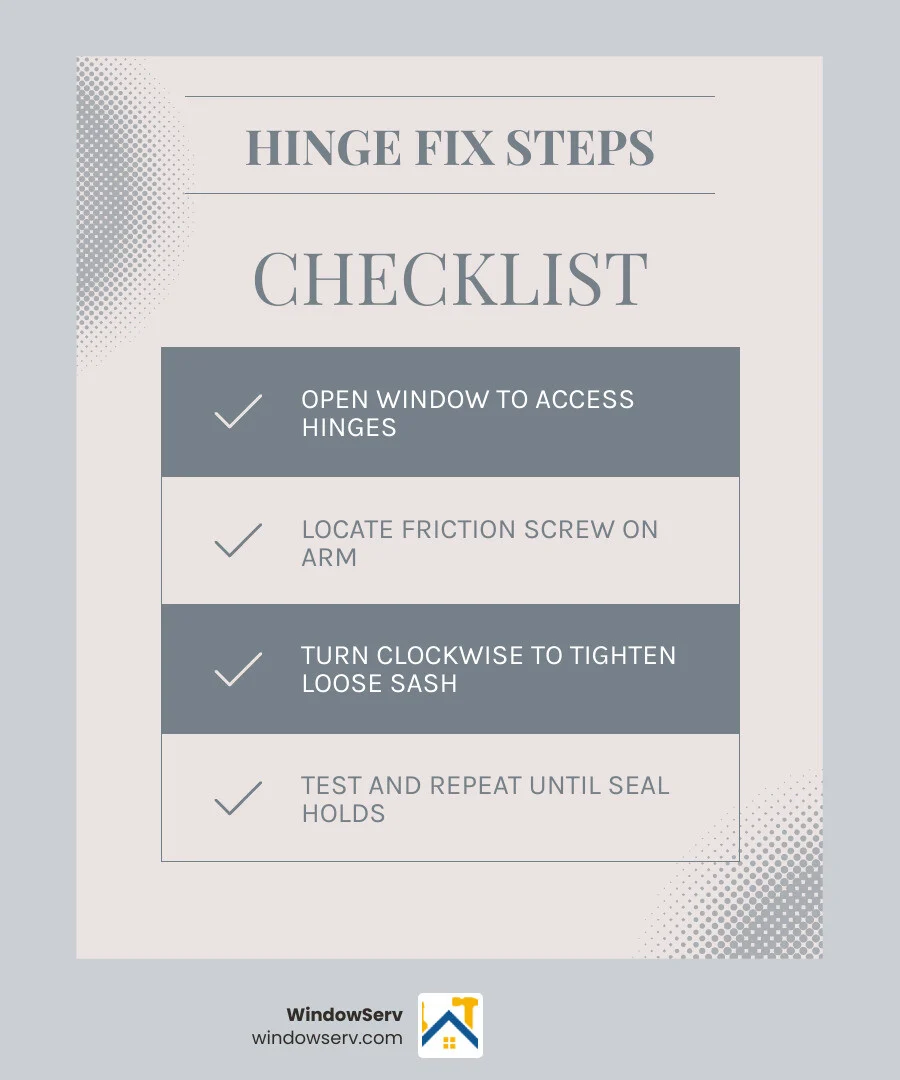
Open the window to access the hinges.
-
Locate the friction screw on the hinge arm.
-
Turn clockwise to tighten a loose window, or counterclockwise to loosen a stiff one.
-
Test the window by opening and closing it several times.
-
Repeat in small increments until it opens smoothly and seals fully when closed.
For flag hinges, use a 5mm Allen key to adjust height, lateral position, or compression. For butt hinges, loosen the grub screw first before making lateral changes.
Most adjustments take under 5 minutes with a basic screwdriver or Allen key.
A window that sticks, rattles, or lets in a cold breeze isn’t just annoying — it’s expensive. Draughty or poorly sealed windows can account for up to 30% of a home’s heat loss. For homeowners in New Jersey dealing with older double-glazed units, that number shows up directly on your energy bills.
The good news? Many hinge problems are simple to fix yourself. A loose sash, a stiff handle, or a visible gap between the frame and sash often comes down to a single misaligned or worn hinge — and in most cases, a screwdriver is all you need.
But not every hinge problem is a DIY fix. Some worn friction stays or bent components need replacing, not adjusting. This guide walks you through both scenarios clearly.
I’m Feiruz Gabibov, Chief Operating Officer of WindowServ, and through overseeing hundreds of window repair jobs across New Jersey, I’ve seen how a simple failure to adjust double glazed window hinges on time can spiral into costly heat loss and frame damage. I’ll walk you through exactly what to look for and how to fix it.
Identifying When to Adjust Double Glazed Window Hinges
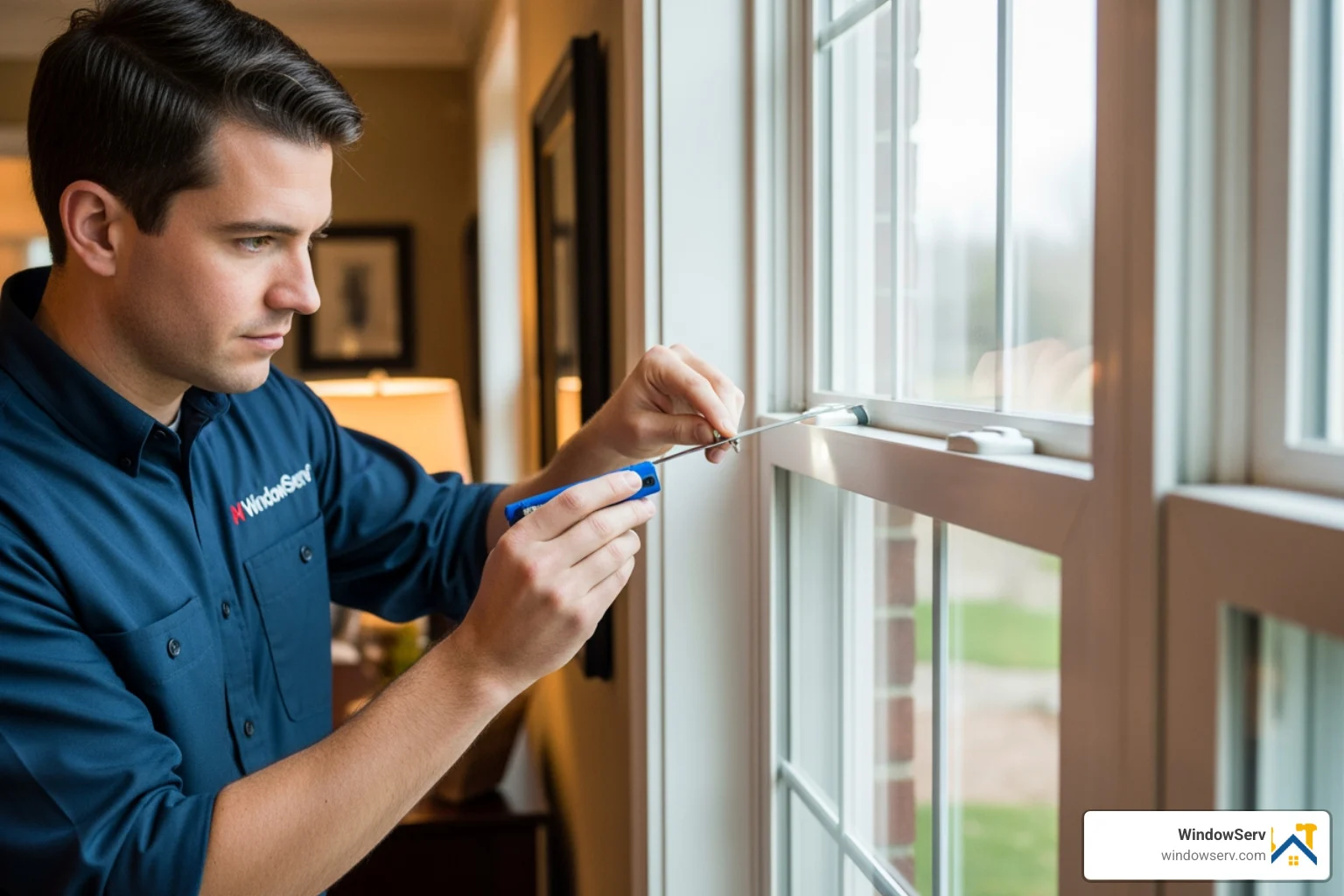
Knowing when to step in and adjust double glazed window hinges is the first step toward a more comfortable home. In our experience working across Bergen, Essex, and Hudson counties, many homeowners assume they need entirely new windows when a simple five-minute adjustment would suffice.
The most obvious sign is a draught. If you feel a chill even when the window is locked, or if you hear a distinct whistling sound on a windy day, the seal has likely been compromised. This misalignment allows heat to bypass the insulation, directly impacting your HVAC workload.
According to Scientific research on heat loss, up to 30% of a home’s heat loss in regions like Ontario (and similarly in the Northeast US) can be attributed to these poorly sealed openings. If your windows aren’t sitting flush, you are essentially paying to heat the outdoors. For those with significantly older frames, you might also consider window restoration services to bring the units back to peak performance.
Common Signs of Hinge Misalignment
As we move into 2026, energy standards are stricter than ever. To keep your home up to par, look for these red flags:
-
Stiff Handles: If you have to put your weight into the handle to get it to turn, the sash isn’t sitting correctly in the frame.
-
Sash Drag: This is when the bottom of the window “catches” or drags against the frame as you close it.
-
Uneven Sightlines: Look at the window from the outside. Is the gap between the sash and the frame even all the way around? If one side is lower, your hinges need a tweak.
-
Difficulty Locking: If the locking points don’t line up with the keeps, you’ll struggle to secure the window, which is both a thermal and a security risk.
Essential Tools and Hinge Identification

Before you start, you need the right gear. Most modern uPVC windows are designed to be user-friendly, but using the wrong tool can strip a screw and turn a 5-minute job into a weekend headache.
You will typically need:
-
Phillips and Flathead Screwdrivers: For friction stay adjustments and removing cover caps.
-
Allen Keys (4mm and 5mm): Essential for flag and butt hinges.
-
Silicone Lubricant: To ensure moving parts glide once they are aligned.
-
Measuring Tape: To check for equal spacing around the sash.
-
Flashlight: To see into the dark recesses of the frame.
Identifying Your Hinge Type
You can’t adjust double glazed window hinges effectively if you don’t know what you’re looking at. uPVC hardware generally falls into four categories:
-
Friction Stays: The most common for casement windows. These are the long metal arms that slide along a track.
-
Flag Hinges: Often found on larger windows or doors. They look like a flag on a pole and allow for three-way adjustment (height, lateral, and compression).
-
Butt Hinges: Simple, traditional-looking hinges that often have a hidden grub screw for lateral movement.
-
T-Hinges: Similar to flag hinges but with a T-shape, commonly offering compression and lateral adjustments.
For a deeper dive into uPVC hardware, you can check this guide on identifying hardware.
Safety Precautions for DIY Adjustments
We always prioritize safety at WindowServ. While adjusting a hinge is simple, the window sash itself can be heavy.
-
Weight Matters: If you are removing a sash or working on a large picture window, always have a second person to hold the weight.
-
Safety Straps: When working on upstairs windows, use a safety strap to ensure the sash cannot fall out of the frame while the hinges are loose.
-
Magnetic Bits: Use a magnetic screwdriver bit. Dropping a screw into the garden from the second floor is a sure way to ruin your afternoon.
-
Never Force It: If a screw won’t turn, don’t force it. It might be a locking grub screw that needs loosening first.
If you feel uncomfortable handling the weight of the glass, our window repair services are always available to handle the heavy lifting for you.
Step-by-Step Guide to Adjust Double Glazed Window Hinges
Ready to get to work? Most homeowners find that their main issue is either a window that won’t stay open (too loose) or one that is a struggle to move (too stiff). This is usually a result of the friction stay.
This is a 5-minute task that can drastically improve your daily life. For a comprehensive look at draught-proofing, see this guide to stopping draughts. If the window still feels “off” after these steps, you may need a more professional window adjustment.
Adjust double glazed window hinges for friction
If your window blows shut in a light breeze or is so stiff it feels like a workout to open, follow these steps:
-
Open the window fully to reveal the metal track (the friction stay).
-
Locate the friction screw. This is usually a small brass or steel screw located on the plastic “slider” part of the hinge arm.
-
Tighten for loose windows: Turn the screw clockwise. This increases the pressure on the track, making the window stay in place.
-
Loosen for stiff windows: Turn the screw counterclockwise. This reduces the pressure, allowing the sash to glide.
-
Balance the operation: Always make the same adjustment to both the top and bottom (or left and right) hinges to ensure the sash moves evenly.
Adjust double glazed window hinges for compression
Compression refers to how tightly the window sash is pulled against the frame’s weatherstripping when closed.
-
Locate the locking pins or mushroom cams on the side of the sash.
-
Use an Allen key or screwdriver to turn these cams. Most cams are eccentric (off-center).
-
Increase compression: Rotating the cam so the thicker side faces the interior will pull the sash tighter against the seal.
-
Test the fit: Close the window on a piece of paper. If you can pull the paper out easily, the compression is too low.
-
2026 Sealing Technology: Modern windows use high-rebound seals, so you don’t need to crush the gasket; just ensure a firm, continuous contact.
Advanced Settings for Flag and Butt Hinges
Flag hinges are the “gold standard” for adjustability. They allow you to move the sash in three dimensions. This is particularly useful if your house has settled and the window frame is no longer perfectly square.
For a technical breakdown of casement and awning adjustments, refer to these detailed hinge adjustment steps.
Vertical and Lateral Alignment
-
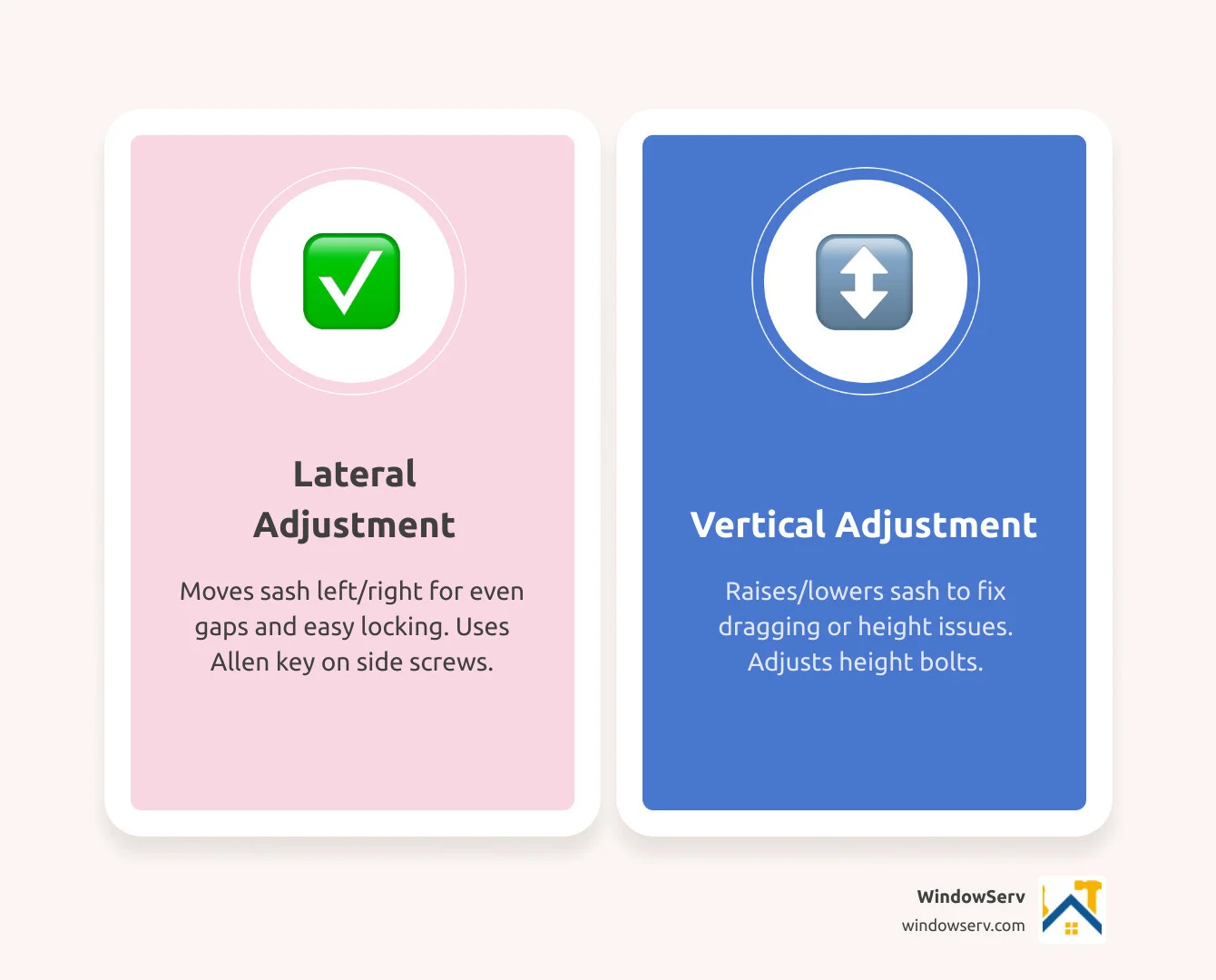
Height (Y-Axis): Usually adjusted via a screw at the very bottom of the hinge. Turning this clockwise will lift the entire sash. This is the cure for “sash drag.”
-
Lateral (X-Axis): Located under a plastic cover on the side of the hinge. This moves the sash left or right within the frame. If your window is hitting the locking side of the frame, you need to adjust this.
-
Corner Bearings: On tilt-and-turn windows, the lower corner bearing is your primary height adjuster.
Fixing Gaps in Older uPVC Windows
On older windows (15–20 years old), you might notice a gap on the hinge side even when the window is closed. This is often caused by worn “triangle guides” on the friction stay. These plastic components guide the hinge into the closed position.
When these wear down, the hinge “stands proud,” leaving a gap of up to 6mm. In these cases, no amount of adjusting will help. You will likely need to replace them with 13mm stack hinges, which are the standard for older double glazing. For more on this, check our double pane repair services.
When to Replace Instead of Adjust
Sometimes, the DIY road ends. Metal fatigue is real, and hinges that have been under strain for years can eventually snap or warp.
You should consider replacement if:
-
Visible Rust or Pitting: This indicates the structural integrity of the metal is compromised.
-
Bent Arms: If the hinge arm is no longer straight, it will never seal correctly.
-
The 10mm Rule: When the window is closed, the hinge should have an overhang of approximately 10mm. If it’s significantly less or more, the hinge is either the wrong size or badly damaged.
-
Fire Escape Requirements: If you are replacing hinges on an upstairs window in 2026, ensure you use “Egress” hinges that allow the window to open to a full 90 degrees for emergency exit.
For more real-world examples of when to call it quits on an old hinge, this forum discussion on hinge replacement provides great community insights.
Frequently Asked Questions
How do I fix a stiff uPVC window that is hard to open?
Most stiff windows just need a bit of TLC. First, apply a silicone-based lubricant to the metal tracks and moving parts. If it’s still stiff, locate the friction screw on the hinge stay and turn it counterclockwise by half a turn. Test and repeat. If the stiffness is accompanied by a grinding sound, the hinge may be bent and require replacement.
Can I adjust my window hinges from the inside?
Yes! One of the best features of uPVC friction stays is that they are designed to be adjusted from the safety of your home. Simply open the window, and the adjustment screws are accessible on the track. For flag hinges, you may need to pop off a small plastic cover cap to reach the screws.
How often should I lubricate my double glazed hinges?
We recommend a quick maintenance check twice a year — once in the spring and once before the winter chill sets in. Use a silicone spray rather than WD-40, as silicone stays on the surface longer and won’t attract as much dust and grit.
Conclusion
At WindowServ, we believe that a well-maintained window is the key to a comfortable, energy-efficient home. Whether you are in Ridgewood, Montclair, or Jersey City, the principles of window care remain the same. Learning to adjust double glazed window hinges is a simple skill that pays dividends in lower energy bills and a quieter home.
However, we also know that life is busy. If your windows are proving stubborn, or if you suspect the frames themselves have warped, don’t hesitate to reach out. Our local New Jersey experts provide comprehensive solutions that save your original frames while delivering up to 30% energy savings.
Ready for a home that’s draught-free? Contact us today for a Professional Window Adjustment and let us handle the fine-tuning for you.