
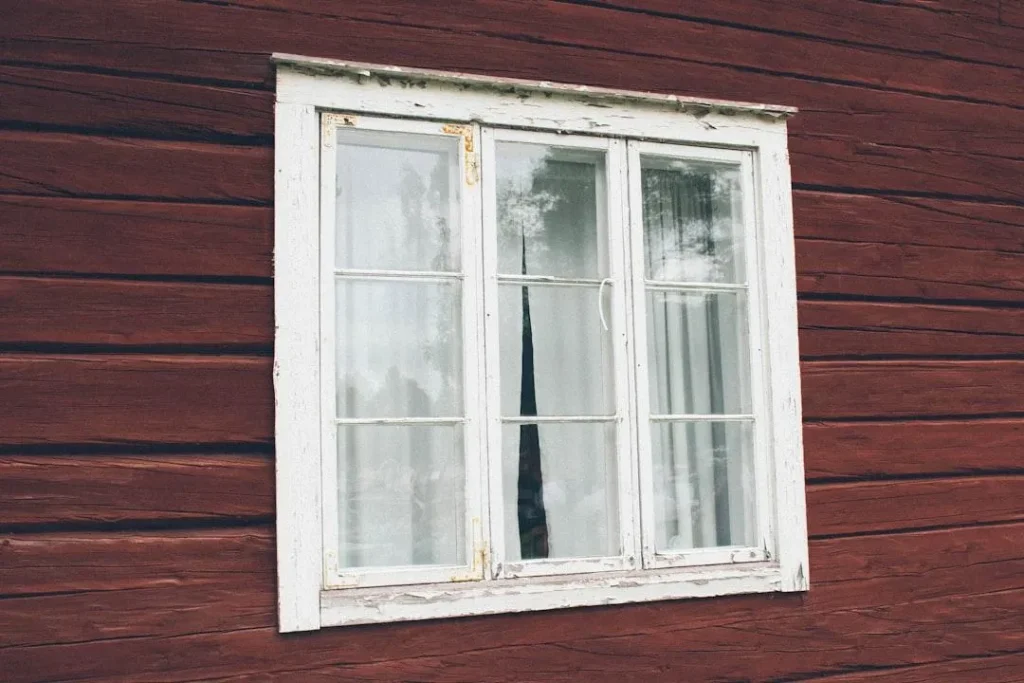
What Does It Really Cost to Restore Wood Windows? The cost to restore wood windows typically falls between $300 and $550 per window, with a national average of around $400.
What Does It Really Cost to Restore Wood Windows?
The cost to restore wood windows typically falls between $300 and $550 per window, with a national average of around $400. Here’s a quick breakdown to help you budget:
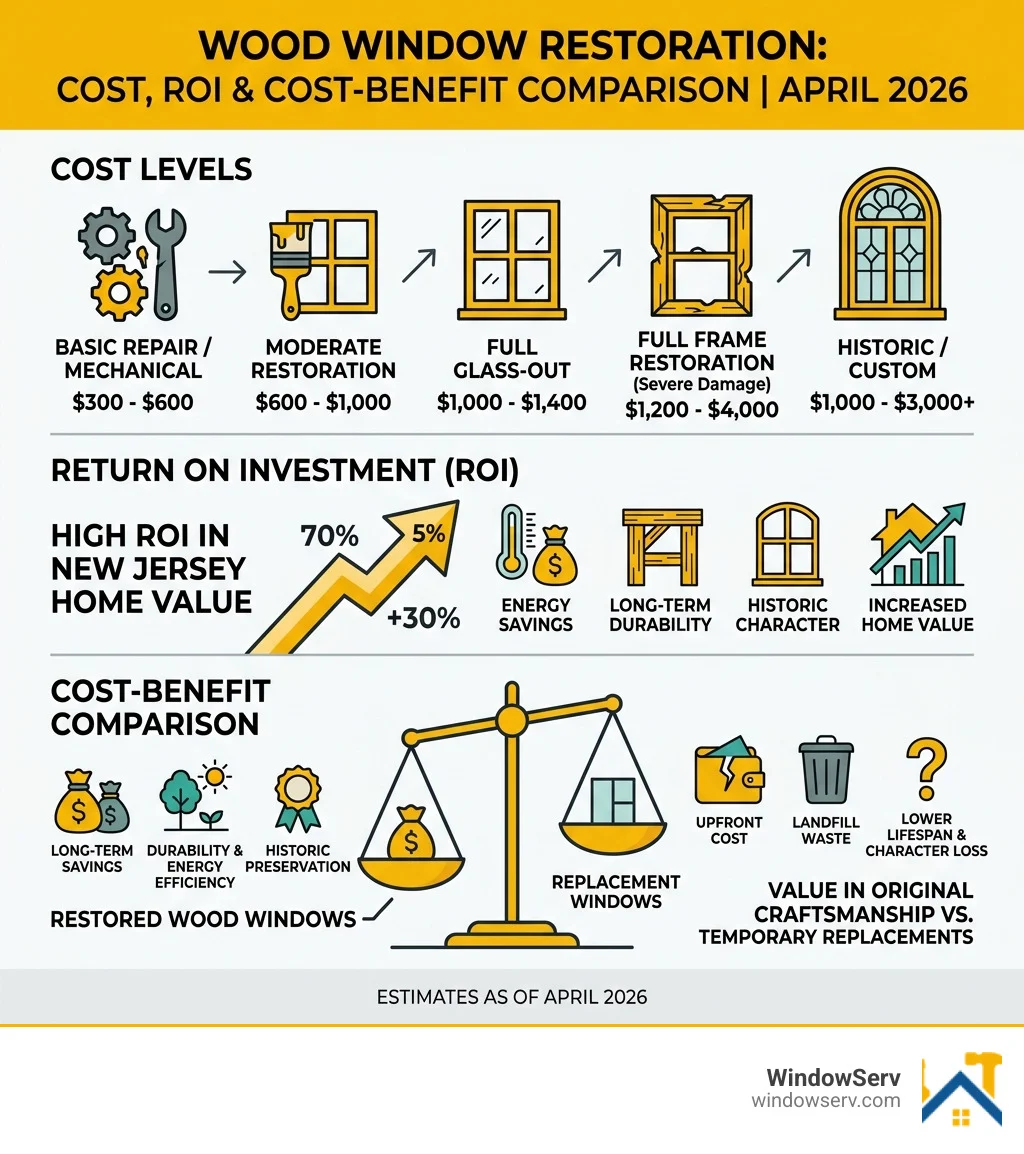
Restoration Level Cost Per Window Basic repair / mechanical restoration $300 – $600 Moderate restoration $600 – $1,000 Full glass-out restoration $1,000 – $1,400 Full frame restoration (severe damage) $1,200 – $4,000 Historic / custom windows $1,000 – $3,000+
Costs rise with window age, damage severity, number of panes, and whether lead paint is involved. For a whole-house project — say, 8 windows — expect to pay roughly $2,800 to $3,300 in total.
These numbers can feel like a lot. But for New Jersey homeowners with older homes, restoring original wood windows often makes more financial sense than replacing them — especially when you factor in long-term durability, energy savings, and home value.
I’m Feiruz Gabibov, COO of WindoServ, and through overseeing hundreds of window restoration projects across New Jersey, I’ve developed a clear picture of what drives the cost to restore wood windows and where homeowners can get the most value. In this guide, I’ll walk you through everything you need to make a confident, informed decision.
Breaking Down the Average Cost to Restore Wood Windows
When we talk about the cost to restore wood windows, it is rarely a “one-size-fits-all” price tag. In April 2026, the market reflects a wide range of needs, from simple functional fixes to deep architectural preservation.
For most homeowners in areas like Summit or Ridgewood, a mechanical restoration is the starting point. This usually costs between $400 and $600 per window. It focuses on getting the window moving again—replacing broken sash cords, servicing the pulleys, and adding weatherstripping. It’s the refurbishment that makes an old window feel new.
However, if your windows have been neglected for decades, you might require a full glass-out restoration. This process, which ranges from $1,000 to $1,400 per opening, involves removing every pane of glass, stripping the sash to bare wood, and re-glazing. While the upfront investment is higher, this level of service essentially resets the clock for another 50 to 100 years.
Project Size Estimated Cost Range 2 Windows $600 – $900 5 Windows $1,700 – $2,100 8 Windows $2,800 – $3,300 16 Windows $5,400 – $6,600 25 Windows $8,000 – $11,000
For more details on how these levels differ, you can explore our window restoration services.
Why Older Wood Windows Cost More to Restore
If your home was built before 1976—which is common in historic New Jersey hubs like Hoboken and Montclair—the cost to restore wood windows is naturally higher. There are three main reasons for this:
-
Old-Growth Wood: Windows built 50 to 100 years ago used dense, old-growth timber. This wood is incredibly rot-resistant but requires delicate handling. You can’t just “patch” it with cheap pine from a big-box store.
-
Lead Paint Handling: Almost all windows of this vintage contain lead-based paint. At WindowServ, we adhere to strict EPA RRP (Renovation, Repair, and Painting) standards. This involves 6-mil plastic containment, HEPA vacuums, and specialized PPE. Safety adds time, and time adds cost.
-
Wavy Glass and Hardware: Authentic “wavy” restoration glass is more expensive than modern float glass. Similarly, if your brass pulleys or sash locks are broken, sourcing period-correct replacements or refurbishing the originals takes a specialist’s touch.
Labor vs. Materials: Understanding the Cost to Restore Wood Windows
One of the most surprising statistics in our industry is the cost split. Labor accounts for approximately 92% of the total project cost, while materials make up only about 8%.
Why is labor so dominant? It’s a matter of hours. A standard 36″x60″ 6-over-6 double-hung window can take 24 to 37 hours of manual labor to restore fully.
-
The Sash: 4–6 hours per sash for stripping and sanding.
-
The Jamb/Frame: 6–9 hours for on-site repairs and cleaning.
-
Glazing: 1 hour per extra pane (lite).
-
The Training: There is no “Window Restoration Degree.” We spend roughly 9 months training a journeyman to master these skills, whereas a replacement window installer can be trained in less than a month.
When you pay for restoration, you aren’t just buying wood and putty; you are buying the hundreds of hours of expertise required to ensure your windows don’t stick, leak, or rot.
Key Factors Influencing Your Restoration Budget
Beyond the age of the home, several variables can shift your estimate.
-
Damage Severity: Minor surface peeling is one thing; structural rot is another. If we find that the bottom rail of your sash has turned to pulp, we need to perform Dutchmen repairs or epoxy stabilization. For more on this, check out our guide on rotten window frame repair.
-
Window Size and Type: A massive picture window or a curved “bow” window will always cost more than a standard double-hung.
-
Number of Windows: Most contractors, including us, offer a “bulk discount” of 5% to 10% when you restore 10 or more windows at once. It’s more efficient for us to set up a shop on-site for a week than to visit for a single window.
-
Accessibility: If your windows are on the third story of a Victorian in Jersey City and require specialized scaffolding, that will be reflected in the labor costs.
-
Historic District Compliance: If you live in a designated historic district, you may be required by law to restore rather than replace. While this can feel restrictive, it preserves your home’s value and often qualifies you for specific grants.
Long-Term Savings and the Cost to Restore Wood Windows
Many homeowners ask, “Will I ever get my money back?” The answer is a resounding yes, but you have to look at the long-term horizon.
Energy Efficiency A common myth is that old windows are energy “sieves.” In reality, a restored wood window paired with a high-quality storm window can achieve an R-value of roughly 3.75. While a brand-new double-pane window might hit an R-5, the difference in your monthly bill is often negligible. In fact, our clients often see up to 30% energy savings simply by sealing the drafts that were present before restoration.
Return on Investment (ROI) According to Remodeling Magazine, window restoration projects typically yield a 70% ROI upon the sale of the home. In New Jersey’s competitive real estate market, original, functioning wood windows are a major selling point that vinyl replacements simply cannot match. To learn more about the technical side of these repairs, see our page on window wood rot repair.
Restoration vs. Replacement: Making the Right Financial Choice
If you’re staring at a quote for $1,200 to restore a window and a quote for $800 to replace it with vinyl, the “cheaper” option seems obvious. But is it?
The 25-Year Cycle Most modern replacement windows have a lifespan of 15 to 25 years. The seals on the insulated glass units (IGUs) eventually fail, leading to that “foggy” look. When a vinyl window fails, you usually have to replace the entire unit again. In contrast, a restored wood window—made of old-growth timber—has already lasted 100 years. With basic maintenance (15 minutes of cleaning and a touch of paint every few years), it will last another 100 years.
Environmental Impact Restoration is the “greenest” choice. You are keeping historic materials out of New Jersey landfills and avoiding the carbon footprint associated with manufacturing and transporting new petroleum-based vinyl windows. As the saying goes, “The greenest window is the one already in your house.”
For a look at some of our past successes in choosing restoration over replacement, browse our window repair and restoration projects.
The Full Wood Window Restoration Process
To understand why the cost to restore wood windows is what it is, you have to see the steps involved. This isn’t just a slap of paint; it’s a surgical procedure for your home.
-
Assessment and Removal: We carefully remove the sashes, labeling everything to ensure a perfect fit upon return.
-
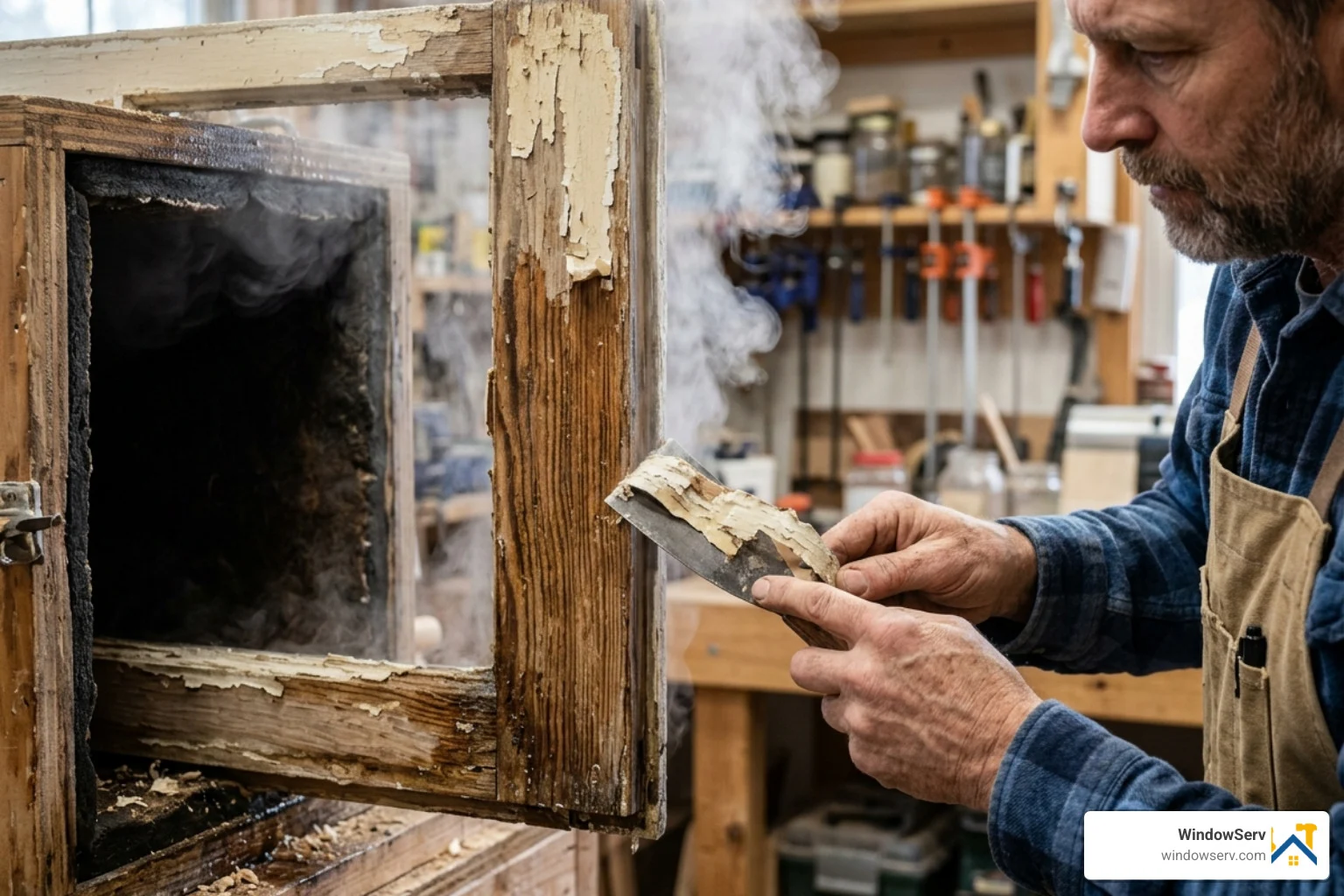
Paint Removal: We use steam stripping or infrared heat to remove layers of old (and often lead-based) paint without damaging the wood fibers.
-
Wood Repair: We address any rot using a combination of “Dutchman” repairs (replacing a small section with matching old-growth wood) and high-strength consolidants.
-
Glass and Glazing: We clean the original wavy glass (or replace broken panes with period-accurate glass) and bed it in fresh linseed oil putty.
-
Hardware and Weights: We strip the pulleys, polish the brass, and replace old cotton ropes with durable brass chains.
-
Finishing: The sashes are primed and painted with high-quality exterior finishes before being reinstalled with modern weatherstripping to stop drafts.
This comprehensive approach is part of our general window services, ensuring that every component—from the pulleys to the sills—works in harmony.
Frequently Asked Questions about Wood Window Restoration
When is the best time of year to restore windows?
In New Jersey, the best time for restoration is during temperate weather—late spring, summer, and early fall. We generally avoid the dead of winter for on-site work because the window openings must be temporarily covered with plywood or plastic while the sashes are in the shop. Scheduling your project during “off-peak” months (late autumn) can sometimes result in better lead times.
How can I save money on a large restoration project?
If the total cost to restore wood windows for your entire home is outside your current budget, consider phasing the project. We often “triage” windows for our clients, identifying the ones in the worst condition or the ones in high-traffic rooms (like the kitchen or living room) to restore first. You can also save by handling the final interior painting yourself or by organizing a “bulk” project with a neighbor.
Is it cheaper to restore or replace wood windows?
Upfront, a basic vinyl replacement is often cheaper. However, a high-quality wood replacement that matches your home’s architecture can cost several thousand dollars per opening, which is significantly more than restoration. When you consider that restoration lasts twice as long as replacement, the “cost per year” of restoration is much lower. If you’re dealing with minor issues, you might only need a window repair rather than a full restoration, which can save you thousands.
Conclusion
Restoring your home’s original windows is an investment in both the past and the future. While the cost to restore wood windows requires a commitment, the benefits—architectural beauty, 30% energy savings, and a 70% return on investment—far outweigh the temporary convenience of modern replacements.
At WindowServ, we are proud to be New Jersey’s local experts. Whether you are in a brownstone in Jersey City, a colonial in Westfield, or a historic estate in Tenafly, our team is dedicated to saving your original frames and providing a satisfaction guarantee. We don’t just fix windows; we preserve the character of your home.
Ready to see what’s possible for your home? Start your project with professional window restoration today and let us help you bring your windows back to life.