
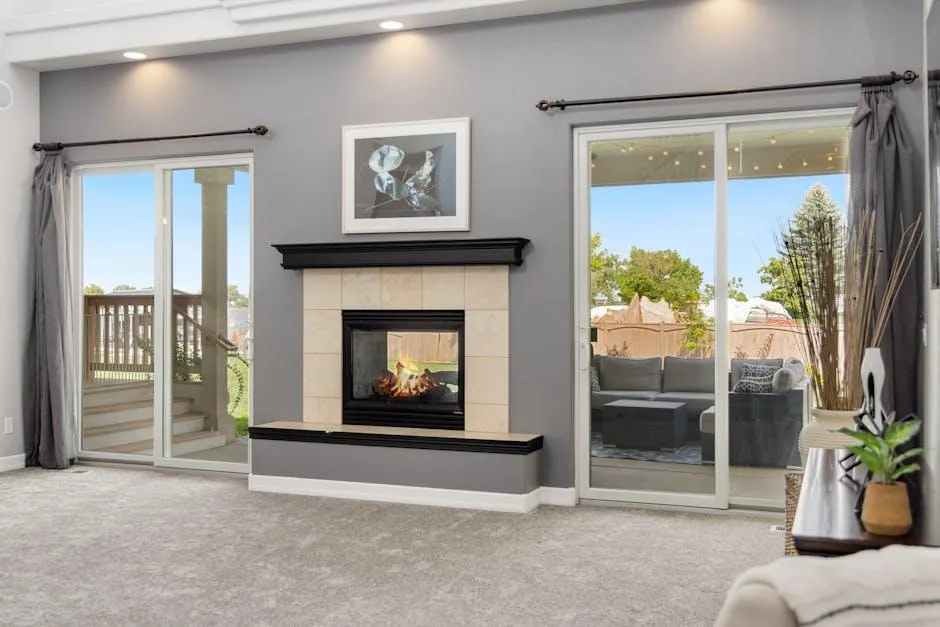
Why Patio Door Frame Replacement Is Worth Getting Right the First Time Patio door frame replacement is the process of removing a damaged or worn door frame and installing a
Why Patio Door Frame Replacement Is Worth Getting Right the First Time
Patio door frame replacement is the process of removing a damaged or worn door frame and installing a new one — either as a full frame swap or a drop-in frame kit — to restore your door’s seal, structure, and energy performance.
Here’s a quick overview of what the process involves:
Step What It Means Identify the problem Rot, warping, drafts, or sticking operation Choose a replacement type Full frame removal or insert/frame kit Pick your material Vinyl, wood, fiberglass, or galvanized steel Measure the opening Typically 72 in. x 80 in. for standard residential doors Install and seal Set, shim, secure, and weatherproof the new frame
A patio door can last 20 to 30 years — but only with the right frame keeping it together. When that frame starts to fail, your energy bills climb, drafts creep in, and your door becomes a security risk.
For many New Jersey homeowners, a failing patio door frame isn’t just an annoyance. It’s a slow leak in your home’s comfort and efficiency that compounds every season you ignore it.
This guide walks you through the entire replacement process — from spotting early warning signs to sealing the finished frame — in plain language you can actually use.
I’m Feiruz Gabibov, Chief Operating Officer of WindoServ, where I’ve overseen hundreds of window and door projects across New Jersey, including complex patio door frame replacement jobs on everything from vinyl inserts to full structural frame rebuilds. That hands-on operational experience shapes every recommendation in this guide.
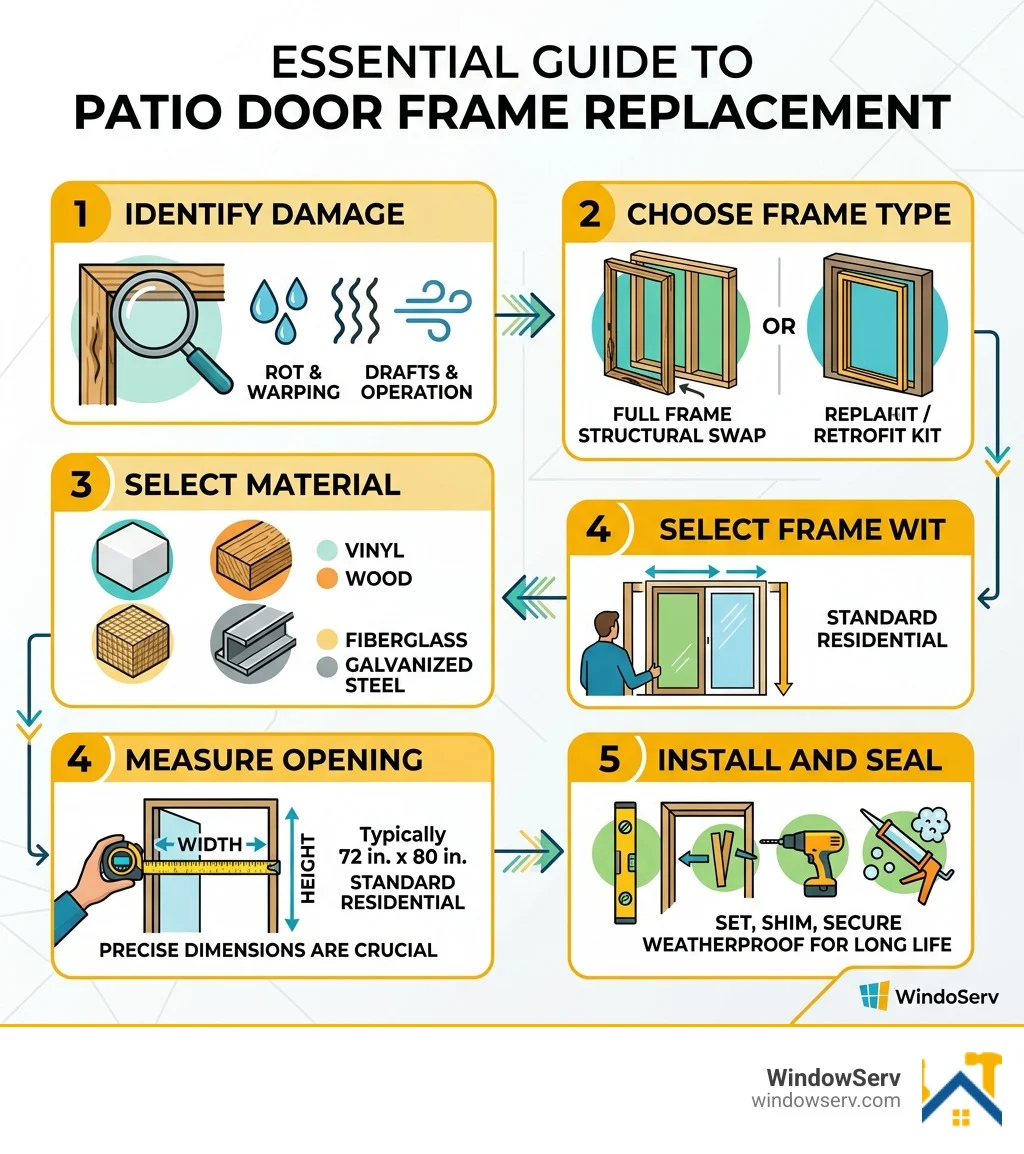
Essential Guide to Patio Door Frame Replacement
When we talk about patio door frame replacement, we are looking at the backbone of your home’s transition to the outdoors. The frame is what holds the heavy glass panels in place, ensures they glide smoothly, and keeps the New Jersey weather where it belongs—outside.
There are two primary paths you can take: a full frame replacement or using an insert frame kit. A full frame replacement is the “nuclear option.” It involves stripping the opening down to the structural studs. This is necessary if you have significant wood rot or structural damage. On the other hand, an insert or replacement frame kit is designed to fit into the existing structural opening, often allowing you to upgrade the frame material without rebuilding the entire wall section.
Maintaining the structural integrity of your home is our top priority. If the rough opening—the space between the wall studs—is compromised by moisture, a simple kit won’t fix the underlying issue. For more complex situations, understanding Patio Door Frame Components and Replacement Parts is essential before you start swinging a hammer. If you’re feeling overwhelmed by the technicalities, you can always find more info about local door repair to see how the pros handle it in your neighborhood.
Signs You Need a Patio Door Frame Replacement
How do you know it’s time to move past simple repairs? In our experience across Bergen and Essex counties, the most common culprit is wood rot. If you can poke a screwdriver into your wooden frame and it feels like a sponge, the structural integrity is gone.
Other red flags include:
-
Warping: Sunlight and moisture can cause frames to bow, making the door nearly impossible to slide.
-
The Dime Rule: If you can slide a dime through a gap in your door seal, it’s large enough for a mouse to enter and definitely large enough to let your expensive AC escape.
-
Drafts and Condensation: If you feel a breeze while the door is shut or see fog trapped between glass panes, your seals have failed.
-
Sticking Operation: If opening your door feels like a gym workout, the frame may have sagged or the tracks may be permanently damaged.
Most sliding glass doors have a lifespan of 20 to 30 years. If yours is hitting that May 2026 milestone and showing these signs, it’s time for a change.
Measuring for Your Patio Door Frame Replacement
Precision is everything. A mistake of even a quarter-inch can turn a weekend DIY project into a week-long headache. To get it right, we recommend measuring the “rough opening”—the space from stud to stud.
-
Width: Measure at the top, middle, and bottom. Use the smallest measurement.
-
Height: Measure from the subfloor to the header at the left, center, and right. Again, use the smallest number.
-
Corner-to-Corner: Measure diagonally. If the two numbers aren’t almost identical, your opening is “out of square,” and you’ll need to use shims during installation to level things out.
Standard residential sizes are usually 72 in. x 80 in., which fits most 6-foot sliding doors. However, specialty applications exist. For instance, a shipping container-specific frame often measures around 65 3/16″ x 85 1/2″. Also, pay attention to glass thickness; older units often used 3/4″ glass, while many modern replacement glass frames are designed for 1/2″ or 1″ units.
Choosing Materials and Frame Kits
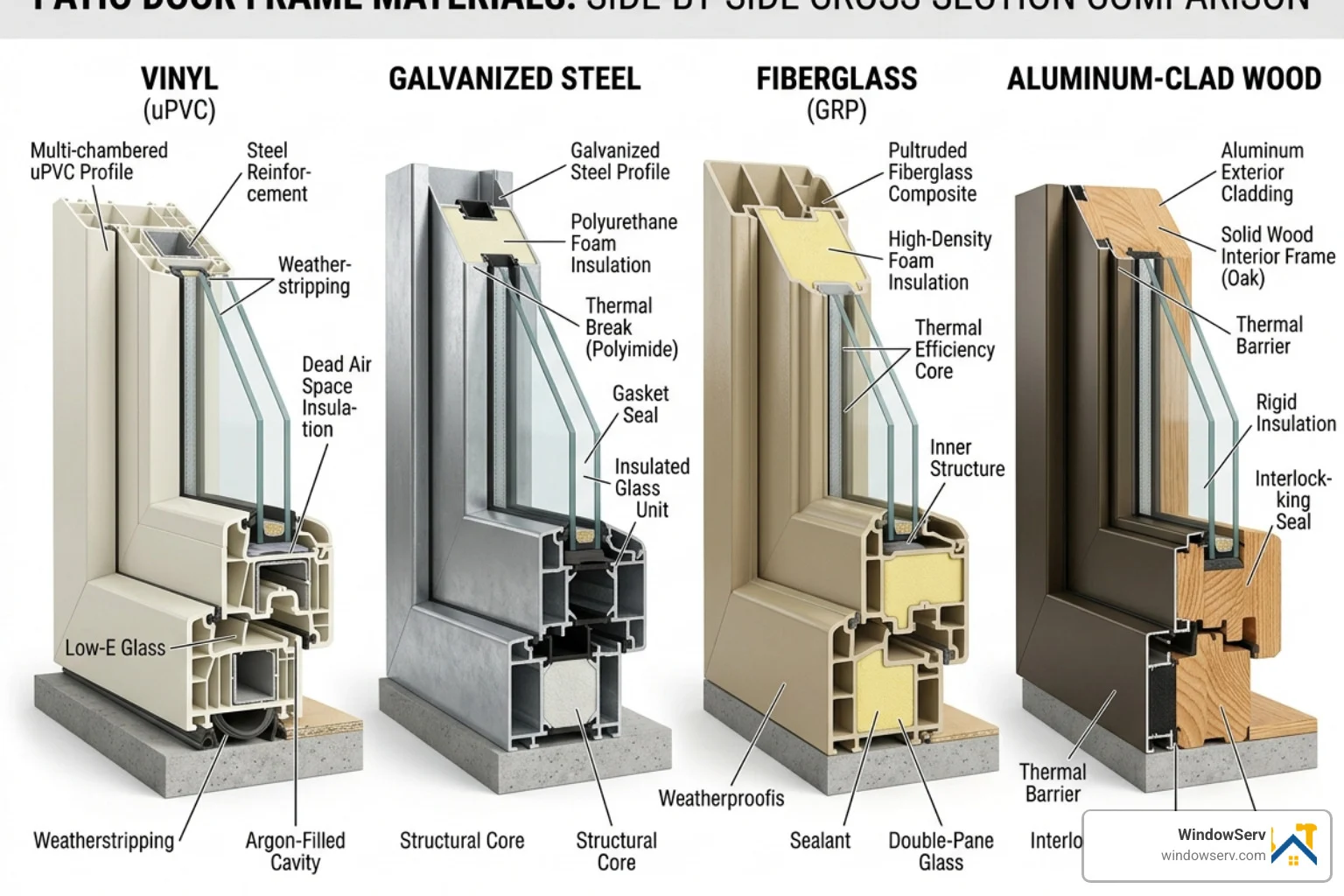
The material you choose dictates how much work you’ll have to do in the future. In patio door frame replacement, vinyl is the undisputed king of low maintenance.
-
Vinyl: Affordable (typically $300 to $1,200) and resistant to rot. The American Craftsman 50 Series is a popular choice for its energy efficiency and “universal handing,” meaning you can decide which way the door slides during installation.
-
Galvanized Steel: Often used in industrial settings or shipping container conversions. These are incredibly durable and weather-resistant, though heavier (around 44.8 lbs for a standard kit).
-
Fiberglass: The premium choice. It mimics the look of wood but offers superior strength and thermal performance.
-
Aluminum-Clad: These give you the beauty of a wood interior with a tough, weather-resistant aluminum exterior.
For a deeper dive into what works best for NJ climates, check out our guide on High-Performance Patio Door Materials and Installation.
Comparing Full Frame vs. Pocket Replacement
We often get asked if a “pocket” or “insert” replacement is enough. A pocket replacement involves leaving the old frame in place and sliding a new, slightly smaller frame into it. It’s faster and cheaper, but it reduces your glass area.
A full frame replacement involves removing the sashes, the frame, and the exterior trim (like brickmould). While more complex, it is the only way to ensure that any hidden rot in the walls is addressed. If you’re dealing with a home in a place like Ridgewood or Montclair with older wood-frame construction, a full frame swap is usually the wiser long-term investment.
Specialized Frames for Unique Openings
Not every door is a standard residential slide. We see a growing trend in shipping container modifications for home offices or workshops. These require specialized 14-gauge galvanized steel frames that can be mounted directly to the container’s corrugations without heavy modification.
For masonry or concrete walls—common in some Jersey City or Hoboken developments—you might need a “flush flange” frame. These are designed to sit flat against the masonry, creating a water-tight seal without the need for traditional wood siding trim.
Step-by-Step Installation Instructions
Ready to get your hands dirty? Before you start, gather your tools: a level, shims, a drill, high-quality silicone caulk, and your frame kit.
Preparing the Opening and Removing the Old Frame
-
Remove the Sashes: Carefully lift the sliding panel out of the track. You may need to adjust the rollers to give it enough clearance.
-
Extract the Trim: Use a pry bar to remove the interior casing and the exterior brickmould.
-
Cut the Frame: If the old frame is stubborn, you may need to use a reciprocating saw to cut through the nails or screws holding it to the studs.
-
Clean and Flash: Once the frame is out, vacuum the debris. Apply a self-adhesive flashing tape to the sill (the bottom of the opening). This is your first line of defense against water. For stucco walls, ensure you have the proper water-management liners in place.
Setting and Securing the New Frame
-
Dry Fit: Lift the new frame into the opening to ensure it fits.
-
Apply Caulk: Run three thick beads of 100% silicone caulk along the sill.
-
Set the Frame: Place the frame in the opening.
-
Level and Plumb: This is the most critical step. Use shims behind the screw holes to ensure the frame is perfectly level (horizontal) and plumb (vertical). If it’s crooked, the door won’t slide.
-
Secure: Drive the provided hex head screws through the frame and shims into the wall studs.
-
Seal the Perimeter: Fill the gap between the frame and the wall with low-expansion foam, then apply a clean bead of caulk around the exterior.
Costs and Energy Efficiency Factors
Let’s talk numbers. Patio door frame replacement isn’t just about the parts; it’s about the long-term value.
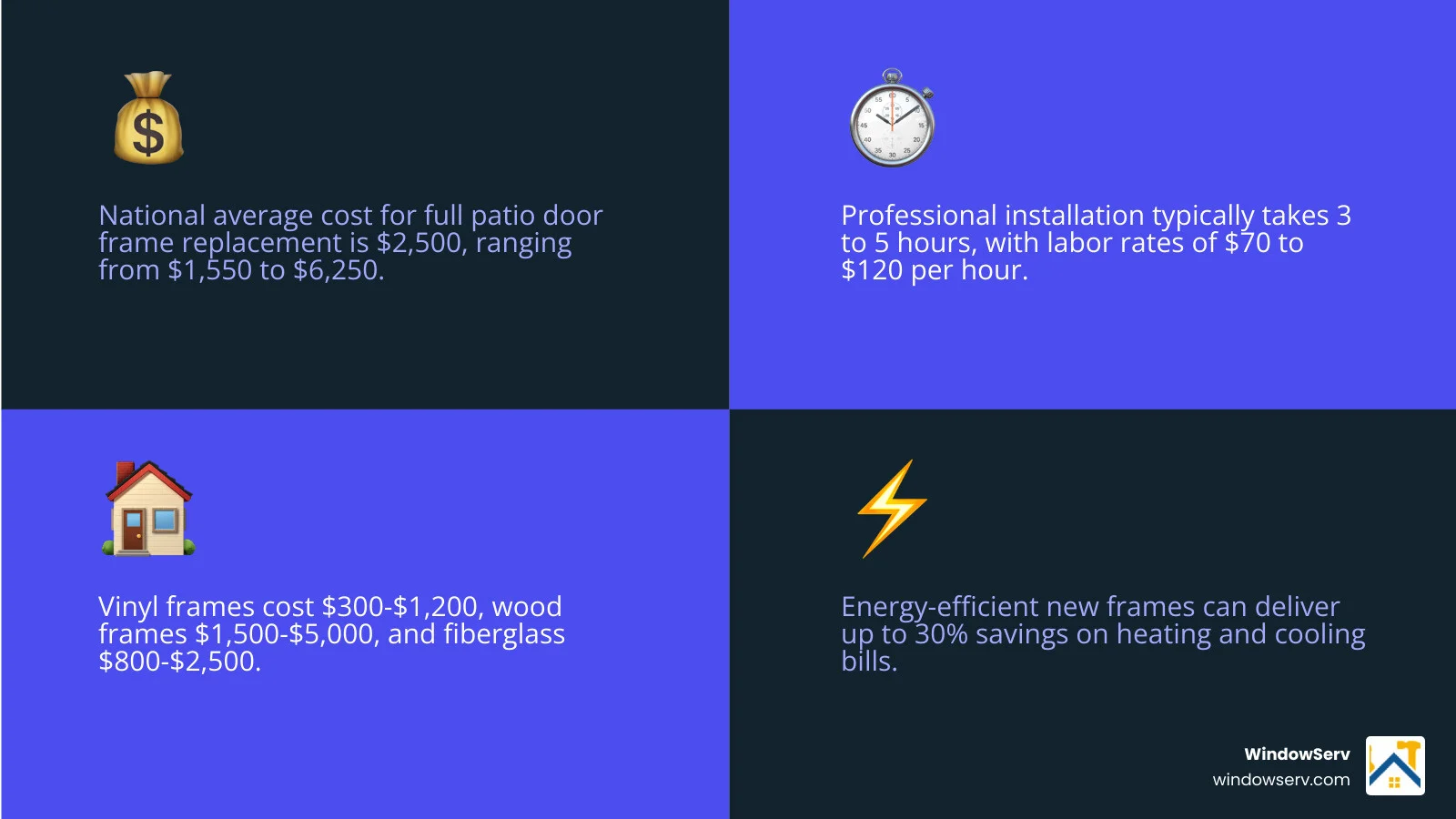
The national average for a full patio door replacement is approximately $2,500, but the range is wide ($1,550 to $6,250). Labor typically accounts for $400 to $1,400 of that, with pros charging between $70 and $120 per hour. Most installations take 3 to 5 hours.
Impact of Energy-Efficient Features
A new frame can lead to up to 30% energy savings. Look for these specs:
-
Low-E Glass: A microscopic coating that reflects heat while letting light through.
-
U-Factor: Measures heat loss. In New Jersey’s cold winters, you want a lower U-factor.
-
SHGC (Solar Heat Gain Coefficient): Measures how much heat from the sun the door lets in.
-
Weatherstripping: High-quality pile or rubber seals prevent air leaks.
Handling Different Wall Facades
The exterior of your home dictates your installation method:
-
Brick: You often use a “block frame” that fits into the masonry opening without disturbing the surrounding brick.
-
Lap Siding: You’ll likely need to remove some siding or trim to properly flash the door.
-
Stucco: Requires a “flush flange” door that seals directly against the stucco surface to prevent moisture from getting behind the facade.
-
Masonry: Often requires “wood bucks”—wooden frames anchored into the concrete—that the door frame then attaches to.
Frequently Asked Questions about Patio Door Frames
Can I replace just the frame without the glass panels?
Technically, yes, if you can find a replacement frame kit that is identical to your existing one. However, most modern kits come as a “system.” If your frame is rotted, there’s a high chance your glass seals are also aged. Often, it’s more cost-effective to replace the whole unit to ensure the warranty covers everything.
Is DIY installation better than hiring a professional?
If you are handy and have a helper (those glass panels are heavy!), you can save $500 to $1,000 in labor. However, be warned: many manufacturers will void the warranty if the door isn’t installed by a licensed professional. If the door isn’t perfectly level, it will leak or fail prematurely, costing you more in the long run.
How do I maintain my new patio door frame for longevity?
-
Clean the Tracks: Use a vacuum and a damp cloth every few months. Dirt is the #1 killer of door rollers.
-
Lubricate: Use a silicone-based spray on the tracks. Never use WD-40, as it attracts gunk.
-
Inspect Seals: Check the weatherstripping once a year and replace it if it’s cracked or flattened.
Conclusion
Replacing your patio door frame is one of the most impactful home improvement projects you can undertake. It boosts your home’s curb appeal, slashes your energy bills, and makes your living space more functional. Whether you’re tackling a 72 in. x 80 in. vinyl kit in Westfield or a complex stucco installation in Hoboken, the key is preparation and precision.
At WindowServ, we pride ourselves on being local NJ experts. We don’t just swap parts; we provide comprehensive solutions that save original frames whenever possible and guarantee up to 30% energy savings. If you’ve discovered that your DIY project is a bit more than you bargained for, or if you simply want the peace of mind that comes with a satisfaction guarantee, we’re here to help.
Don’t let a drafty, sticking door ruin your summer breeze or hike up your winter heating bill. Schedule your professional window replacement today and let us handle the heavy lifting.