
Why Your Single Hung Window Won’t Stay Up — And What to Do About It Single hung window balance repair is the process of adjusting or replacing the internal spring
Why Your Single Hung Window Won’t Stay Up — And What to Do About It
Single hung window balance repair is the process of adjusting or replacing the internal spring mechanism that holds your window’s bottom sash in place when open.
Here’s a quick overview of what’s involved:
-
Identify the problem — sash slams shut, is hard to lift, or moves unevenly
-
Locate your balance type — spiral, block-and-tackle, constant force coil, or cord-and-weight
-
Remove the sash — disengage the pivot shoes or take-out clips to access the balance
-
Replace or adjust the balance — swap out broken parts or recalibrate spring tension
-
Reinstall and test — confirm the sash stays up and moves smoothly
Most repairs take a couple of hours and cost far less than a full window replacement.
If your window suddenly slams shut the moment you let go — or feels like you’re lifting a bag of bricks every time you open it — your balance system is almost certainly the culprit. The balance is the quiet workhorse inside your window frame. It counteracts the weight of the sash so the window stays exactly where you put it. When it fails, the whole window becomes frustrating, and potentially unsafe.
The good news? This is one of the more fixable window problems out there. You don’t need to replace the whole window. In most cases, you just need to replace or adjust a small mechanical component — once you know what type you have and how to access it.
I’m Feiruz Gabibov, COO of WindowServ, a New Jersey-based window repair company where single hung window balance repair is one of the most common service calls we handle across older homes in the region. In this guide, I’ll walk you through everything our technicians do — so you can tackle it yourself or know exactly what to expect when you call a pro.
Understanding Your Window Balance System
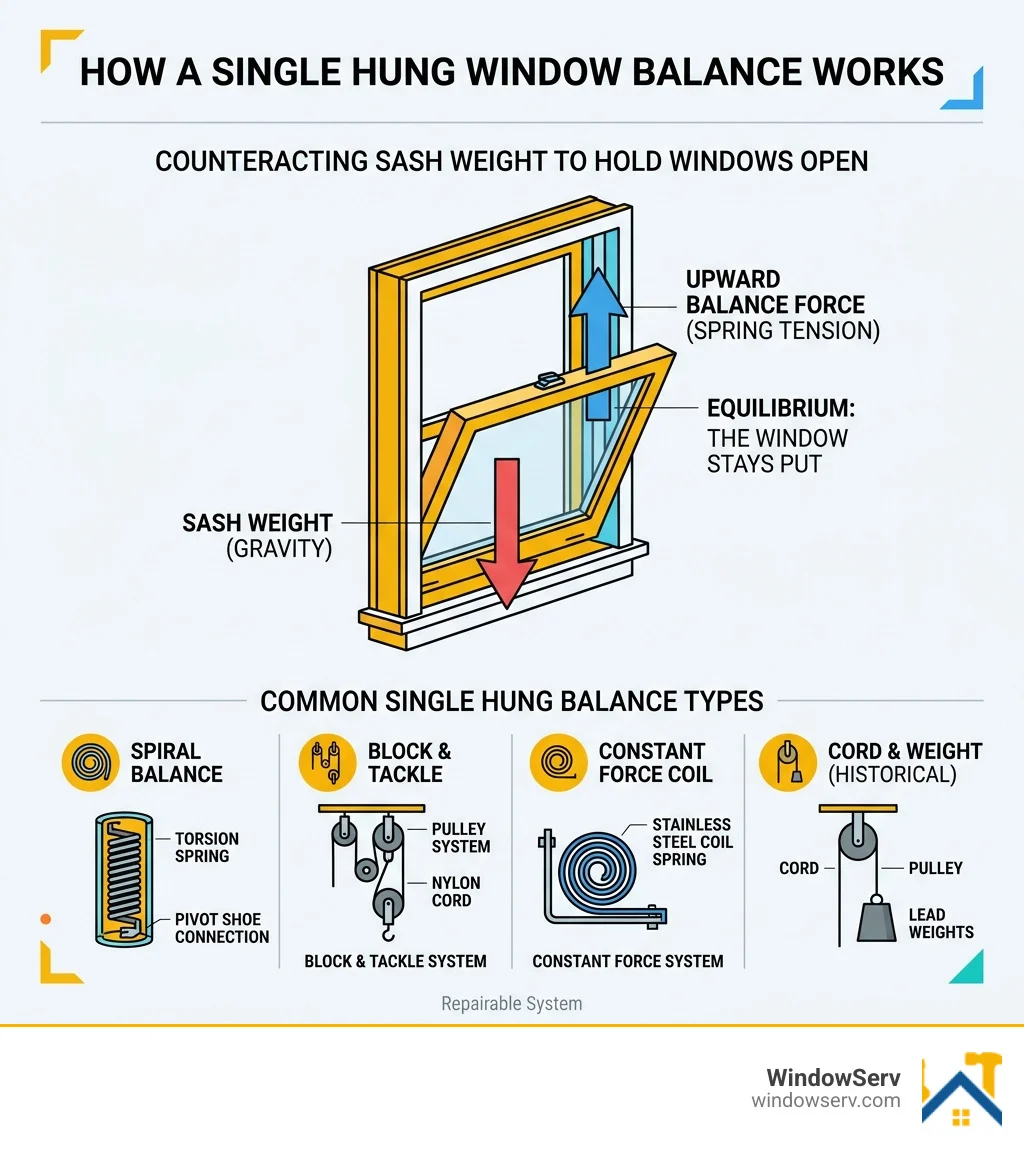
To fix a window, you first have to understand the “magic” that keeps it hovering in mid-air. In a single hung window, only the bottom sash moves. Inside the side channels (the jambs) of the window frame, there are hidden mechanisms called balances.
These devices use springs, pulleys, or weights to provide an upward force that exactly matches the downward pull of gravity on the glass and wood/vinyl sash. When these are working perfectly, you can move the window with a single finger. When they fail, that balance is lost.
At WindowServ, we specialize in Window Balance Replacement and Repair, and we’ve found that most New Jersey homes built in the last 30 years use one of three modern systems: block-and-tackle, spiral, or constant force. Older historic homes in areas like Ridgewood or Montclair might still feature the classic cord-and-weight system.
Identifying Signs That You Need single hung window balance repair
How do you know it’s the balance and not just a sticky track? Look for these “cries for help” from your windows:
-
The Guillotine Effect: You open the window, let go, and it slams shut immediately. This usually means the spring has snapped or the cord has broken.
-
The Heavy Lift: The window feels twice as heavy as it used to. This indicates the tension in the balance has weakened or the mechanism is jammed.
-
The Crooked Sash: One side of the window sits higher than the other. This typically happens when the balance on one side has failed while the other is still holding on.
-
Visible Debris: If you see bits of frayed string, metal shavings, or a loose “corkscrew” rod sticking out of the side of your window, it’s time for Window Restoration.
-
Strange Noises: Clicking, popping, or grinding sounds when moving the sash are clear indicators of mechanical failure inside the jamb.
Common Balance Types in Modern Windows
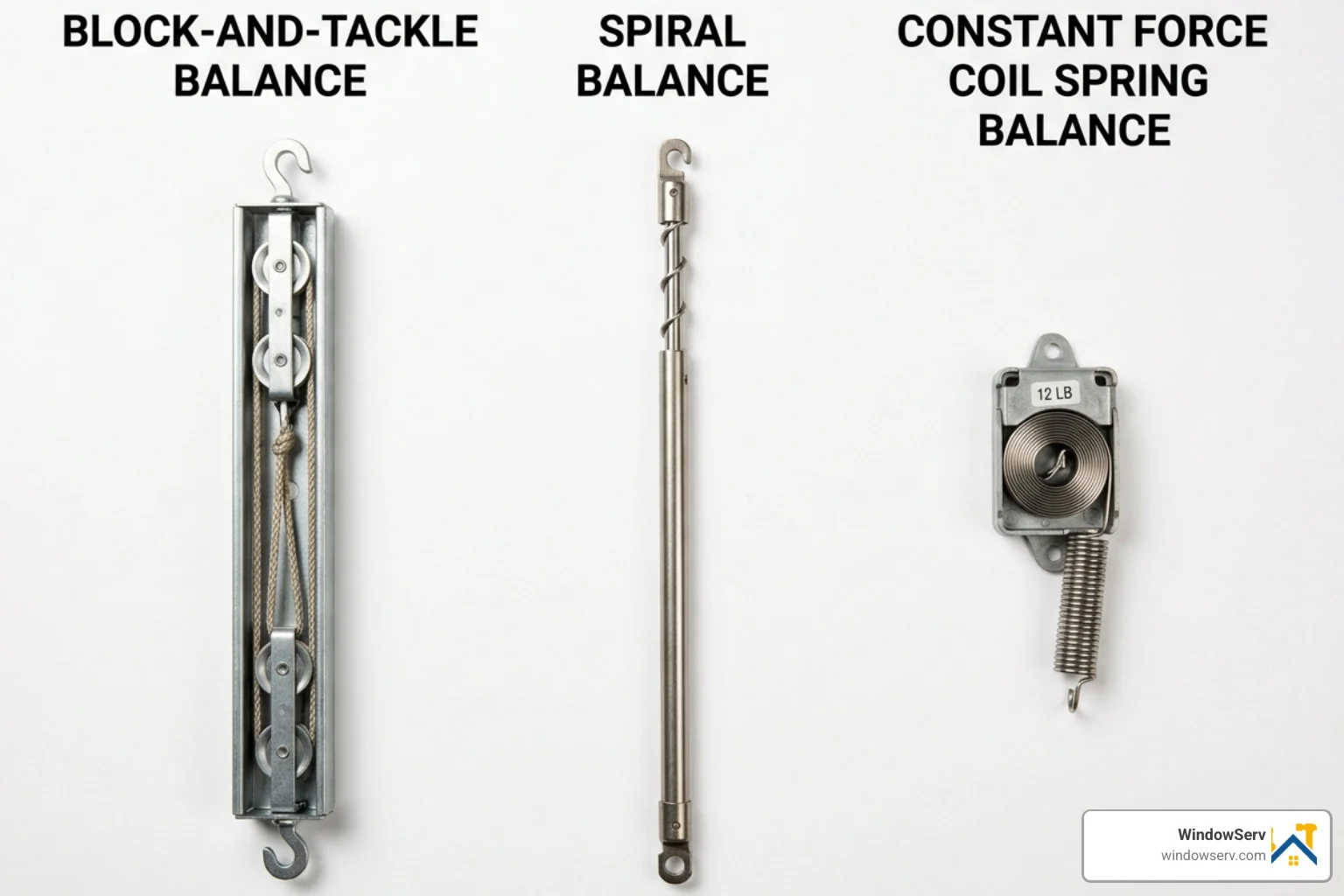
Before you order parts, you need to know what you’re looking at. Here are the “Big Four” you’ll encounter during single hung window balance repair:
-
Block-and-Tackle (Channel) Balances: These look like a metal U-shaped channel. Inside, there is a series of pulleys and a high-tension spring. A cord exits the bottom and attaches to the sash. These are incredibly common in MI Windows and Andersen units.
-
Spiral Balances: These consist of a metal tube containing a coiled spring and a twisted “spiral” rod. You’ll often see these in vinyl or aluminum windows. They are adjustable, which is a big plus.
-
Constant Force (Coil) Balances: These use a stainless steel spring that looks like a heavy-duty tape measure. They are very durable and are often found in newer vinyl windows.
-
Cord-and-Weight: Found in historic NJ homes, these use a lead or iron weight hidden behind the wall, connected to the sash by a cotton cord or metal chain over a pulley. If your cord is snapped, you’ll need Window Spring Replacement or cord restoration.
Essential Tools and Safety for single hung window balance repair
Working with window balances means working with stored energy. Those springs are under significant tension, and if they snap or release unexpectedly, they can cause injury.
Safety First: Always wear safety glasses and sturdy work gloves. If a spiral balance rod spins out of control, it can catch your fingers or eyes.
For a successful DIY single hung window balance repair, gather these tools:
-
Flat-head and Phillips screwdrivers: For removing stops and clips.
-
Needle-nose pliers: Essential for grabbing cords or locking shoes.
-
Spiral Balance Tension Tool: If you have spiral balances, this specialized tool is a lifesaver (though pliers can work in a pinch).
-
Silicone-based lubricant: To ensure everything moves smoothly once repaired. Avoid petroleum-based grease as it attracts New Jersey dust and grime.
-
Putty knife: To gently pry off window stops without damaging the paint.
If this sounds like a lot of gear for a Saturday afternoon, Window Repair is often more about precision than brute force.
Step-by-Step Guide to Replacing Balances
In April 2026, as the NJ spring weather kicks in, many homeowners find their windows won’t stay open for that fresh breeze. Knowing the lifespan of your hardware helps you decide whether to repair or replace.
Step-by-Step Instructions for single hung window balance repair
While every brand is slightly different, the general process for single hung window balance repair follows these steps:
-
Remove the Sash: In most single hung windows, you must first raise the sash a few inches. Look for “take-out clips” on the side tracks—these are small metal or plastic tabs. Flip them out. Now, lift the sash up until the balances engage the clips, then pull the sash toward you.
-
Identify the Balance: Once the sash is out, you’ll see the balances in the side jambs. For block-and-tackle systems, they are usually held in by a single screw at the top.
-
Disconnect the Balance: Carefully unscrew the balance. If it’s a block-and-tackle, keep a firm grip on it so it doesn’t snap upward. Unhook the cord from the “sash shoe” (the plastic part that slides in the track).
-
Order the Correct Part: Look for stamped numbers on the metal channel or the spiral tube. These codes (like “28 3” or “1020”) tell you the length and the weight capacity. You must match these exactly!
-
Install the New Balance: Hook the new balance into the shoe, pull it up to the mounting hole, and screw it back into place.
-
Reinstall the Sash: Reverse the removal process. Ensure the sash pins engage with the shoes properly. If the window is lopsided, one of the pins missed the shoe. If the sash is damaged, you might need Window Sash Replacement.
Adjusting Spiral Balance Tension
Spiral balances are unique because they don’t always need replacing—sometimes they just need a “tune-up.”
If your window is falling down, the spring needs more tension. Using your tension tool, unhook the spiral rod from the shoe at the bottom. Turn the rod clockwise (usually 2-3 full turns) to increase the lift. If the window is too hard to close, turn it counter-clockwise to release tension. This Window Adjustment can often save you the cost of new parts.
Troubleshooting and Post-Repair Maintenance
Once the single hung window balance repair is complete, don’t just walk away! A little maintenance goes a long way in preventing future failures.
-
Clean the Tracks: Use a vacuum and a damp cloth to remove grit and dead bugs from the jambs. Debris is the #1 killer of window balances.
-
Lubricate: Apply a light coat of dry silicone spray to the tracks. This reduces the friction the balance has to fight against.
-
Check Weatherstripping: While the sash is out, inspect the fuzzy or rubber seals. Replacing worn weatherstripping can improve your window’s U-factor by up to 20%, saving you 10-15% on heating costs in chilly Essex or Hudson County winters.
-
Test the Operation: Open and close the window several times. It should stay put at any height. If it still creeps down, you may need another turn of tension or a higher-rated balance.
Frequently Asked Questions about Window Balances
How do I find the correct replacement balance for my window?
Look for the “DNA” of the balance. On block-and-tackle systems, there is a four-digit number stamped on the metal. On Andersen 100 Series, this number is etched on the part. For spiral balances, measure the length of the metal tube and note the color of the plastic “tip” (red, white, blue, or black), which indicates the weight rating.
Can I repair a window balance without removing the sash?
Generally, no. To safely access the tensioned springs and mounting screws, the sash must be removed. Attempting to fix a balance with the sash in place is a recipe for broken glass or pinched fingers. If your glass is already compromised, consider Window Glass Replacement before attempting balance repairs.
When should I call a professional for window balance issues?
DIY is great, but some situations require an expert touch. You should call WindowServ if:
-
The window frame has significant Window Wood Rot Repair needs.
-
The window is extremely large or heavy (like a large picture window with a moving sash).
-
The balance system is an old cord-and-pulley hidden inside the wall.
-
You’ve tried adjusting the tension and the window still won’t stay up—this could indicate a warped frame or misaligned tracks.
Conclusion
A window that stays open when you want it to is a basic comfort every New Jersey homeowner deserves. Whether you’re in a historic brownstone in Hoboken or a modern home in Summit, single hung window balance repair is an essential skill for maintaining your home’s value and energy efficiency.
By following this guide, you can restore your windows to “like-new” operation, extending their lifespan by 10-15 years. However, if you find yourself staring at a tangled mess of springs and cords, don’t sweat it. At WindowServ, we provide professional Window Balance Replacement and Repair and Professional Window Installation across Bergen, Middlesex, Monmouth, and beyond.
We’re here to ensure your windows are safe, efficient, and easy to use. Contact us today for a consultation, and let’s get those windows gliding again!