
Why Soundproof Secondary Glazing Is One of the Smartest Upgrades for Noisy Homes Soundproof secondary glazing is a retrofit system that adds a second independent pane of glass inside your
Why Soundproof Secondary Glazing Is One of the Smartest Upgrades for Noisy Homes
Soundproof secondary glazing is a retrofit system that adds a second independent pane of glass inside your existing window — creating an air gap that blocks sound before it enters your home.
Quick answer for busy homeowners:
What you want to know The short answer What is it? A second glazing layer fitted inside your existing window frame How much noise does it block? Up to 54 dB — roughly 80% of outside noise Is it better than double glazing? Yes, for soundproofing — the large air gap outperforms standard double glazing Can it go over existing double glazing? Yes, as long as there is enough interior space Is it suitable for older or listed homes? Yes — it is reversible and does not alter the exterior
If you live near a busy New Jersey road, a rail line, or under a flight path, you already know the problem. Traffic noise, sirens, and urban buzz bleed through your windows constantly — and older single-pane windows make it far worse. Windows are, in fact, the primary acoustic weak point in most homes. Even well-sealed walls can be undermined by a single thin pane of glass vibrating in its frame.
The good news is that you do not need to replace your windows entirely to solve it. Secondary glazing is widely regarded as the most effective retrofit solution for noise reduction — outperforming many modern double or triple glazing upgrades in real-world conditions.
I’m Feiruz Gabibov, COO of WindoServ, and through overseeing window repair, replacement, and installation across New Jersey, I’ve seen how soundproof secondary glazing transforms noisy, uncomfortable rooms into genuinely peaceful spaces. This guide covers everything you need to make the right decision for your home.
The Science Behind Soundproof Secondary Glazing
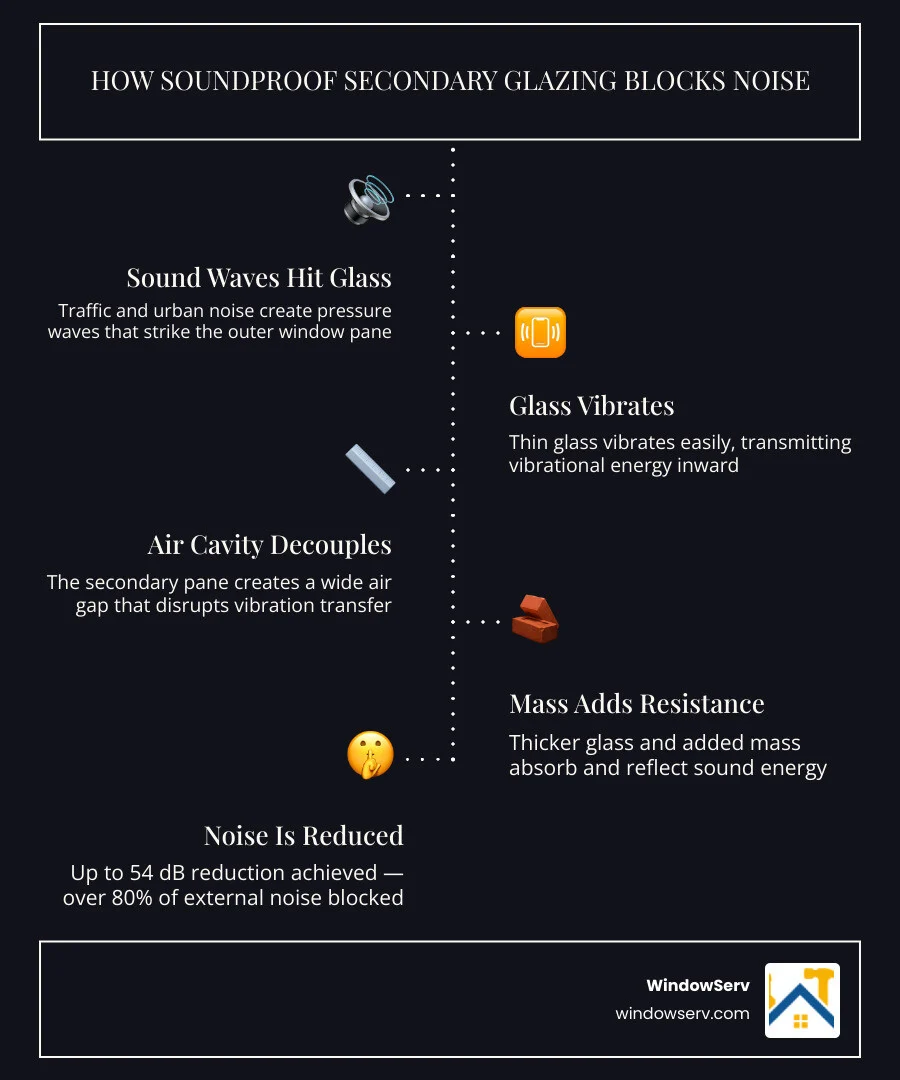
To understand why soundproof secondary glazing works so well, we first have to look at what sound actually is: vibrational energy. When traffic noise or a train passes by, it creates pressure waves in the air. These waves hit your window pane, causing the glass to vibrate. That vibration then passes through the glass and moves the air inside your room, which your ears perceive as noise.
Most windows are the “acoustic Achilles’ heel” of a building because glass is thin and rigid, making it an excellent conductor for these vibrations. To stop this, we use the three pillars of acoustics: mass, decoupling, and dampening.
By adding a secondary window, we aren’t just adding more glass; we are creating a completely independent structure. This is a core part of our Window Soundproofing services. Unlike standard double glazing, where two panes are locked into a single frame, secondary glazing is “decoupled.” This means the vibration of the outer pane isn’t directly passed to the inner pane. For more detail on how these principles apply to city living, check out our Soundproofing Solutions for Urban Homes.
How Decoupling Reduces Noise
Decoupling is the secret sauce of soundproof secondary glazing. In a standard double-glazed unit, the two panes of glass are usually only 16mm to 20mm apart. Because they are so close and held in the same frame, they often vibrate together as a single unit.
Secondary glazing creates a much larger air cavity—often 100mm (about 4 inches) or more. This deep cushion of air acts as a vibration disruptor. By the time the sound waves have moved the outer glass and traveled through that wide air gap, they have significantly less energy to move the secondary pane. Furthermore, professional installation ensures we eliminate “flanking noise”—the sound that “leaks” through tiny gaps in frames or around seals. Even a 1% gap in a window’s seal can reduce its sound insulation by as much as 10dB.
Real-World Performance of Soundproof Secondary Glazing
When we talk about performance, we measure it in decibels (dB). In acoustics, a 10dB reduction is perceived by the human ear as a 50% reduction in volume. Soundproof secondary glazing is capable of delivering a reduction of up to 54dB. In practical terms, this means cutting out roughly 80% of the noise from the street.
These systems are tested against rigorous standards, such as BS 8233:2014, which provides guidance for the control of noise in and around buildings. By meeting these benchmarks and following WHO guidelines for community noise, secondary glazing helps create environments where you can actually sleep, work, and relax. You can read more about achieving these results in our guide to Soundproofing Solutions for Urban Homes.
Critical Factors for Maximum Acoustic Performance
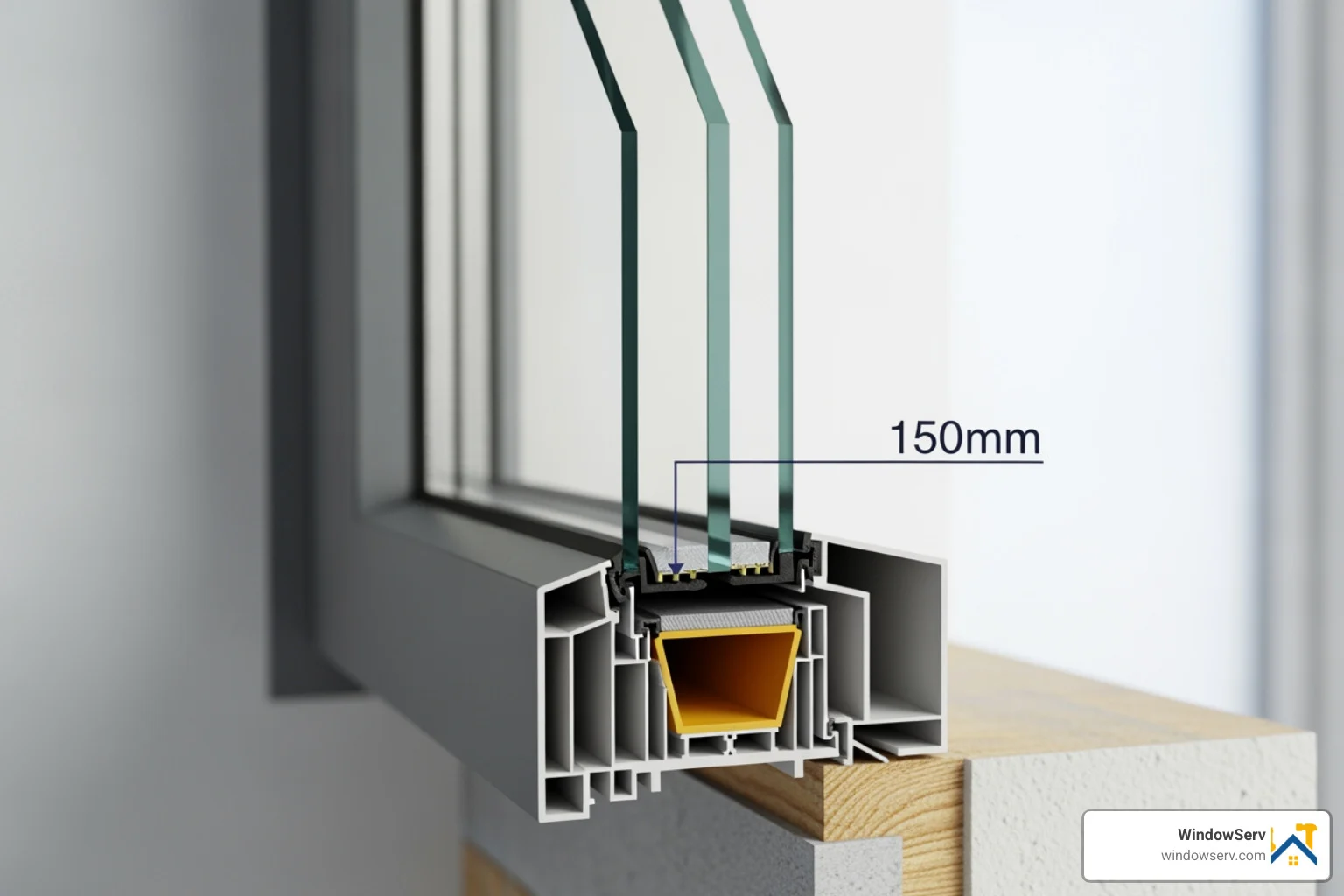
Not all secondary glazing is created equal. If you just slap a piece of plastic over a window, you might see a small improvement, but for true “library quiet” results, three factors are critical: the air gap, the glass thickness, and the seal.
The Role of the Air Cavity
The distance between your existing window and the secondary pane is the most important variable. While a small gap of 10mm to 20mm helps with thermal insulation, it does very little for sound.
For effective noise reduction, we recommend a cavity depth of at least 100mm, with 150mm to 200mm being the “gold standard.” This larger gap is particularly effective at tackling low-frequency noise, like the heavy “thrum” of traffic or the rumble of aircraft. As the cavity increases, the acoustic insulation improves significantly. If you’re looking to dive deeper into these technical specs, our page on Maximizing Noise Reduction with Secondary Glazing explains the physics in detail.
Selecting the Right Glass Type
While standard glass helps, soundproof secondary glazing usually utilizes specialized acoustic laminate glass. This isn’t just “thick glass.” Acoustic laminate (such as 6.8mm or 10.8mm thicknesses) consists of two layers of glass bonded together with a special PVB (Polyvinyl Butyral) interlayer.
This interlayer acts as a dampening membrane. When sound waves hit the glass, the interlayer absorbs the vibration rather than passing it through. For the best results, we often suggest using a different thickness for the secondary glass than what is in your primary window. This prevents “sympathetic resonance,” where two identical panes vibrate at the same frequency, allowing sound to pass through more easily. Discover more about high-performance glass options in our post on Quiet Replacement Windows NJ.
Comparing Secondary Glazing to Replacement Windows
One of the most common questions we get at WindowServ is: “Should I just buy new double-pane windows?” The answer depends on your goals.
Feature Single Glazing Standard Double Glazing Triple Glazing Secondary Glazing Noise Reduction Poor Moderate (approx. 30-35dB) Good (approx. 35-40dB) Excellent (up to 54dB) Thermal Insulation Low High Very High High Cost N/A High Very High Moderate Listed Building Friendly? Yes No No Yes
While new windows are great for energy efficiency, soundproof secondary glazing often wins on noise reduction because of that massive air gap we mentioned earlier. For a full breakdown of your options, visit our Window Replacement Services page.
Why Secondary Glazing Outperforms Double Glazing for Sound
Standard double and triple glazing units are designed primarily for thermal retention. Because the panes are close together and share a single frame, they are acoustically linked. Secondary glazing uses independent frames. This separation breaks the path of the sound. Furthermore, because the secondary unit is installed on the interior “reveal” of the window, it creates a secondary seal that catches any noise that might have leaked through the primary window’s hardware or aged seals. You can learn more about The Benefits of Secondary Frames on our specialized service page.
Benefits of Soundproof Secondary Glazing for Listed Buildings
In many parts of New Jersey, like Montclair or Ridgewood, homes have historic value. Replacing original windows in a listed building or a conservation area is often prohibited or requires expensive, historically accurate replicas that still might not solve the noise issue.
Secondary glazing is a “reversible adaptation.” Because it is installed on the inside and doesn’t change the exterior appearance of the home, it is almost always permitted by local planning boards and heritage organizations. It allows you to keep your beautiful original sash windows while enjoying 21st-century quiet. Plus, it provides a significant boost to your Energy Efficiency Insulation Tips for Homeowners, reducing heat loss by up to 65%.
Selecting the Best System for Your Property
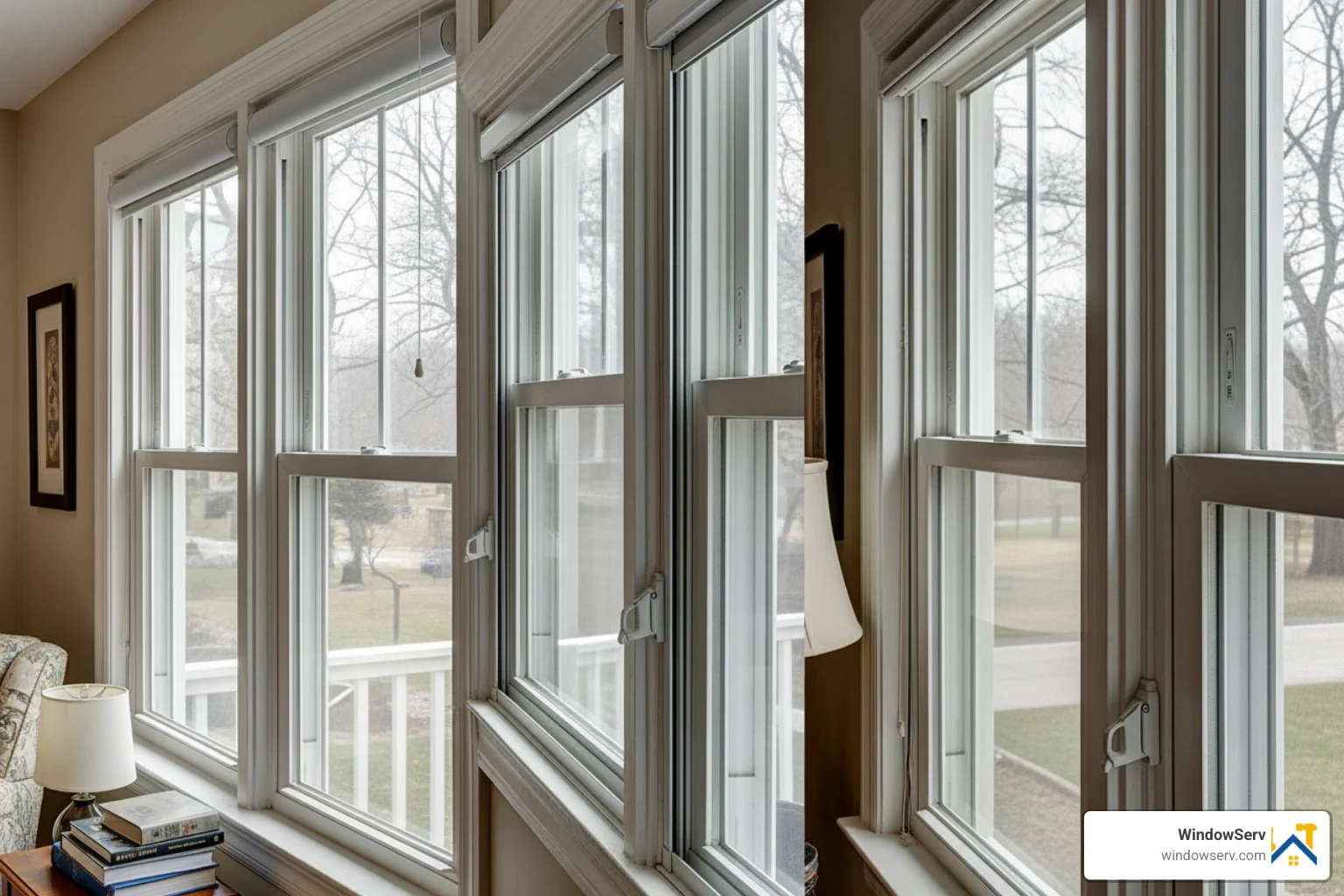
We don’t believe in a one-size-fits-all approach. Your secondary glazing should match the function of your existing windows.
Sliding and Hinged Systems
For most NJ homeowners, horizontal sliders are the go-to for casement windows, while vertical sliders (sash) are perfect for traditional colonial-style homes. These systems use slimline aluminium frames that are virtually invisible from the outside.
Hinged units are excellent for larger windows or where you need full access for cleaning. We often recommend hinged units for high-performance needs because they can accommodate thicker, heavier acoustic double-glazed units (up to 28mm), providing the ultimate barrier against noise. These often feature multi-point locking, which adds an extra layer of security to your home.
Magnetic and Lift-Out Options
If you are looking for a more budget-friendly or DIY-style solution, magnetic systems are an option. These often use lightweight acrylic or polycarbonate panels that “snap” onto the frame using magnetic strips.
While these are great for thermal insulation and reducing draughts, they generally offer lower decibel reduction than a fully sealed, aluminium-framed glass system. For permanent, high-decibel noise problems (like living next to the NJ Transit lines), we always recommend a professional glass installation. You can explore all these varieties at our WindowServ Soundproofing Solutions page.
Installation and Maintenance for Long-Term Success
The most expensive acoustic glass in the world won’t work if it isn’t installed correctly. At WindowServ, we focus on “sealing the envelope.” This involves using twin brush seals and high-performance gaskets to ensure there are zero air gaps.
Maintenance in 2026 is easier than ever. Modern secondary glazing uses durable, powder-coated aluminium that doesn’t rust or peel. To keep them looking new, simply use a non-abrasive cloth with a mild vinegar and water solution. This prevents streaks on your acoustic glazing and keeps the optical clarity high.
Professional Installation Considerations
When we install soundproof secondary glazing, we look at two main methods:
-
Reveal Fix: The unit is fixed into the internal “reveal” (the side walls of the window opening). This is best for soundproofing because it allows for the largest air gap.
-
Face Fix: The unit is fixed directly onto the window frame or the surrounding wall. This is often used when the window sill is too shallow for a reveal fix.
We also ensure the subframe is rigid. A “floppy” frame can vibrate and actually amplify sound, so we use high-quality timber or aluminium subframes to ensure structural integrity.
Maintenance and Care in 2026
By May 2026, sustainability is at the forefront of home improvement. Most aluminium used in our frames is highly recyclable, and the long lifespan of these units (often backed by a 10-year guarantee) makes them a very “green” choice. Beyond cleaning the glass, we recommend a quick lubrication of the sliding tracks or hinges once a year to keep the operation smooth and the seals tight.
Frequently Asked Questions about Soundproof Secondary Glazing
Can I install secondary glazing over existing double glazing?
Absolutely. In fact, this is a common request in modern Jersey City or Hoboken apartments that were built with standard double glazing but are still too noisy. Adding secondary glazing over existing double glazing creates a “triple-glazed” effect with a massive air gap, which can result in near-total silence.
How much space do I need on my window sill for installation?
For a standard slimline system, you generally need about 50mm to 80mm of clear sill space. However, if you want maximum soundproofing (the 150mm+ gap), we can often install a “timber ground” or an extended subframe to create the necessary depth even if your sills are narrow.
Does secondary glazing help with thermal insulation and energy bills?
Yes! While we often install it for noise, the thermal benefits are huge. It creates an additional insulating layer of air that prevents heat from escaping in the winter and keeps the NJ summer heat out. Homeowners can see up to a 10-25% reduction in their heating and cooling bills.
Conclusion
At WindowServ, we believe your home should be your sanctuary. Whether you are dealing with the constant hum of the Garden State Parkway or the bustling streets of Newark, soundproof secondary glazing is the most effective, least intrusive way to reclaim your peace and quiet.
Our local NJ experts specialize in comprehensive solutions that save your original frames while providing up to 30% energy savings and a massive reduction in noise. We serve homeowners across Bergen, Essex, Hudson, Middlesex, Monmouth, and Union counties with a satisfaction guarantee.
Ready to turn down the volume on the outside world? Request a consultation for professional window soundproofing today and let us help you create the quiet home you deserve.