
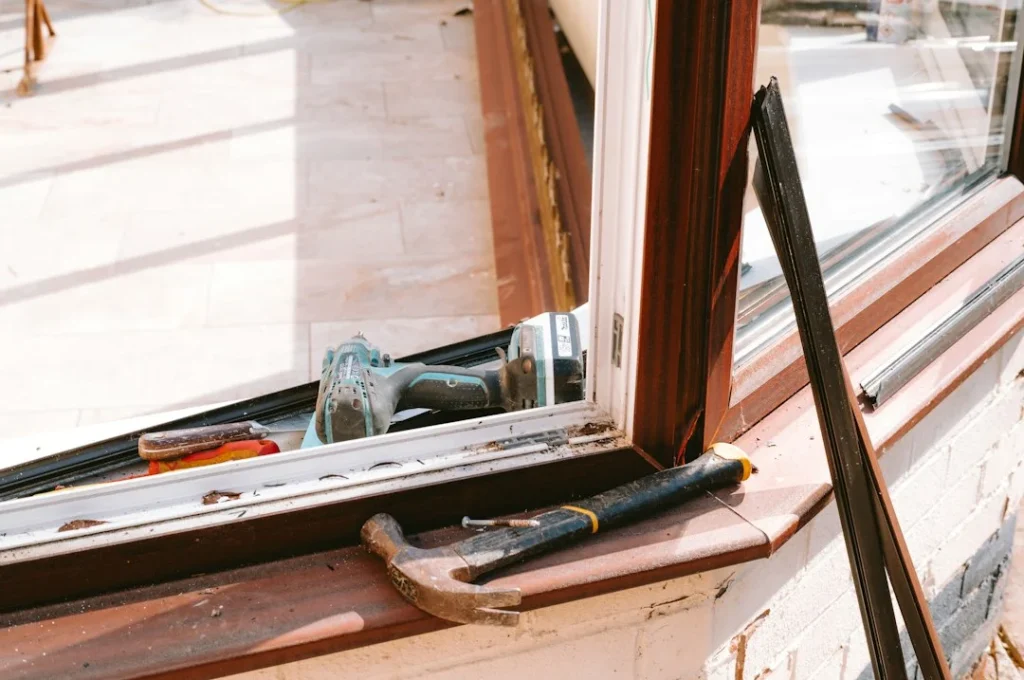
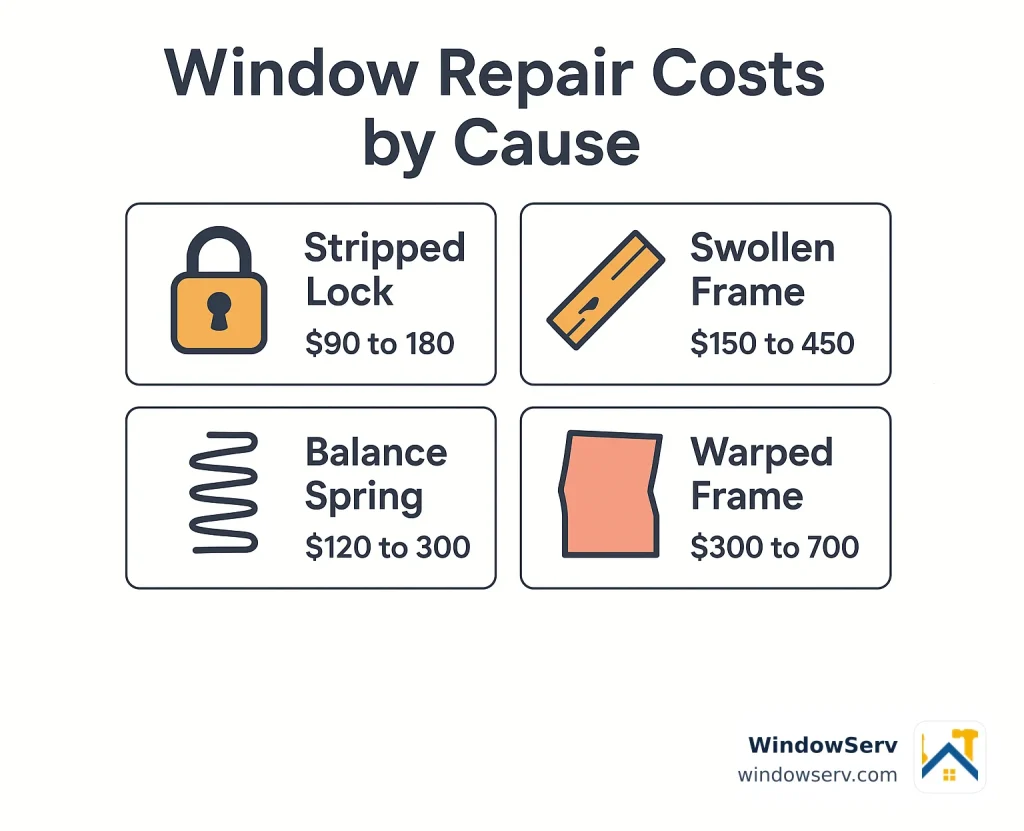
Repair costs for a window that won't close range from $90 for a stripped lock to over $700 for a warped frame, depending on the root cause.
When a Window Won’t Latch, the Fix Depends on the Cause
A window that won’t close or lock properly is rarely a single, simple problem. Our window adjustment technicians diagnose whether it’s a stripped lock, swollen sash, bent track, or failed balance spring before quoting any price. Not sure which one applies to your window? Get a straight, itemized quote before any work begins.
Diagnosis Comes Before a Price Tag
Most window repair quotes homeowners receive are guesses dressed up as estimates. A technician glances at a window that won’t close, assumes the worst, and quotes a full sash or frame replacement without ever checking whether the actual problem is a $15 part. We built our process around the opposite approach: every service call starts with a hands-on diagnostic that identifies which of the five common failure points is actually causing the problem before a single dollar is quoted.
Flat-Rate Pricing, No Surprises
Our technicians quote by the job, not the hour. Once a technician identifies the cause, whether it’s a stripped sash lock or a swollen frame, you’re given a flat price for that specific repair before work starts. If the job turns out to be more involved once the window is opened up, we stop and confirm the new price with you rather than padding the invoice after the fact. This matters because window repair quotes can vary by a factor of ten depending on what’s actually wrong, and a flat-rate structure protects you from being billed for guesswork.
Trucks Stocked for Same-Visit Repairs
Each service vehicle carries a working inventory of the parts that fail most often: sash locks and keepers in the common finishes, block-and-tackle balance springs and constant-force balances in standard sizes, tilt-latch pins, and track hardware for vinyl, wood, and aluminum frames. That inventory means the large majority of adjustment calls, roughly four out of five by our internal tracking, are resolved in one visit rather than requiring a follow-up trip once a part is special-ordered. For homeowners, that translates into one invoice and one afternoon off work instead of two.
Technicians Who Service Windows, Not Just Sell Them
Every technician who performs an adjustment has completed in-house training specific to balance systems, sash geometry, and weatherstripping, not just general handyman carpentry. That distinction matters more than it sounds. A broken balance spring and a misaligned track can produce nearly identical symptoms, a window that won’t stay up or won’t close flush, and misdiagnosing one as the other leads to a repair that doesn’t hold. Our technicians are trained to tell the difference quickly, which is also why we can quote accurately over the phone for straightforward symptoms and confirm the exact price on-site.
A Written Guarantee on Every Adjustment
Every repair comes with a 12-month workmanship guarantee covering the specific fix performed. If a lock we replaced strips again or a track we realigned slips within that window, we return and correct it at no charge. We stand behind adjustments specifically because they’re mechanical work with moving parts, and a guarantee that only covers the labor for thirty days isn’t much of a guarantee at all.
No Pressure Toward Full Replacement
A persistent complaint we hear from homeowners is that previous contractors pushed a full window replacement for a problem that turned out to be a $120 balance spring. We don’t sell replacement windows, which removes the financial incentive to steer every call toward a bigger job. When a frame genuinely is too warped to adjust, or a sash has deteriorated beyond repair, we’ll say so plainly and explain why, but that recommendation only comes after the diagnostic, not before it. For a deeper look at how the adjustment process itself works step by step, our guide on fixing common window adjustment issues walks through the mechanics behind each fix described in this article.
Transparent Scheduling and Communication
Appointments are scheduled in two-hour arrival windows with a text confirmation and a call when the technician is on the way, and the diagnostic itself typically takes 15 to 20 minutes before you’re given a firm price. There’s no obligation to proceed with the repair on the spot. If you want to get a second opinion or simply think it over, you’re free to do so, and the diagnostic fee is waived if you move forward with the repair that day.
Short answer
what it costs to fix a window that won’t close depends entirely on which part failed.
- Stripped sash lock: $90 to 180
- Misaligned track: $100 to 250
- Broken balance spring: $120 to 300 per window
- Swollen wood frame: $150 to 450
- Warped frame (moderate): $300 to 700
- Full sash or window replacement: $350 to 1,200+ per window
If your quote lands far outside these ranges for the cause described, ask the contractor to explain exactly what’s being replaced and why.
Mark Delgado
is the Lead Window Technician at WindowServ, with 15 years of experience repairing and adjusting residential windows across wood, vinyl, and aluminum frame types. He holds a certification in fenestration repair through the American Architectural Manufacturers Association (AAMA) and has trained WindowServ’s technician team on balance system diagnostics since 2016.
Mark reviewed the pricing, failure causes, and DIY guidance in this article to confirm they reflect what technicians actually encounter and quote in the field, not generalized industry averages.
Not every “window won’t close” call has the same fix, and the price difference between causes is significant enough that it’s worth knowing which one applies to you before a technician ever shows up. The table below reflects typical price ranges for each cause, based on standard single-hung and double-hung residential windows. Larger windows, custom shapes, and multi-pane units with grilles generally sit at the higher end of each range or slightly above it.
| Cause | Typical repair | Price range | Time needed |
|---|---|---|---|
| Stripped sash lock | Replace lock and keeper hardware | $90 to 180 | 30 to 45 minutes |
| Misaligned track | Realign, clean, and lubricate track | $100 to 250 | 45 minutes to 1 hour |
| Broken balance spring | Replace balance spring or tube | $120 to 300 per window | 1 to 1.5 hours |
| Swollen wood frame | Sand, seal, and re-adjust sash | $150 to 450 | 1 to 2 hours |
| Warped frame (moderate) | Reshape, shim, or re-square frame | $300 to 700 | 2 to 4 hours |
| Full sash replacement | New sash unit installed in existing frame | $350 to 900 per window | Half day |
| Full window replacement | New window unit, frame and all | $400 to 1,200+ per window | Half day to full day |
Why a Stripped Lock Is the Cheapest Fix
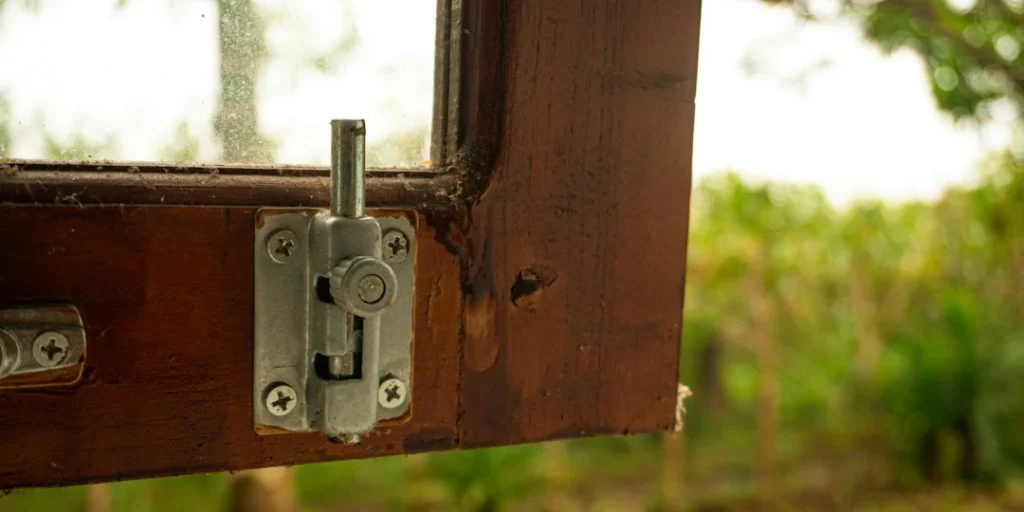
A stripped or worn sash lock is mechanical, not structural, which is why it’s the least expensive repair on this list. The lock cam or keeper wears down from years of use and simply stops catching, even though the window itself still closes fine. Replacement hardware is inexpensive and the labor is quick, which is why a quote significantly above $180 for this specific cause is worth questioning.
Why Balance Springs Price Per Window, Not Per Job
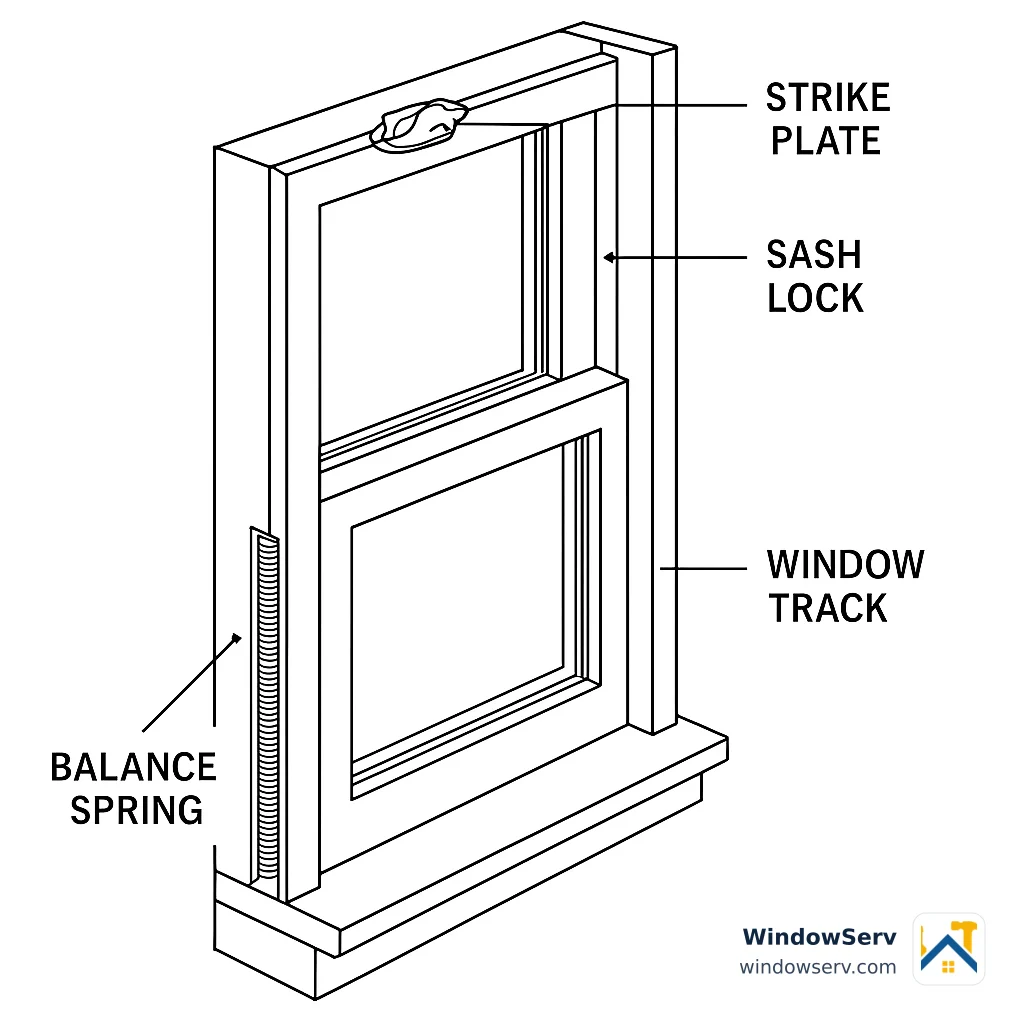
Balance springs (or balance tubes, depending on your window’s age and manufacturer) wear out gradually, and when one fails, the sash either won’t stay up or won’t seat down far enough to latch. Because each sash has its own independent balance system, a two-window job with failed balances on both sides will roughly double the single-window price rather than being quoted as one flat job.
Why Swollen Wood Costs More Than Expected
Swollen wood frames, common in older homes or in humid climates, require sanding down the sash edges, resealing the exposed wood, and reinstalling with proper clearance, which takes considerably longer than a hardware swap. If the swelling has recurred seasonally for several years, the wood underneath may already be compromised, which can push the job toward the higher end of the $150 to 450 range or toward a localized sash repair instead.
Where Warping Crosses Into Replacement Territory
A warped frame is the gray area between adjustment and replacement. Mild warping, where the frame is still square enough to reshape and shim, falls in the $300 to 700 range. But once warping is severe enough that the sash can’t form a tight seal no matter how it’s adjusted, continuing to pay for repeated adjustments stops making financial sense, and a full sash or window replacement becomes the more durable fix. This is the same repair-versus-replace judgment call homeowners face with other aging building components, similar to the logic laid out in our guide on repairing versus replacing a deck: fix what’s structurally sound, replace what keeps failing.
What Drives Full Replacement Costs Higher
Full sash or window replacement costs scale with frame material, glass package, and custom sizing. A standard vinyl double-hung sash replacement sits near the lower end of the $350 to 900 range, while a wood-clad unit with insulated or tempered glass can push past $1,200 per window. If your window has failed structurally rather than mechanically, meaning the frame itself is rotted, cracked, or no longer square, replacement is typically the only lasting option regardless of price.
Some of the causes above are genuinely fixable with basic tools and twenty minutes, and others require equipment and parts most homeowners don’t have on hand. The table below breaks down which symptoms are reasonable to tackle yourself and which ones warrant calling a professional before you make the problem worse.
| Symptom | DIY friendly | Call a professional when |
|---|---|---|
| Lock feels loose or doesn’t catch | Yes, tighten mounting screws first | Lock cam is visibly worn or won’t catch even when tight |
| Window sticks only in humid months | Yes, try paraffin wax on the tracks | Sticking persists in dry months too, suggesting swelling |
| Sash won’t stay up on its own | Maybe, check for debris in the track | Sash drops immediately, suggesting a broken balance spring |
| Frame looks bowed or uneven | No | Any visible warping, this is a structural issue |
| Window went off track after a storm or slam | No | Alignment requires removing the sash and resetting the track |
When It’s Reasonable to Try It Yourself
If the window closes but the lock won’t catch, start by checking whether the strike plate and lock cam actually line up when the sash is fully closed. A loose mounting screw on either piece is an easy fix with a screwdriver. Seasonal stickiness that shows up every summer and disappears by fall is often just friction from humidity, and a dry silicone spray or paraffin wax along the tracks resolves it in minutes. Our step-by-step walkthrough on fixing window adjustment issues yourself covers the five most common at-home fixes in more detail, including how to check sash square and clean out debris from the track channel.
When DIY Attempts Make the Problem Worse
Forcing a window that won’t close is the single most common way a simple adjustment turns into an expensive repair. Homeowners who push hard on a stuck sash risk cracking the glass, bending the track further out of alignment, or snapping a balance spring that was only partially failed. If a window resists closing with light to moderate pressure, that resistance is telling you something mechanical is wrong, not that it needs more force.
Signs the Problem Is Beyond a Quick Fix
A few signs reliably indicate the issue has moved past anything fixable with hand tools. If the sash visibly sits unevenly in the frame even when closed, if you can see daylight through a gap at one corner but not the other, or if the window has gotten progressively harder to close over several months rather than suddenly, the frame itself is likely out of square. These situations call for a technician with alignment tools and, in some cases, shims or frame reinforcement that a homeowner isn’t equipped to install correctly.
The Cost of Misdiagnosing It Yourself
Attempting a repair without correctly identifying the cause often means buying the wrong part. A homeowner who assumes a sagging sash means a broken balance spring, when the real issue is a warped frame, ends up with an unused part and a window that still won’t close. Given that a professional diagnostic typically takes 15 to 20 minutes and most companies, including ours, apply that fee toward the repair if you proceed, the financial risk of guessing wrong on parts usually outweighs the cost of having it diagnosed correctly the first time.
A Reasonable Middle Ground
If you’re unsure which category your window falls into, it’s worth attempting only the zero-risk steps first: cleaning the track, checking for loose screws, and testing a lubricant on binding points. If the window still won’t close and latch cleanly after those steps, stop there. Continuing to force it or guess at parts is where DIY attempts most often turn a $150 repair into a $450 one.
If you’ve decided the problem is beyond a DIY fix, the next challenge is making sure the contractor you hire is actually qualified to diagnose the cause correctly rather than defaulting to the most expensive recommendation. A few concrete steps will protect you from both overpriced quotes and sloppy repairs.
Confirm Licensing and Insurance Before Scheduling
Requirements vary by state and municipality, but any legitimate window repair contractor should be able to provide proof of general liability insurance without hesitation, and in jurisdictions that require a home improvement or contractor license for this type of work, a current license number you can verify independently. Ask for both before you schedule, not after the technician arrives. If a company is reluctant to provide a license number or insurance certificate, treat that as a disqualifying red flag rather than a minor inconvenience, since you’re the one financially exposed if an uninsured worker is injured on your property.
Get the Diagnosis in Writing Before Approving Work
A trustworthy contractor will tell you specifically what’s wrong, not just what it will cost. Before approving any repair, ask the technician to state the diagnosed cause in writing on the quote itself, for example “broken balance spring, left sash” rather than a vague line item like “window repair.” This does two things: it gives you something concrete to compare against the pricing ranges in this article, and it creates a record if the same problem recurs shortly after the repair.
Compare at Least Two Quotes for Anything Over $300
For straightforward fixes like a stripped lock or a lubrication and realignment job, a single quote is usually sufficient given the narrow price range involved. But once a quote moves into warped frame or replacement territory, where prices can vary by hundreds of dollars for the same described problem, it’s worth getting a second opinion. Be specific when requesting the second quote; describe the same symptoms and ask the second contractor to diagnose independently rather than simply pricing against the first quote, since that defeats the purpose of a second opinion.
Ask What Happens If the Diagnosis Changes
Sometimes a technician opens up a window expecting a track misalignment and discovers the real issue is a cracked sash corner underneath. Ask upfront how the company handles a change in scope: do they stop and call you with a revised price before proceeding, or do they complete whatever work they think is needed and bill afterward? A company that commits to confirming any price change before continuing work is a meaningfully safer choice than one that doesn’t address the question directly.
Check for a Written Workmanship Guarantee
Parts used in window repairs, particularly balance springs and sash locks, typically carry a manufacturer warranty, but labor is a separate issue entirely. Ask specifically how long the workmanship itself is guaranteed, not just the part. A guarantee of 90 days or less on labor is on the short side for mechanical repairs with moving parts; six months to a year is a more reasonable standard, and you should get that guarantee in writing on the invoice, not as a verbal assurance.
Ask for Recent, Verifiable References
A company with a genuine track record in window adjustment work should be able to provide at least two or three references from jobs completed in the past few months, not years-old testimonials. When you call, ask the reference specifically whether the final price matched the quoted price, and whether the problem recurred after the repair. Those two questions reveal more about a contractor’s reliability than almost anything else you can ask.
Red Flags Worth Walking Away From
Be cautious of any contractor who insists on diagnosing the problem over the phone and quoting a firm price without seeing the window in person, since the causes covered in this article can look identical from a homeowner’s description but carry very different price tags. Likewise, be wary of a technician who immediately recommends full window replacement before attempting or even discussing an adjustment, particularly if the window is otherwise in good condition. Replacement is sometimes the right call, as outlined earlier in this article, but it should be the conclusion of a diagnostic, not the opening pitch.
Get a Straight Answer on Your Window Repair
Stop guessing why your window won’t close. Our technicians arrive with the tools to diagnose stripped locks, swollen frames, bent tracks, and broken balance springs on the spot, and most adjustments are finished in a single visit. Request your free quote today and find out exactly what it will cost to get your window closing, latching, and locking the way it should, backed by a workmanship guarantee on every repair we perform.