Why Your Business Needs Professional Storefront Glass Replacement
A storefront is the first point of contact between your business and every person who walks by. Damaged, fogged, or visibly aging glass communicates neglect — and customers notice. Beyond perception, compromised commercial glass is a genuine liability: it weakens building security, inflates energy costs, and can put you on the wrong side of building codes.
Here is a closer look at the four reasons business owners and facility managers should treat storefront glass replacement as a priority, not an afterthought.
Safety and Security
Commercial storefronts are governed by strict safety glazing requirements. Under U.S. building codes — specifically ANSI Z97.1 and the International Building Code (IBC) — any glass installed within 2 feet of a door must be safety glass. That means tempered or laminated glazing that, when broken, either crumbles into small blunt fragments (tempered) or holds together on an interlayer (laminated) instead of producing the large, razor-sharp shards typical of ordinary annealed glass.
If your storefront was built or renovated decades ago, there is a real chance that some panels do not meet current safety glazing standards. Non-compliant glass is not just a code violation — it is a direct physical risk to employees, customers, and anyone who passes by your building.
Beyond code compliance, modern storefront glass is engineered to resist forced entry. Laminated glass, for example, can withstand repeated blows without fully giving way. The polymer interlayer keeps the glass fragments bonded together, maintaining a physical barrier even after the outer ply cracks. For businesses in high-traffic areas, retail corridors, or neighborhoods with elevated crime rates, this difference between a panel that shatters on first impact and one that holds is the difference between a successful break-in and a failed one.
Replacing aging or damaged glass with code-compliant, security-rated panels is one of the most effective steps you can take to protect your property, your inventory, and the people inside your building.
Energy Efficiency
Single-pane glass — still found in many older commercial storefronts — offers almost no thermal insulation. In winter, heat conducts straight through the glass surface and escapes to the outside. In summer, solar radiation pours in unimpeded, forcing air-conditioning systems to work overtime.
The result is an HVAC system that runs longer, cycles more frequently, and consumes more electricity or gas than it should. For a retail store or restaurant with a large glass frontage running climate control 10–12 hours a day, the impact on utility bills is substantial — often hundreds of dollars per month more than necessary.
Replacing old single-pane glass with insulated glass units (IGUs) or panels with Low-E coatings can reduce heat transfer by 30 to 50 percent. An IGU consists of two or three glass panes separated by a sealed airspace filled with argon or krypton gas. The gas is denser than air and conducts heat more slowly, creating an effective thermal barrier. When a Low-E (low-emissivity) coating is added to one of the interior glass surfaces, it reflects infrared radiation back toward its source — keeping heat inside during winter and outside during summer.
The upfront investment in energy-efficient glass pays for itself through lower monthly utility bills, reduced wear on HVAC equipment, and a more comfortable interior environment for customers and staff.
Curb Appeal and Brand Image
Your storefront glass is not just a building component — it is a marketing asset. Clear, clean, well-maintained glass maximizes product visibility from the sidewalk, invites foot traffic, and tells prospective customers that this is a business that pays attention to detail.
Fogged insulated glass, scratched panels, visible cracks, or temporary tape-and-board patches send the opposite message. They suggest that the business is struggling, cutting corners, or simply does not care. Research consistently shows that exterior appearance is one of the top factors influencing a consumer’s decision to enter a store. A neglected storefront costs you customers before they ever reach the door.
For retail businesses that rely on window displays — clothing boutiques, jewelry stores, bakeries, electronics retailers — the quality of the glass itself matters. Standard float glass has a faint green tint caused by iron impurities. Low-iron glass eliminates this tint, providing near-perfect optical clarity and true color rendering. If your displays are your primary marketing tool, the glass they sit behind should do them justice.
Replacing aging, damaged, or low-quality glass is one of the fastest and most visible ways to refresh your business’s exterior and reinforce a professional brand image.
Addressing Existing Damage
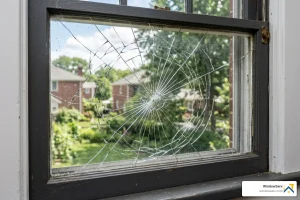
Glass damage does not stabilize on its own — it progresses. A hairline crack caused by thermal stress or minor impact can propagate across the entire panel when temperatures shift. A tiny chip at the edge of a tempered panel weakens the stress distribution, increasing the chance of sudden full-panel failure. A broken seal on an insulated glass unit lets moisture into the sealed airspace, causing permanent fogging that worsens over time as more condensation enters.
None of these problems can be reversed. A cracked panel cannot be un-cracked. A failed IGU seal cannot be re-sealed in the field — the entire unit must be replaced. Adhesive films and temporary patches may buy a few weeks, but they do not restore structural integrity, thermal performance, or visual clarity.
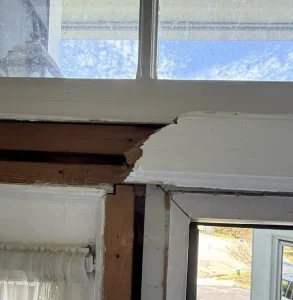
The practical reality is that delaying replacement only increases the scope of the eventual repair. A single cracked panel replaced today costs a fraction of what a full storefront overhaul costs after months of deferred maintenance, frame corrosion from water intrusion, and potential code enforcement action.
If you see damage — cracks, chips, fogging, drafts, or condensation — the right time to address it is now, not later.