
That Haze Between Your Panes Is Telling You Something Important foggy double pane windows Foggy double pane windows are one of the most common — and most misunderstood — problems
That Haze Between Your Panes Is Telling You Something Important
Foggy double pane windows are one of the most common — and most misunderstood — problems New Jersey homeowners face. The fog isn’t on the surface. You can’t wipe it off. And it won’t go away on its own.
Here’s the short answer if you need it fast:
What causes foggy double-pane windows?
- The seal between the two panes of glass has failed
- Outside air — carrying moisture — enters the space between the panes
- That trapped moisture condenses on the inner glass surfaces, creating the haze you see
What can you do about it?
- Cleaning the glass won’t work — the moisture is sealed inside the unit
- DIY fixes (drilling, defogging kits) don’t restore the seal and often make things worse
- The reliable fix is replacing the insulated glass unit (IGU) — usually without touching your existing frames
That persistent haze is more than an eyesore. It means your window has lost its insulating ability, which can quietly push up your heating and cooling bills month after month.
This guide walks you through exactly why it happens, what it’s costing you, and how to fix it the right way — whether you have one cloudy pane or a whole house full of them.
I’m Feiruz Gabibov, Chief Operating Officer of WindoServ, and I’ve overseen hundreds of foggy double pane window assessments and repairs across New Jersey. My team works with homeowners every day to diagnose seal failure and restore window performance without unnecessary full replacements.
The Science Behind Foggy Double Pane Windows
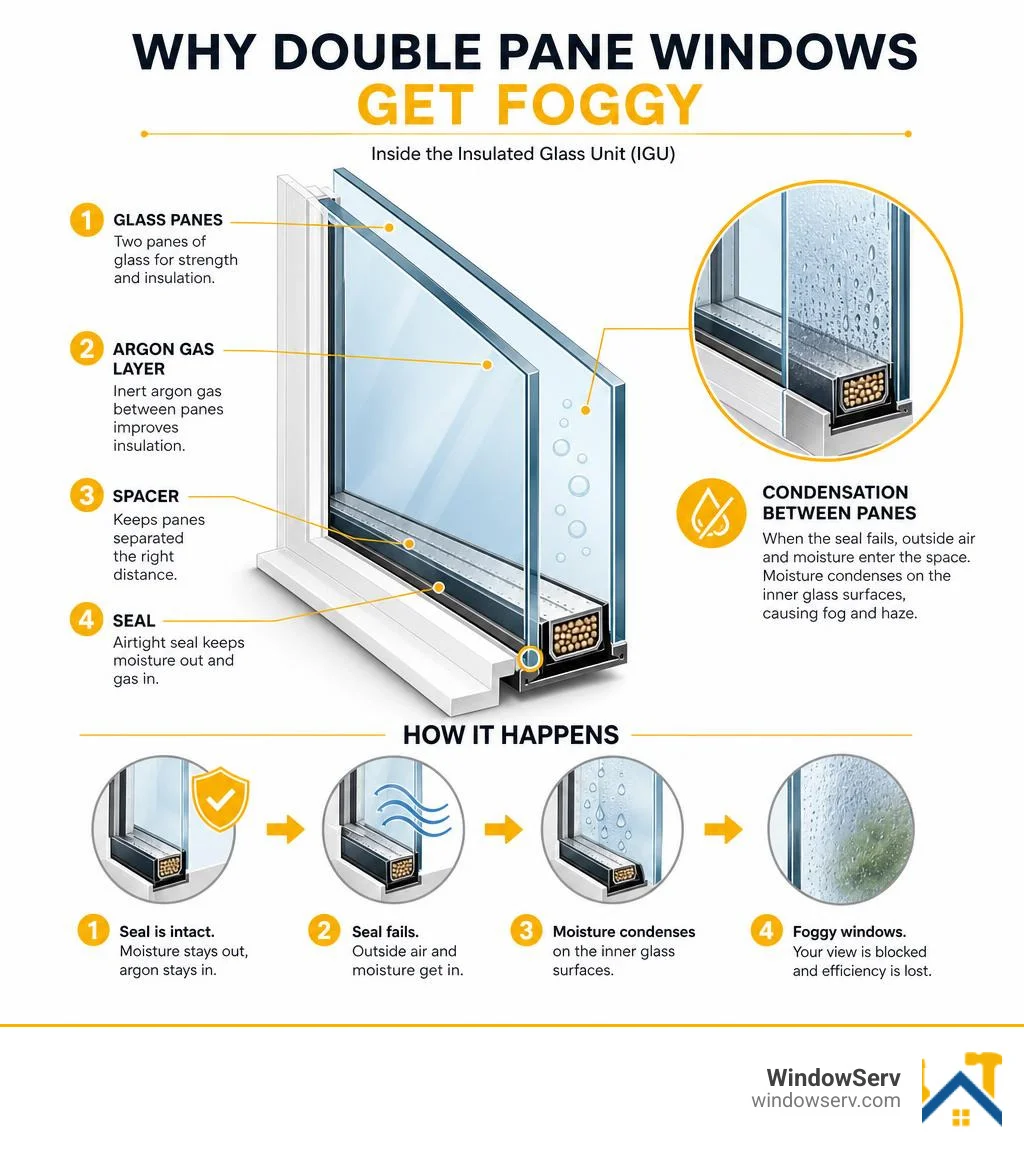
To understand why your windows look cloudy, we have to look at how modern double-pane windows are constructed. These are not just two sheets of glass stuck in a frame. They are highly engineered, factory-sealed systems known as Insulated Glass Units (IGUs).
An IGU consists of two (or sometimes three) panes of glass separated by a spacer bar. The air tight cavity between the panes is filled with dry air or an insulating inert gas, most commonly argon. This gas layer acts as a barrier, slowing down the transfer of heat between the inside of your home and the outdoors.
The entire unit is held together by a high-strength outer seal. However, this seal is under constant physical stress from a natural process known as thermal pumping.
Every single day, your windows are subjected to temperature fluctuations. When the sun shines on the glass, the gas inside the IGU heats up and expands, bowing the glass outward. At night, the gas cools and contracts, drawing the glass inward. This continuous expansion and contraction puts immense pressure on the window’s seals. Over years of seasonal shifts — from humid New Jersey summers in Jersey City to freezing winter nights in Ridgewood — the seals eventually fatigue, develop microscopic cracks, and fail.
Once the seal is compromised, outside air begins to seep into the gap. To manage minor amounts of moisture, the spacer bar contains silica desiccant beads. These beads have an incredible absorption capacity, boasting a surface area of approximately 7,200 square feet per gram! But they do not have an infinite capacity. Over time, as more humid air leaks inside, the desiccant beads become completely saturated. When they can no longer absorb moisture, the humidity level between the panes rises. As soon as the glass temperature drops below the dew point, condensation forms on the inside surfaces, leaving you with foggy double pane windows.
For a deeper dive into how this moisture behaves, you can read this Scientific explanation of condensation and find More info about condensation between window panes.
Interior vs. Exterior vs. Between-Pane Condensation
Not all window condensation is a sign of trouble. It is vital to distinguish where the moisture is forming so you do not replace a perfectly healthy window:
- Exterior Condensation: This occurs on the outermost surface of the glass, usually on humid summer mornings in places like Monmouth or Middlesex counties. It happens when the outdoor air is warm and humid, but the glass surface is cooler than the outdoor dew point. This is actually a sign that your windows are working highly efficiently, keeping the outdoor heat from warming up the glass.
- Interior Condensation: This forms on the glass surface inside your home, typically during cold winter months. It happens when warm, humid indoor air (from cooking, showering, or heating) comes into contact with cold glass. You can easily wipe this away. You can resolve this by lowering your indoor relative humidity to a recommended 30% to 50% using dehumidifiers or exhaust fans.
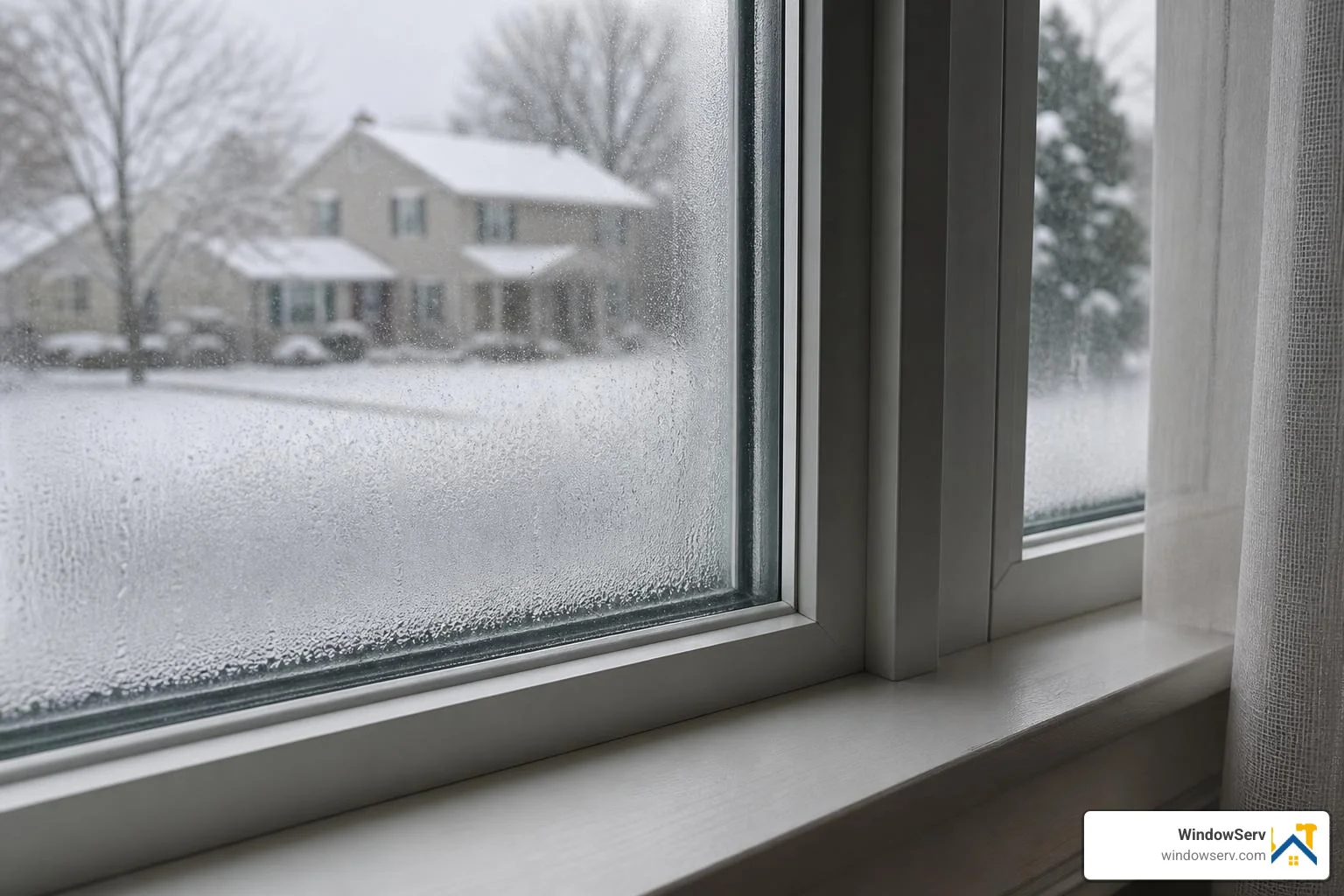
- Between-Pane Condensation: This is the only type of condensation that indicates a problem. If the moisture is trapped inside the double-pane assembly where you cannot touch or wipe it, the seal has failed.
To help identify what is happening with your glass, check out this guide on Understanding what causes fogging.
Why You Can’t Just Wipe the Fog Away
It can be incredibly frustrating to look at a cloudy window and know that a simple wipe with a microfiber cloth would clear it — if only you could reach it. Unfortunately, because the moisture is trapped within a sealed chamber, it is completely inaccessible.
If left unaddressed, this trapped moisture does more than just block your view. Over time, the water droplets undergo repeated cycles of evaporation and condensation. As the water evaporates, it leaves behind mineral deposits from the glass and the surrounding materials. This creates a permanent, white, hazy residue known as silica haze or glass etching.
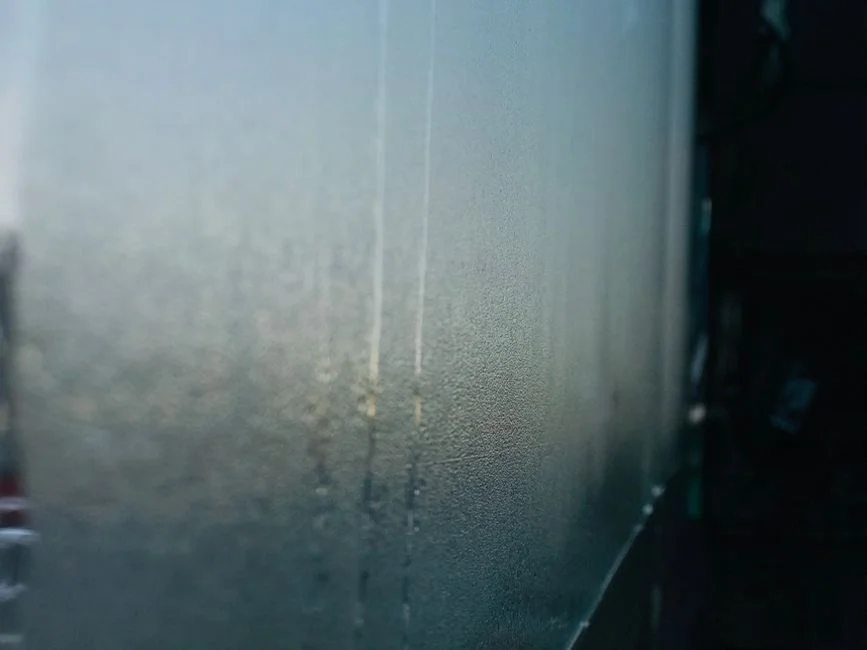
In severe cases, the moisture forms distinct patterns known as riverbedding, where tiny streams of mineral-rich water run down the inside of the glass and permanently etch the surface. Once glass etching or silica haze has occurred, the glass is physically damaged. Even if you were somehow able to separate the panes and clean them, the glass would remain permanently scarred and cloudy.
For tips on maintaining your glass surfaces, you can refer to this Removing haze guide.
The True Cost of Failed Window Seals
A failed window seal is not merely a cosmetic annoyance; it represents a significant drop in your home’s thermal performance.
When an IGU’s seal fails, the insulating argon gas escapes and is replaced by humid, ambient air. Argon gas is dense and slows down heat transfer beautifully. Air, especially moist air, is highly conductive. In fact, wet air conducts heat far faster than dry air or argon.
When your window seals fail, the insulating R-value of the window drops dramatically. This leads to:
- Increased Energy Bills: Your heating and cooling systems have to work significantly harder to maintain a comfortable indoor temperature. During cold New Jersey winters in towns like Montclair and Tenafly, heat escapes rapidly through the compromised glass. In the summer, outdoor heat transfers easily into your air-conditioned rooms.
- Drafts and Discomfort: You will likely notice cold spots near your windows, making your living spaces feel drafty and uncomfortable.
- Reduced Noise Dampening: Properly sealed double-pane windows typically reduce outside noise by 30% to 35%. When the seal fails and the gas escapes, this soundproofing capability is noticeably diminished.
A 100% argon gas fill increases the thermal performance of an IG unit by 16%, while even a 50% argon fill provides an 8% boost. Losing this gas barrier is a direct hit to your wallet. If you want to stop drafts and restore comfort, explore More info about window repair.
Evaluating Your Repair and Replacement Options
When dealing with foggy double pane windows in May 2026, homeowners generally choose between three primary paths. Understanding the differences in cost, effectiveness, and longevity is key to making the right choice for your home.
| Feature / Option | Defogging (Drilling & Venting) | IGU (Glass-Only) Replacement | Full Window Replacement |
|---|---|---|---|
| Average Cost | $100 – $250 per window | $250 – $600 per window | $900 – $2,000+ per window |
| Restores Insulation? | No (leaves unit filled with air) | Yes (restores factory gas fill) | Yes (fully restores performance) |
| Preserves Original Frame? | Yes | Yes (keeps existing sashes/frames) | No (removes entire frame) |
| Warranty | Minimal or none | Typically 10 – 20 years | Varies by manufacturer |
| Long-Term Reliability | Low (fog often returns quickly) | Extremely High | Extremely High |
For many New Jersey homeowners, full window replacement is an unnecessary expense. In New England and the surrounding Northeast region, the average cost of a full window replacement project can reach approximately $21,922. While new windows return about 76% of their cost in added resale value, replacing the entire frame is rarely required just because of a failed seal.
According to industry experts, the glazing assembly (the IGU glass itself) can be replaced approximately 75% of the time. Occasionally, the sashes must be replaced, and only about 5% of cases actually require that the entire window frame be ripped out. This makes glass-only replacement the smartest, most cost-effective option for the vast majority of homes.
To understand the best approach for your specific situation, read More info about double pane window repair and replacement.
Why DIY Fixes for Foggy Double Pane Windows Fail
It is easy to find DIY “solutions” online that promise to cure your foggy windows for pennies. These methods usually involve drilling tiny holes into the outer pane of glass, spraying a chemical cleaning solution or alcohol inside to dry out the moisture, and inserting small one-way micro-vents or plastic plugs to let air circulate.
While these kits may temporarily clear up the visible condensation, they are fundamentally flawed for several reasons:
- They Do Not Fix the Seal: The seal remains broken. Humid outdoor air will continue to flow into the window cavity freely.
- They Destroy Insulating Value: By drilling holes, you permanently release any remaining insulating argon gas. Your double-pane window is essentially demoted to a single-pane window with a drafty air gap.
- They Risk Breaking the Glass: Tempered glass will instantly shatter if drilled, and standard glass is incredibly easy to crack during DIY drilling attempts.
- They Void Your Warranties: Drilling holes in your windows will instantly void any remaining manufacturer warranties on the glass or the frames.
You can see an example of these temporary methods in this DIY defogging video, but keep in mind they do not offer a lasting solution. For more details on why these retail kits fail to deliver long-term results, read this Hoboken foggy window repair kits info.
The Professional Solution for Foggy Double Pane Windows
The only reliable, long-term solution for a failed window seal is professional Insulated Glass Unit (IGU) replacement.
This process does not require ripping out your window frames, damaging your interior trim, or replacing your siding. Instead, a professional technician carefully removes the vinyl glazing beads holding the foggy glass unit in place, extracts the failed IGU, cleans the frame channel, and installs a brand-new, factory-sealed IGU.
This method restores your window’s original energy efficiency, clarity, and soundproofing at a fraction of the cost of a full replacement. It allows you to keep your existing frames, which is especially beneficial if you have high-quality wood or custom-colored vinyl frames that match your home’s aesthetic.
To learn more about how we can restore your clear views, check out More info about foggy window glass replacement and find More info about replacing sealed glass units. If you live in Union County, you can also view this local Westfield NJ seal repair info to see how professional glass services work in your neighborhood.
How to Prevent and Delay Window Seal Failure
While all window seals will eventually succumb to age and the elements, there are several proactive steps you can take to maximize their lifespan:
- Keep Weep Holes Clear: Most vinyl and aluminum window frames have small drainage holes at the bottom of the exterior frame called weep holes. These holes allow rainwater to drain away from the window sill. If they become clogged with dirt, leaves, or insect nests, water can pool around the bottom edge of the IGU. Prolonged exposure to standing water will rapidly degrade the window’s secondary seal.
- Control Indoor Humidity: Keep your home’s humidity level between 30% and 50%. This reduces the moisture load on your windows and prevents excessive condensation from forming on the glass surfaces.
- Avoid High-Pressure Washing: When cleaning your home’s siding or windows, never use a pressure washer near your window frames. The intense pressure can easily tear or dislodge the delicate rubberized seals around the glass.
- Inspect Your Windows Annually: Take a few minutes every spring or fall to inspect the caulking and weatherstripping around your windows. Address any cracks or gaps promptly to prevent moisture from getting trapped against the frame.
For more helpful maintenance advice, check out More info about fixing foggy double pane windows.
Frequently Asked Questions About Cloudy Windows
Understanding your options can help you save money and make informed decisions. Here are some of the most common questions we hear from New Jersey homeowners. If you are looking for technical specifications on replacement glass, you can read More info about insulated glass units.
How long do double-pane window seals typically last?
On average, high-quality double-pane windows with professional installation can maintain their seals for 15 to 20 years or more. However, their actual lifespan depends heavily on environmental factors. Windows that receive direct, intense sunlight (such as south- and west-facing windows) will experience more extreme thermal pumping, causing them to fail sooner than shaded windows.
Is condensation between panes covered by a window warranty?
Yes, many major window manufacturers provide warranties specifically covering glass seal failure for 10 to 20 years. If your windows are relatively new, it is always worth checking your paperwork. However, that most manufacturer warranties only cover the cost of the replacement glass unit itself — they rarely cover the labor costs required to remove the old glass and install the new unit.
Does foggy glass mean I am losing heat and wasting energy?
Absolutely. When a seal fails, the insulating argon gas escapes and is replaced by wet, conductive air. This can cause your window’s thermal performance to degrade by 30% to 50%, leading to drafty rooms, cold spots, and higher monthly utility bills.
Conclusion
At WindowServ, we specialize in providing smart, cost-effective solutions for homeowners dealing with foggy double pane windows across New Jersey. Whether you are located in Bergen, Essex, Hudson, Middlesex, Monmouth, or Union counties, our local experts are here to help.
Our signature approach focuses on preserving your original, high-quality window frames whenever possible. By replacing only the failed insulated glass units, we can restore your home’s comfort, deliver up to 30% energy savings, and save you thousands of dollars compared to the cost of a full window replacement. We back all of our work with a comprehensive satisfaction guarantee so you can move forward with absolute confidence.
Don’t let cloudy glass ruin your views or inflate your heating bills. Schedule a professional foggy window glass replacement with the WindowServ team today and get your crystal-clear views back!