

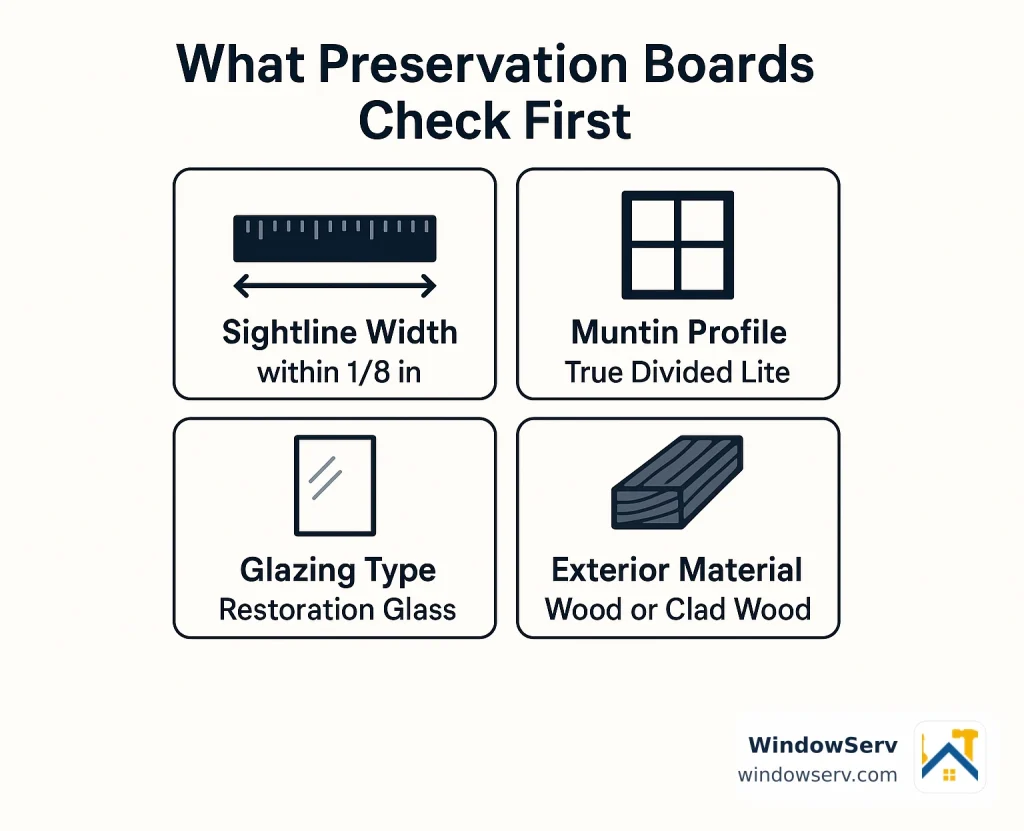
Preservation commissions typically require matching sightlines within 1/8 inch and true divided-light muntin profiles before approving replacement windows in historic districts.
Replacing Windows Without Losing Historic Approval
Homeowners in preservation districts face a narrow path: windows that leak air and show visible rot, paired with a commission that will reject any replacement that changes the home’s appearance. WindowServ’s window installation team builds replacement windows engineered to match original sightlines, muntin profiles, and materials so your application clears review the first time.
Most window companies treat “matching the look” as an afterthought, something handled with a quick glance at a brochure before ordering whatever is in stock. That approach fails in front of a preservation commission, because the people reviewing your application are trained to spot a sightline that’s a half-inch too wide or a muntin bar that’s been simulated with a stick-on grid instead of actually dividing the glass. Here’s what we do differently, and why it holds up under scrutiny.
We measure before we design
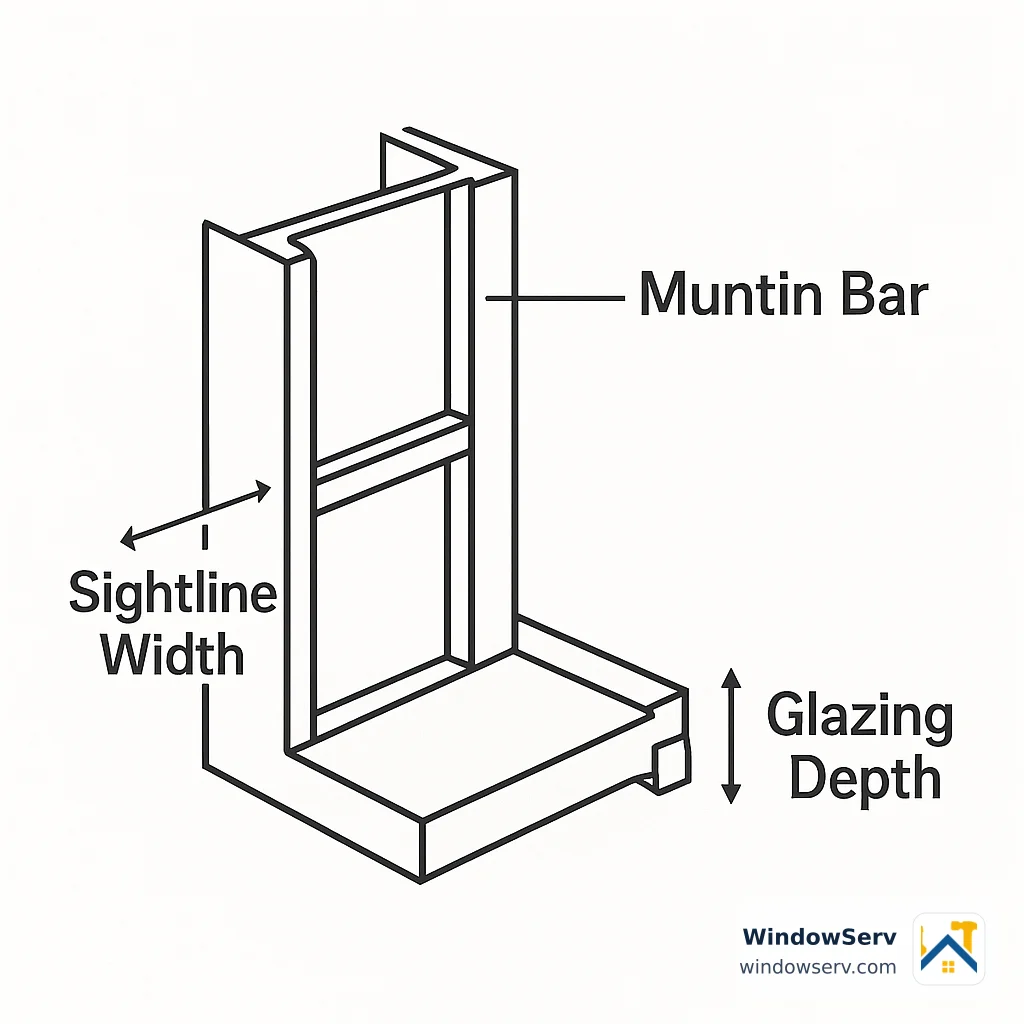
Before any window is ordered, our crew documents the existing sash width, the exterior and interior sightline dimensions, the glazing bar profile, and the depth of the reveal on at least three representative windows on the elevation facing the street. Commissions in most jurisdictions care almost exclusively about the street-facing elevation, which means we can sometimes recommend a simpler, less expensive product on rear and side elevations where review standards are looser. That distinction alone has saved clients several thousand dollars on larger projects without touching a single requirement the commission actually enforces.
We Stock Both True and Simulated Divided Lite Windows

A surprising number of rejected applications come down to using a simulated divided lite (SDL) grid where the commission’s guidelines specifically call for true divided lite (TDL) construction, meaning each pane is a physically separate piece of glass rather than one sealed unit with a grid clipped on top. We stock both configurations from our manufacturing partners and will tell you plainly which one your district requires rather than selling you whichever one carries a better margin. On some projects an SDL unit with an interior and exterior spacer bar, plus a shadow bar between the panes, is genuinely indistinguishable from six feet away and saves the client real money; on others, nothing short of true divided lite will pass, and we say so before you pay for a submission.
We match material, not just color
Vinyl replacement windows are rejected outright in a large share of local historic districts, regardless of color or grid pattern, because the material itself reads as inauthentic up close. Where that’s the rule, we install wood or clad-wood units, with exterior aluminum or fiberglass cladding available in a baked-on finish that matches the home’s existing trim color rather than a generic manufacturer palette. Where fiberglass or vinyl is permitted, which is more common than homeowners assume for rear elevations and additions not visible from the public right-of-way, we’ll say so and let you decide based on budget and maintenance preference.
We document the submission the way the commission reviews it
Our proposal package includes side-by-side photos of the existing window and the proposed replacement at matching scale, a materials spec sheet, and a sightline comparison diagram, the same format most commissions request on their own application checklist. Clients who’ve gone through two or three rounds of rejection with other contractors tell us the biggest difference is simply that our submission looks like it was built by someone who has sat through a commission hearing before, because we have.
We Keep Permitting and Installation on a Realistic Timeline
Preservation review adds weeks to a project that a standard permit wouldn’t require, and we build that into the schedule from day one rather than letting a client discover it mid-project. If your project also involves a below-grade opening, our crew follows the same documentation discipline we use on an egress window installation, where permit sequencing and commission sign-off both have to land before the opening is cut.
We warranty the installation, not just the unit
Manufacturers warranty their glass and hardware, but a poorly flashed or improperly sized replacement window will fail at the installation, not the product. Every window we install carries a labor warranty covering flashing, sealant, and fit separate from the manufacturer’s product warranty, and we’ve found that distinction matters most on older homes where the original rough openings are rarely square.
None of this is marketing language. It’s the specific, repeatable process that gets a historic district application approved on the first pass, which is the difference between a four-week project and a four-month one.
Daniel Reyes
has led WindowServ’s historic and specialty installation crew for over fifteen years, overseeing window replacement projects in more than a dozen local historic districts across the region. He has presented materials and sightline documentation directly to preservation commission review boards and regularly consults with homeowners on which products meet local guidelines before a single order is placed. Daniel holds manufacturer certifications in wood and clad-wood window installation and trains WindowServ’s field crews on flashing and fit standards for older, often out-of-square window openings.
Camden County is home to several of South Jersey’s oldest residential pockets, including the Haddonfield Historic District and sections of Collingswood and Merchantville built before 1930, where original wood double-hung windows with true divided lites are still common and where local preservation ordinances govern any exterior change visible from the street. These ordinances aren’t ceremonial. A homeowner who installs a vinyl replacement with a snap-in grid pattern without approval can be required to remove it and reinstall a compliant unit at their own cost, which is a far more expensive outcome than getting the application right the first time.
The region’s climate adds a practical pressure on top of the regulatory one. South Jersey sees humid, often sweltering summers and winters that swing from mild to genuinely cold, and that combination is hard on original single-pane wood sashes, especially where the glazing putty has dried out and cracked. Many of the homes we work on in this area still have their original 1910s or 1920s sashes, which means the putty, the counterweight pulley system, and the glass itself are all original materials nearing or past their practical service life. Homeowners dealing with a sticking sash or a failed cord often start by trying to fix what’s there, and our guide on replacing a sash cord covers that repair for anyone not yet ready for full replacement. But once the sash itself is rotted, warped, or the glazing has failed beyond a simple reglaze, repair stops being cost effective and replacement becomes the better long-term investment, which is where preservation-compliant matching becomes essential rather than optional.
Camden County’s historic commissions generally follow guidelines adapted from the Secretary of the Interior’s Standards for Rehabilitation, which means the review criteria are fairly consistent from one township to the next, even though the specific application forms differ. In practice, this means commissions in Haddonfield, Collingswood, and similar districts are looking for the same handful of things: a sightline width that doesn’t visibly widen the frame, a true divided lite pattern on any street-facing elevation where the original windows had one, and an exterior material or finish that reads as wood from normal viewing distance. Rear and side elevations not visible from a public street typically face lighter scrutiny, which is where we often recommend a more budget-friendly clad-wood or fiberglass option to offset the cost of true divided lite units on the front.
Humidity in this region also affects which glazing option makes sense. Insulated glass units with a warm-edge spacer perform meaningfully better against condensation on the interior face during humid South Jersey summers than older single-pane designs, and most preservation guidelines in the area permit insulated restoration glass as long as the exterior appearance, including the simulated or true divided pattern, matches the original. That’s good news for homeowners worried that meeting preservation standards means giving up modern energy performance. It generally doesn’t.
Homeowners outside Camden County but within a similarly regulated district, including portions of Cherry Hill with older housing stock, face the same core requirements, and anyone further along in deciding between repair and full replacement may find it useful to first read our broader guide to window repair in Cherry Hill before committing to a full preservation-compliant installation. The right call often depends on how much of the original sash material is still sound, and that’s a judgment best made with an in-person inspection rather than a guess from photos.
Whatever township or district your home sits in, the underlying lesson is the same: a replacement window project in a preservation-regulated area succeeds or fails based on decisions made before the first window is ordered, not on anything that happens during installation itself.
Don’t let a rejected application delay your project by another review cycle. WindowServ prepares the measurements, material samples, and comparison photos your preservation commission actually asks for, before a single window is ordered. Request a free quote and we’ll walk your property, document your existing sightlines and muntin pattern, and tell you honestly whether your district will approve vinyl, fiberglass, or requires wood. No guesswork, no wasted submission fees.