
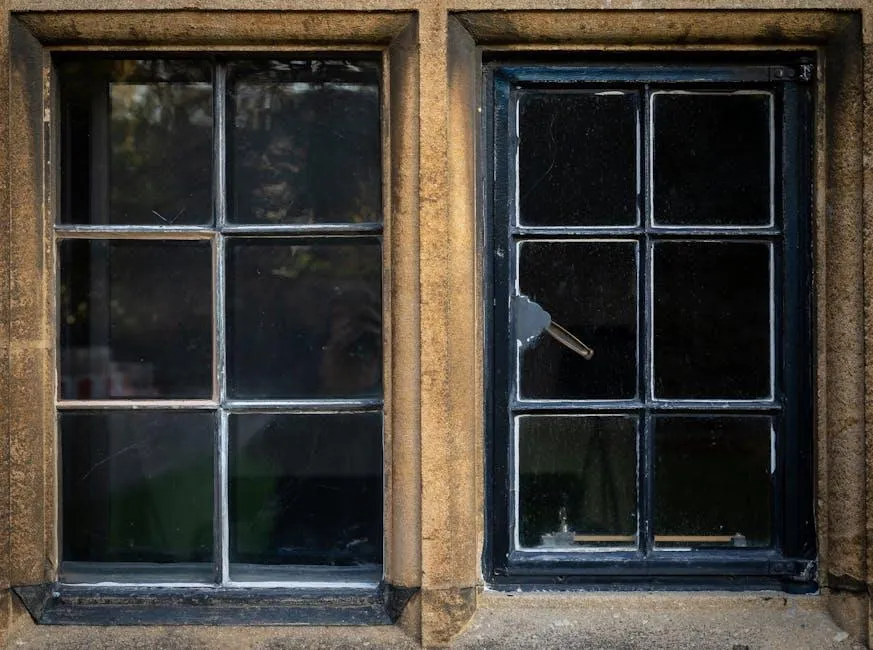
When Your Casement Window Glass Needs Repair: What You Need to Know Casement window glass repair is something most New Jersey homeowners will face at some point — whether it’s
When Your Casement Window Glass Needs Repair: What You Need to Know
Casement window glass repair is something most New Jersey homeowners will face at some point — whether it’s a crack from impact, foggy glass from a failed seal, or a draft creeping in around an aging frame.
Here’s a quick overview of what the repair process typically involves:
Situation Likely Fix Typical Cost Minor crack (intact glass) Glass repair resin kit $20–$50 DIY Broken single pane Glass replacement in sash $150–$300 professional Fogged double-pane glass Replace insulating glass unit (IGU) $150–$500 professional Damaged sash or frame Full sash replacement $50–$200 for parts Extensive frame rot Full window replacement $1,500–$4,500+
Casement windows are side-hinged and swing outward like a door. That design gives them excellent ventilation, a tight energy seal when closed, and strong structural integrity. But it also means the glass, seals, and hardware take real stress over time — especially in New Jersey’s variable climate.
When things go wrong, the damage is hard to ignore. A fogged pane blocks your view. A cracked pane compromises your home’s security. A failed seal quietly drives up your energy bills every single month.
The good news? Most casement window glass problems can be fixed without replacing the entire window unit — often in just one to two hours.
I’m Feiruz Gabibov, Chief Operating Officer of WindoServ, and I’ve overseen hundreds of casement window glass repair jobs across New Jersey — from straightforward single-pane replacements to tricky vintage Pella sash restorations. In this guide, I’ll walk you through everything you need to diagnose, repair, or know when to hand the job to a pro.
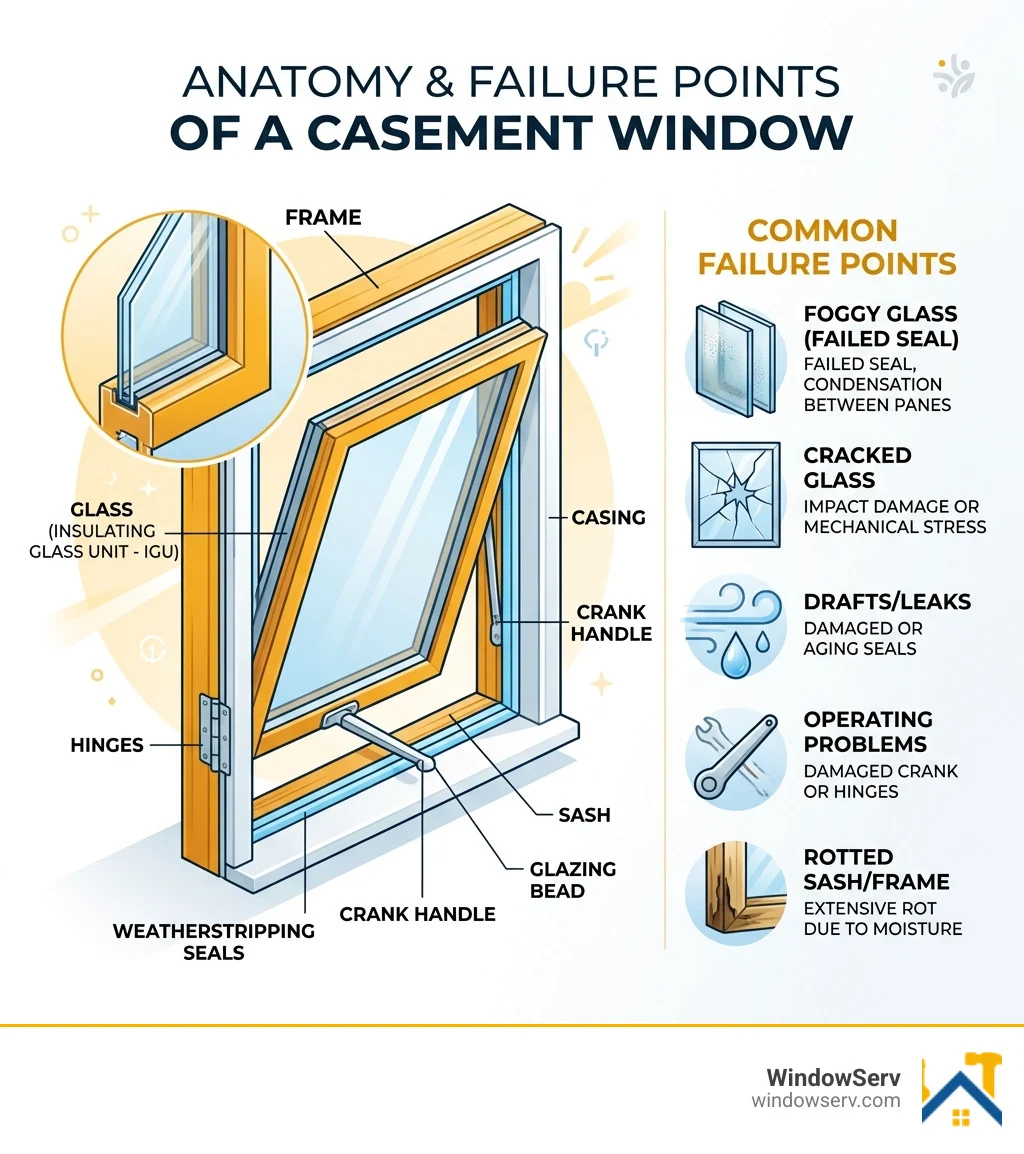
Identifying Common Issues and Casement Window Glass Repair Needs
Before you grab a screwdriver, you need to know exactly what you’re looking at. Casement windows are unique because they rely on a mechanical “crank” to operate. When the glass or the seals around it fail, it’s often a result of either physical impact or mechanical stress on the frame.
Impact Damage and Cracked Panes
This is the most obvious reason for casement window glass repair. Whether it was an errant baseball in Ridgewood or a heavy storm branch in Montclair, a cracked pane is a security risk and an energy drain. If the glass is cracked but still intact, you might be able to use a resin kit as a temporary measure. However, for true structural integrity, the pane should be replaced.
Seal Failure and Fogging
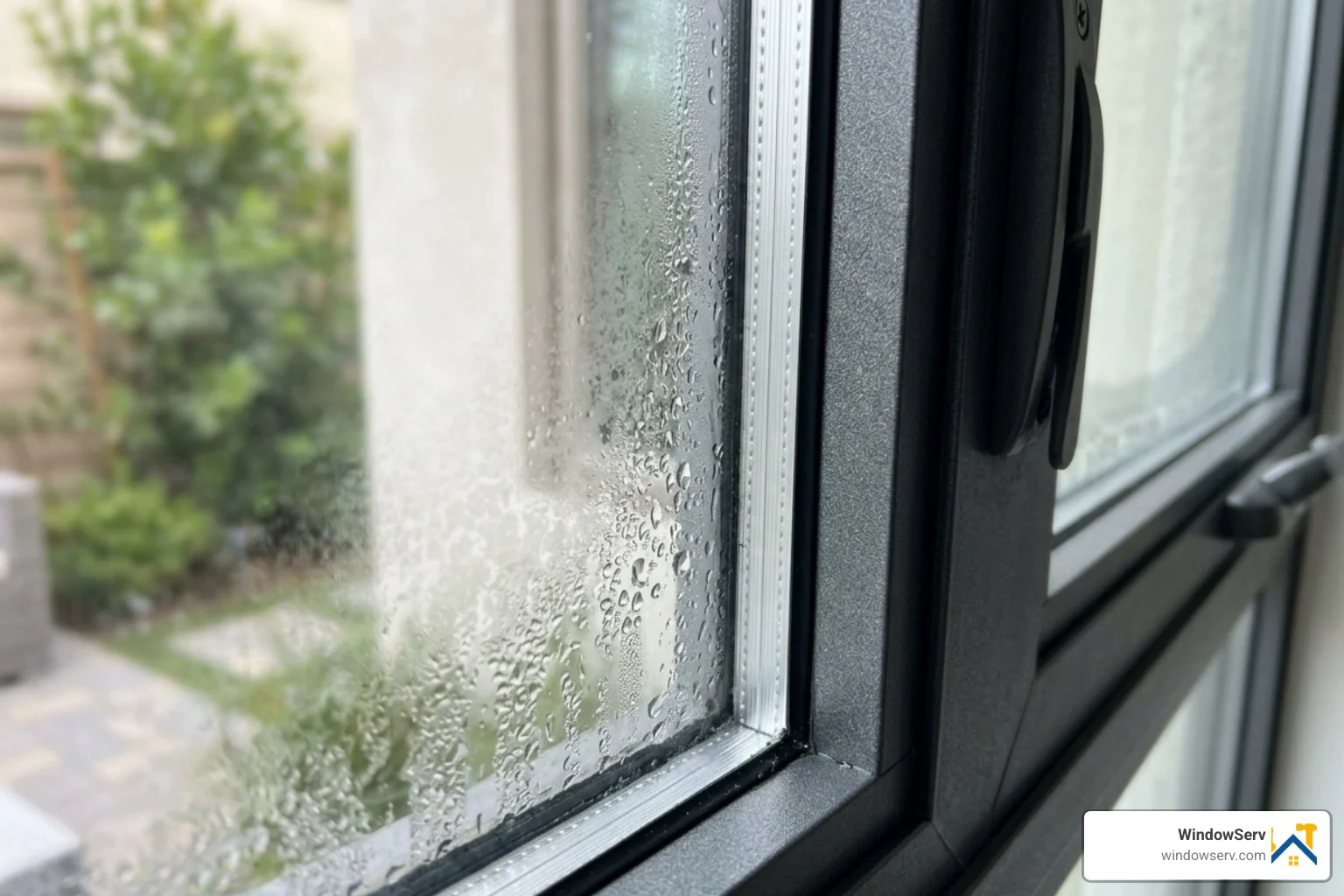
Have you noticed a “rainbow effect” or actual water droplets trapped between your glass panes? This is a classic sign of a failed Insulated Glass Unit (IGU). In New Jersey, our humid summers and freezing winters cause the air between the panes to expand and contract. Eventually, the seal breaks, the insulating argon gas escapes, and moisture-laden air rushes in.
Breather Tube Clogs
In older Pella windows, you might see small metal grommets. These are breather tubes designed to equalize pressure. A common (and somewhat funny) issue we see in places like Summit and Westfield is mud daubers or tiny insects clogging these tubes. When they can’t “breathe,” the window fogs up almost instantly as the seasons change.
Visual Distortion and Drafts
If you feel a breeze even when the window is cranked shut, the glass might not be the only problem—the sash itself might be sagging. When a sash sags, it pulls away from the weatherstripping, creating a gap. You can check this by moving a candle or a piece of incense around the edge of the glass; if the flame flickers, you’ve found your leak.
For more complex issues, you can explore our Professional Window Glass Repair and Replacement options. If your main issue is moisture, check out our more info about foggy window glass replacement to see how we restore clarity without replacing the whole window.
Handling Brand-Specific Casement Window Glass Repair Challenges
Not all windows are created equal. Repairing an Andersen window is a different world than working on a vintage Pella or a modern vinyl unit.
-
Pella Windows: Older models often use wood stops held in place by a “sticky” glazing that feels like chewing gum even 40 years later. Removing these without snapping the delicate wood requires patience, a heat gun, and often a bit of soapy water to lubricate your putty knife.
-
Andersen & Marvin: These often use high-performance materials like Fibrex or Ultrex fiberglass. While durable, they require specific component matching. You can’t just slap any piece of glass in there; you need to match the original thickness (often 3/32″ or 1/8″) to ensure the sash still closes flush.
-
Vinyl Frames: Common in newer Hoboken or Jersey City condos, vinyl can crack if handled roughly in cold weather.
If you’re dealing with these brand-specific headaches, our Expert Window Repair Services can help identify the exact hardware and glass specs needed for a seamless fix.
Signs of Insulating Glass Unit (IGU) Failure
When the IGU fails, you lose more than just your view. You lose money.
-
Argon Leakage: You can’t see the gas leaving, but you’ll feel the “thermal bridging”—the glass will feel significantly colder or hotter than it should.
-
Desiccant Saturation: Inside the spacer bar of your window is a material meant to absorb moisture. Once it’s “full,” the fogging becomes permanent.
-
U-factor Degradation: This is a fancy way of saying your window is no longer insulating.
Understanding the window seal replacement cost is vital here. Replacing just the glass unit (the IGU) is almost always cheaper than a full window replacement and can restore your energy efficiency by up to 30%.
Essential Tools and Materials for DIY Casement Window Glass Repair
If you’re a hands-on homeowner in Bergen or Essex County, you can tackle some of these repairs yourself. But you’ll need more than a standard toolbox.
The “Must-Have” List:
-
Glass Suction Cups: Don’t skip these. They allow you to maneuver a heavy pane of glass safely without getting your oily fingerprints all over the new seal.
-
Stiff Putty Knife & 5-in-1 Tool: Essential for prying off wood stops and scraping away old, stubborn glazing.
-
100% Silicone Sealant: We recommend high-quality professional-grade silicone (like Dow Corning 795) for bedding the glass.
-
Glazing Points: Small metal triangles that hold the glass in place while your sealant cures.
-
Heat Gun: For softening old putty. Just be careful—too much heat can crack the glass you’re trying to save!
-
Wire Brush: To clean the “rabbet” (the groove where the glass sits) of any rust or old debris.
Materials Matter: When ordering replacement glass, check the etching in the corner. It will tell you if the glass is tempered (safety glass) or has a Low-E coating. Using the wrong thickness—for example, trying to force 1/8″ glass into a 3/32″ slot—will prevent the stops from fitting back on and might even break the new pane.
Step-by-Step Guide to Replacing Casement Window Glass
Ready to get to work? Follow this process to ensure a professional-grade casement window glass repair.
1. Sash Removal
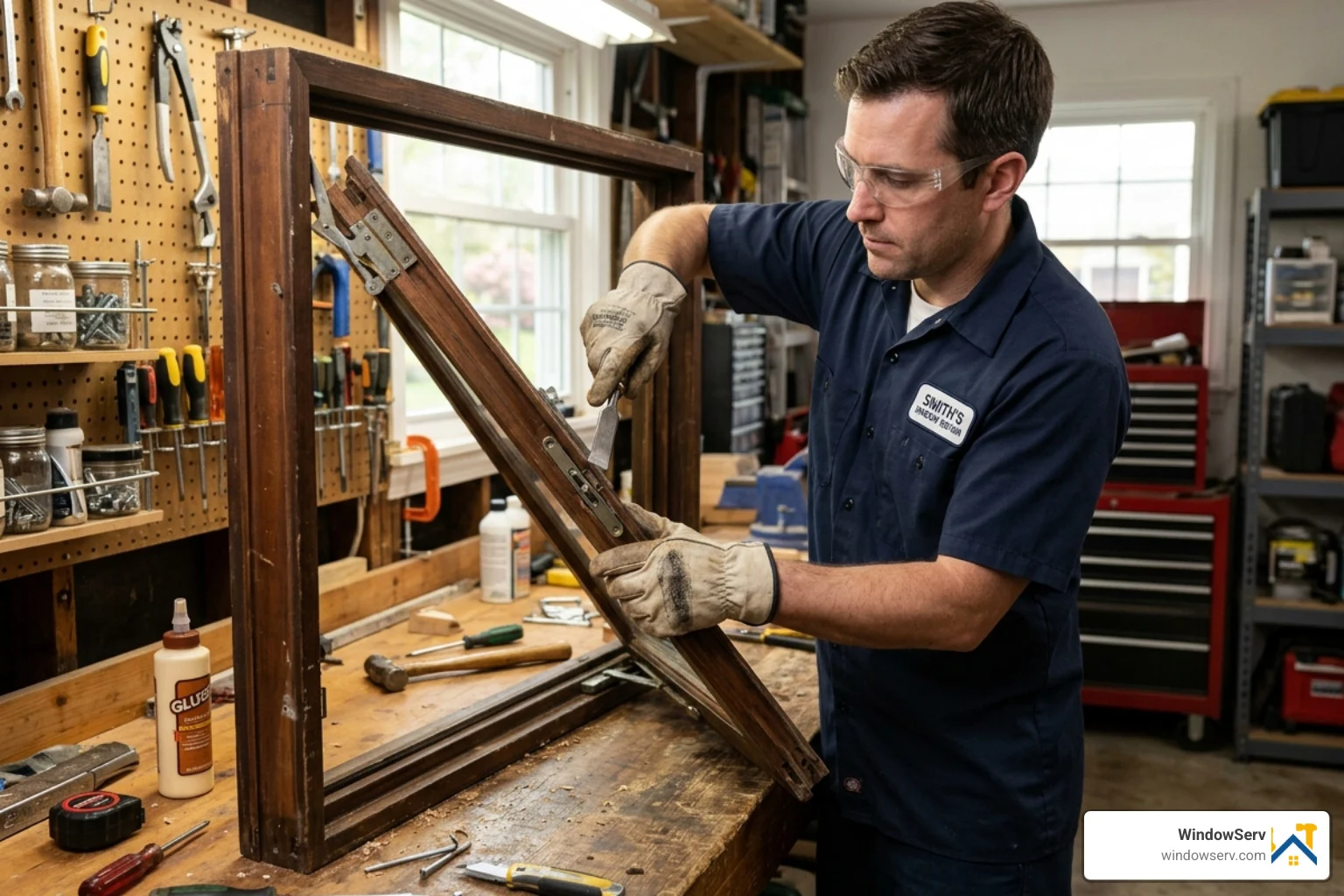
It is significantly easier to repair a casement window if the sash is lying flat on a workbench. Open the window fully. Locate the screws on the hinge arms (top and bottom) and the operator arm (the crank). Unscrew these carefully. Pro Tip: Have a partner hold the sash so it doesn’t fall out onto your lawn while you’re unscrewing the last hinge!
2. Removing Old Glazing and Glass
Use your utility knife to cut the seal between the glass and the frame. If you have wood stops, gently pry them up. If they are stuck, use a heat gun to soften the adhesive. Once the stops are off, the glass should lift out. Be sure to wear heavy-duty gloves here—old glass often shatters during removal.
3. Cleaning the Rabbet
This is the most skipped step, but it’s the most important. Use a wire brush or a sharp chisel to remove every last bit of old putty, silicone, and dirt. If the wood is bare, apply a quick coat of primer to prevent the new silicone from soaking into the wood and failing.
4. Bedding and Sealing
Apply a thin, continuous bead of 100% silicone sealant into the frame. This is called “back-bedding.” Carefully set the new glass into the frame using your suction cups. Press down gently until the silicone “oozes” slightly around the edges—this confirms a weather-tight seal.
5. Reinstalling Stops and Hardware
Insert your glazing points every 6 inches to hold the glass. Replace the wood or vinyl stops. Finally, take this opportunity to lubricate your hinges and crank gears with a non-oily silicone spray. This prevents the “sticking” that often causes frame stress in the first place.
For a deeper dive into the nuances of this process, see our more info about window glass replacement.
Safety Precautions for Casement Window Glass Repair
Safety isn’t just a suggestion; it’s a requirement when handling architectural glass.
-
Eye Protection: Tiny glass shards can fly when you’re prying out old panes.
-
Working at Heights: If you’re working on a second-story window in a Paramus or Livingston home, always work from the inside if possible. If you must use a ladder, ensure it is on level ground and have a spotter.
-
Disposal: Wrap broken glass in heavy cardboard and tape it shut before putting it in the trash. Never leave glass shards on the ground where pets or children can find them.
When to Call a Professional for Casement Window Glass Repair
While DIY is great for some, there are times when calling us at WindowServ is the smarter (and safer) move.
-
Structural Rot: If you poke the wooden frame with a screwdriver and it sinks in like butter, you have wood rot. No amount of new glass will fix a crumbling frame. We specialize in wooden window refurbishment to save those original frames.
-
Multi-Point Lock Failure: If your window won’t lock, it’s often an alignment issue that requires specialized tools to recalibrate.
-
High-Altitude or Large Panes: If the window is massive or three stories up, the risk of injury or breaking an expensive new IGU is high.
-
Warranty Protection: Professional installation often comes with a warranty that DIY simply can’t match.
Cost Analysis of Professional vs. DIY Casement Window Glass Repair
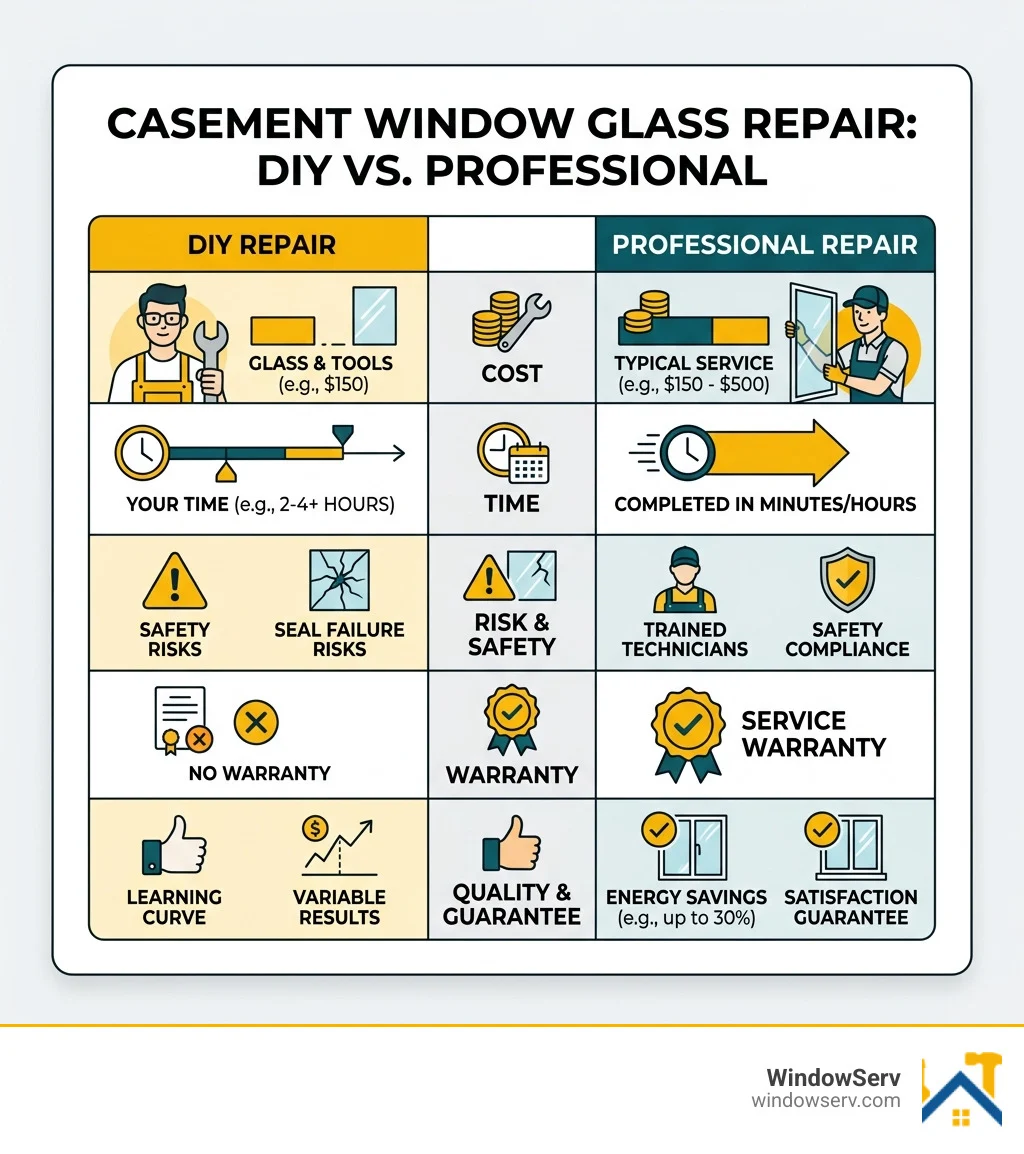
Let’s talk numbers. A DIY repair might cost you $50 for glass and $100 in tools you might never use again. A professional repair typically ranges from $150 to $500.
However, the “cost” of DIY includes your time—usually 2 to 4 hours for a beginner—and the risk of a faulty seal. A professional fix ensures up to 30% energy savings and a satisfaction guarantee. If your window is hard to open, you might also need a window balance repair service, which is a mechanical fix that pros can handle in minutes.
Frequently Asked Questions about Casement Windows
Why is my casement window glass fogging up between the panes?
This is caused by “seal failure.” The airtight seal around your double-pane glass has broken, allowing moisture to enter. It cannot be “cleaned” out; the entire Insulated Glass Unit (IGU) must be replaced.
Can I replace just the glass in a wood casement sash without buying a new unit?
Absolutely. Many “window replacement” companies will tell you that you need a whole new window (costing thousands). At WindowServ, we focus on replacing just the glass and restoring the sash, saving you a fortune while keeping your home’s original character.
How do I maintain my casement window to prevent future glass damage?
The best prevention is lubrication. Every spring and fall, clean the tracks with a vacuum and spray the hinges and crank gears with silicone lubricant. This ensures the window moves freely and doesn’t put “torquing” pressure on the glass or seals when you crank it shut.
Conclusion
At WindowServ, we believe that a broken window shouldn’t mean a broken budget. Whether you’re in the heart of Jersey City or a quiet street in Tenafly, our goal is to provide casement window glass repair that preserves your original frames and restores your home’s energy efficiency.
By focusing on restoration over replacement, we help New Jersey homeowners save money, reduce waste, and enjoy a more comfortable home. If your casement windows are sticking, fogging, or drafty, don’t wait for the problem to get worse.
Schedule your professional window repair with our local NJ experts today and see why we’re the trusted choice for architectural glass across the Garden State.