
Why Foggy Windows Are More Than Just an Eyesore Condensation between window panes is a clear sign that your window’s seal has failed — and it’s one of the most
Why Foggy Windows Are More Than Just an Eyesore
Condensation between window panes is a clear sign that your window’s seal has failed — and it’s one of the most common window problems New Jersey homeowners face.
Here’s what you need to know at a glance:
Question Quick Answer What causes it? A failed seal lets moist air into the insulated gap between the panes Can you wipe it away? No — it’s trapped inside the glass unit Is it serious? Yes — it reduces insulation by up to 50% and can lead to mold and wood rot Can you fix it yourself? No — professional repair or replacement is required Best fix? IGU (insulated glass unit) replacement in most cases
That foggy, cloudy look isn’t just frustrating. It means your window has stopped doing its job. The insulating gas — usually argon — has escaped. Moisture has moved in. And every day you wait, your heating and cooling bills quietly climb.
The good news? In most cases, you don’t need to replace the entire window. Understanding what’s happening inside your glass unit is the first step to fixing it the right way.
I’m Feiruz Gabibov, Chief Operating Officer of WindoServ, a New Jersey-based window repair and glass replacement company — and I’ve seen hundreds of homes where condensation between window panes turned a minor seal issue into costly frame damage simply because it was left too long. In this guide, I’ll walk you through exactly what’s happening, what your options are, and how to make the smartest decision for your home.
What causes condensation between window panes?
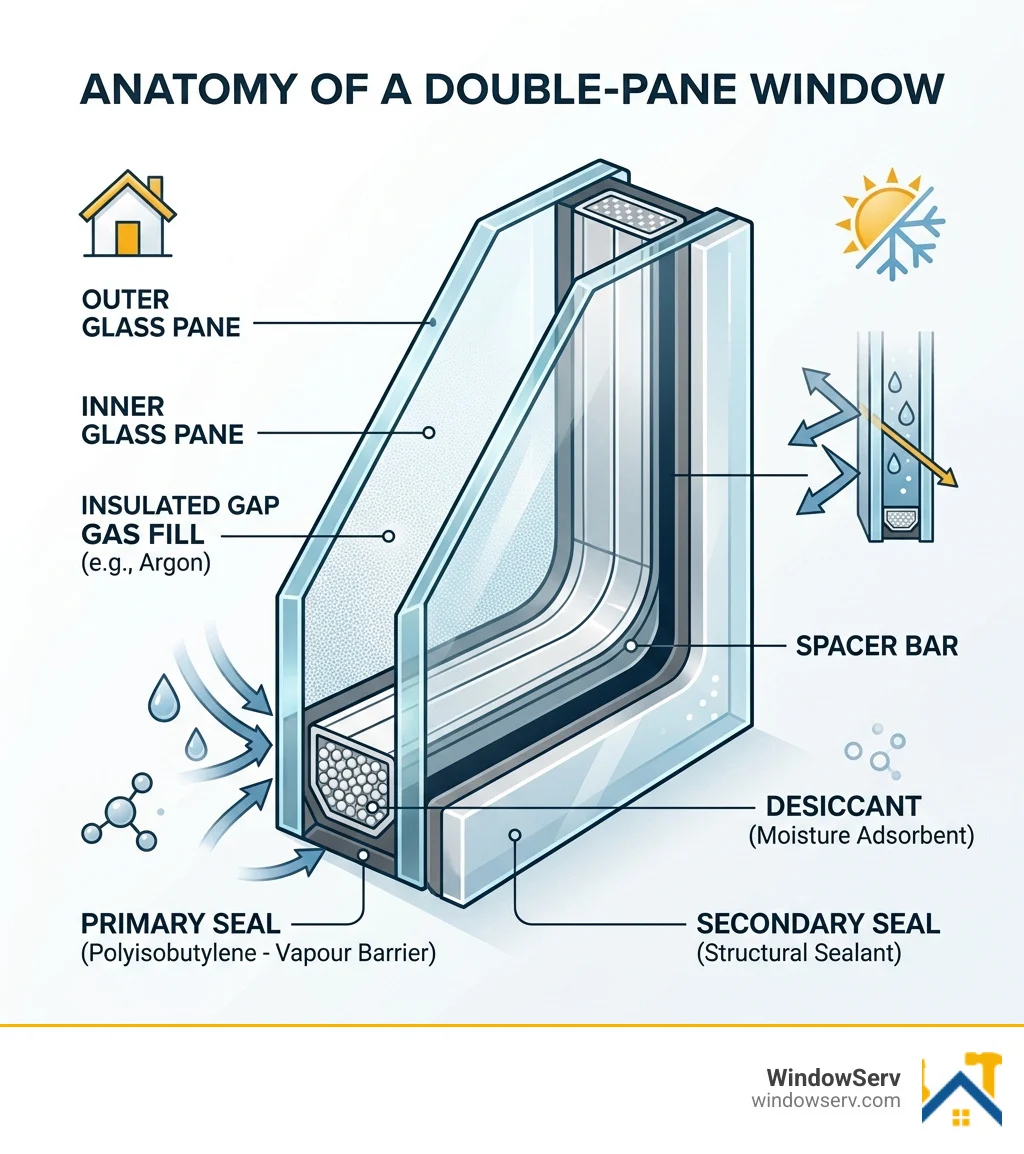
To understand why your windows look like they’ve spent a morning in a sauna, we have to look at the science of the Insulated Glass Unit (IGU). Most modern windows in New Jersey homes—from the brownstones of Jersey City to the suburban estates in Summit—are built with two or three panes of glass separated by a “spacer bar.” This space is filled with an inert gas like argon or krypton, which acts as a thermal barrier.
The entire unit is held together by a primary seal (usually polyisobutylene) and a secondary structural seal. According to research on IGU failure, when these seals are compromised, the insulating gas escapes and humid air from the outside world rushes in.
The Phenomenon of Thermal Pumping
The most common culprit behind seal failure is a process called thermal pumping. Think of your window as a set of lungs. During a hot July day in Edison or Woodbridge, the sun beats down on the glass, causing the gas inside to expand and put pressure on the seals. At night, the temperature drops, the gas contracts, and the unit “inhales.”
Over years of these daily expansion and contraction cycles, the seals eventually develop microscopic cracks. Once that seal is breached, outside air—carrying moisture—is drawn in.
Desiccant Saturation and the Dew Point
Inside that spacer bar I mentioned earlier, there are tiny beads of desiccant (silica gel). This material is a moisture-absorbing powerhouse; in fact, a single gram of silica desiccant has a surface area of about 7,200 square feet! Its job is to soak up any trace amounts of moisture that enter the unit.
However, desiccant has a limit. Once it becomes fully saturated, it can no longer hold water. When the temperature of the glass hits the “dew point,” that excess moisture transforms from an invisible gas into the visible liquid droplets we recognize as condensation between window panes.
Identifying condensation between window panes vs. surface moisture
Before you panic and start looking for repair services, it is vital to confirm where the moisture actually is. We often see homeowners in Bergen and Essex counties who are worried about their windows, only to find out the issue is simply high indoor humidity.
The 10-Second Wipe Test It sounds simple, but it’s the most effective diagnostic tool you have. Take a clean, dry cloth and wipe the inside of the glass. If the fog remains, go outside and wipe the exterior. If the moisture is still there, it is officially trapped between the panes.
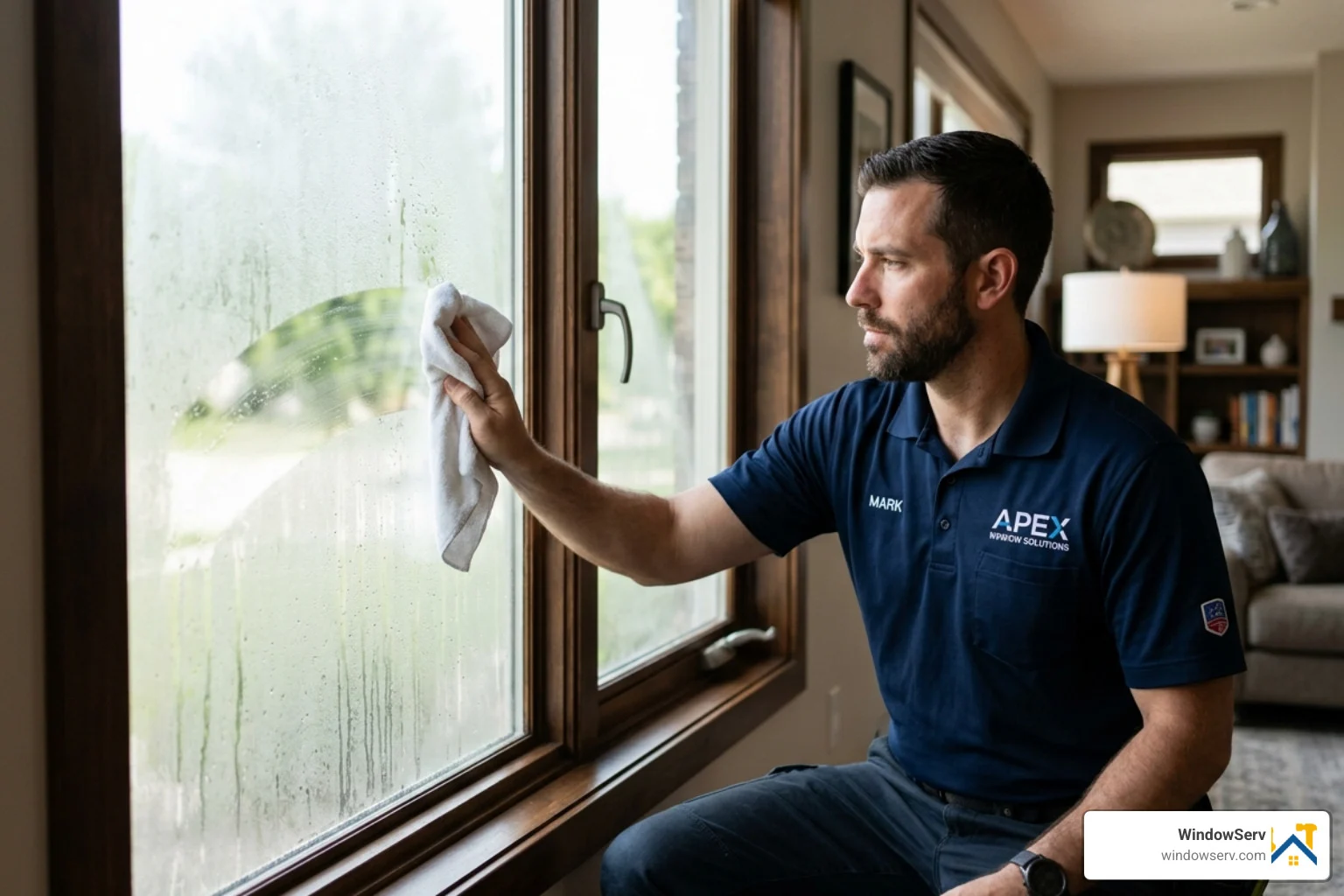
If the moisture is on the inside surface, it usually indicates that your home’s humidity is too high—common in bathrooms or kitchens. If it’s on the outside surface, it often means your windows are actually working very well, keeping the outside pane cool enough for morning dew to form.
However, if the moisture is internal, you might eventually see:
-
Riverbedding: Small “rivers” of water running down the inside of the glass.
-
Silica Haze: A white, powdery residue or “snowflake” pattern left behind by eroding desiccant.
-
Mineral Deposits: Permanent staining that cannot be cleaned off.
If you are seeing these signs, it is time to look into the Window Seal Replacement Cost to restore your home’s efficiency.
Why window seals fail over time
While we wish windows lasted forever, the reality is that they are subject to intense environmental stress. In our service areas like Montclair and Ridgewood, we see several factors that accelerate the 10-to-20-year standard lifespan of a window seal:
-
Solar Exposure: Windows on the south side of a house usually fail first because they endure the most extreme thermal pumping.
-
Poor Drainage: If the “weep holes” in your window frame are clogged, water can pool around the bottom of the IGU, eventually rotting the seals.
-
Vinyl Expansion: Vinyl frames expand and contract more than wood or aluminum, which can put extra mechanical stress on the glass unit.
-
Chemical Cleaners: Harsh petroleum-based cleaners can actually degrade the sealants over time.
As noted in Why is There Condensation Between My Window Panes? [Causes & Fixes], industry data shows that 20-30% of insulated windows develop seal failure within a decade of installation.
The hidden costs of ignoring foggy windows
Many homeowners treat condensation between window panes as a cosmetic annoyance, something to be hidden behind drapes. However, the financial and structural consequences of waiting can be significant.
Energy Efficiency and HVAC Strain
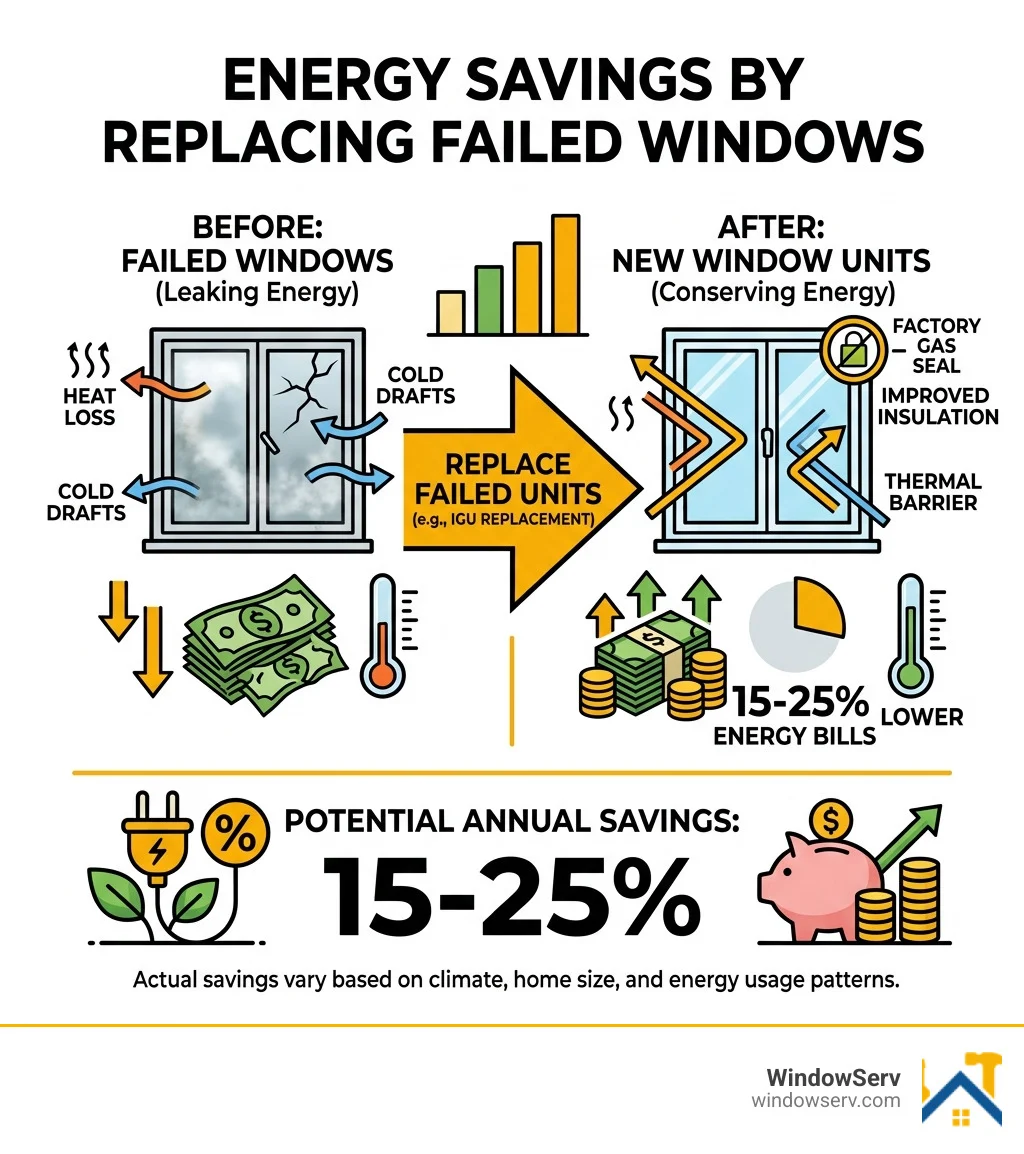
A window with a failed seal is no longer an “insulated” window. It’s essentially just two sheets of glass with a drafty gap in between. Research suggests that a failed seal can cut your window’s insulation value by up to 50%. This leads to:
-
Energy Spikes: Homeowners often report 10-20% spikes in heating costs during New Jersey winters.
-
HVAC Wear: Because your home is losing heat (or cool air) faster, your furnace or AC has to run longer cycles, shortening its lifespan.
Structural Damage and Health Risks
Moisture trapped in a window doesn’t always stay on the glass. It can seep into the sash and frame. For those with traditional homes in areas like Westfield or Livingston, this can lead to Wooden Window Refurbishment needs due to wood rot.
Furthermore, persistent moisture is a breeding ground for mold and mildew. Mold spores can eventually find their way into your indoor air, posing risks to residents with respiratory issues. Finally, foggy windows significantly hurt your property value—potential buyers see “foggy glass” and immediately think “expensive replacement.”
Professional solutions for failed window seals
When you’re ready to fix the problem, you generally have three paths. At WindowServ, we specialize in providing the most cost-effective and durable solution for each specific situation.
Feature Defogging IGU Replacement Full Window Replacement Primary Goal Cosmetic clarity Restore insulation & clarity New frame and glass Process Drill holes & vent Replace glass unit only Remove entire window Durability 3–5 years 15–20+ years 20–30 years Cost Lowest Moderate Highest Insulation Poor Excellent (Factory Gas) Excellent
IGU Replacement: The “Sweet Spot”
In about 75% of cases, you do not need to replace the entire window. We can simply remove the failed glass unit and install a new, factory-sealed IGU into your existing frame. This restores your home’s thermal performance and visibility at a fraction of the cost of a full replacement. This is why we focus heavily on Double-pane window repair as our primary recommendation.
The reality of window defogging
You may have seen “defogging” services advertised as a cheap fix. This process involves drilling tiny holes in the glass, spraying a cleaning solution inside, and installing small vents.
While this can improve the look of the window temporarily, How to Fix Moisture and Condensation Between Double Pane Windows points out that it does not fix the broken seal. You won’t get your argon gas back, and the insulation remains compromised. Most resealed or defogged units only last 3 to 5 years before the fog returns.
Long-term strategies to prevent condensation between window panes
Once you’ve repaired your windows, you’ll want to protect that investment. Here are the steps we recommend to our New Jersey clients:
-
Manage Humidity: Aim for an indoor humidity level of 30-35% during the winter. Use hygrometers to monitor levels and run exhaust fans in bathrooms and kitchens.
-
Ensure Proper Drainage: Periodically check that the weep holes in your window frames are clear of debris.
-
Professional Installation: Many seal failures are caused by windows being installed “out of square,” which twists the frame and stresses the seals. Always use Window adjustment services to ensure everything is aligned.
-
Avoid Pressure Washing: High-pressure water can force its way past seals and damage the secondary sealant.
Frequently Asked Questions about window moisture
How long do double-pane window seals typically last?
Most high-quality double-pane windows have a lifespan of 15 to 25 years. However, in climates like ours—with humid summers and freezing winters—many units begin to show signs of failure around the 10-to-15-year mark. Premium units with “warm-edge” spacers and better sealant technology can often last longer. If your windows are reaching this age, it’s wise to consider Window glass replacement before the frames suffer water damage.
Can I fix condensation between the panes with a DIY solution?
In short: No. While there are DIY kits that suggest you can “reseal” a window, they are almost never effective. To properly fix the issue, the glass must be cleaned of mineral deposits (which requires taking the unit apart), dried in a controlled environment, and resealed with specialized industrial equipment and desiccant. Furthermore, attempting a DIY fix will almost certainly void any existing manufacturer warranty and could lead to the glass shattering if not handled correctly.
Does a window warranty usually cover seal failure?
Most modern window manufacturers offer a warranty on the “hermetic seal” of the IGU. These typically range from 10 to 25 years. However, these warranties often only cover the cost of the glass itself, not the labor to install it. It’s also important to note that warranties are often only valid for the original homeowner and may not transfer when a house is sold. We always recommend checking your paperwork before scheduling a repair.
Conclusion
Condensation between window panes is more than a blurry view—it’s a signal that your home is losing energy and your windows are under attack from moisture. Whether you live in a historic home in Ridgewood or a modern condo in Hoboken, maintaining your window seals is essential for your comfort and your wallet.
At WindowServ, we pride ourselves on being New Jersey’s local experts. We don’t believe in pushing for expensive, unnecessary full-window replacements when a targeted IGU repair can save your original frames and restore your view. Our goal is to help you achieve up to 30% energy savings while providing a satisfaction guarantee that gives you peace of mind.
Don’t let foggy glass ruin your home’s curb appeal or inflate your energy bills. Restore your clear view with professional window repair today. Contact us for a consultation in Bergen, Essex, Hudson, Middlesex, Monmouth, or Union counties, and let’s get your windows back to their clear, efficient best.