
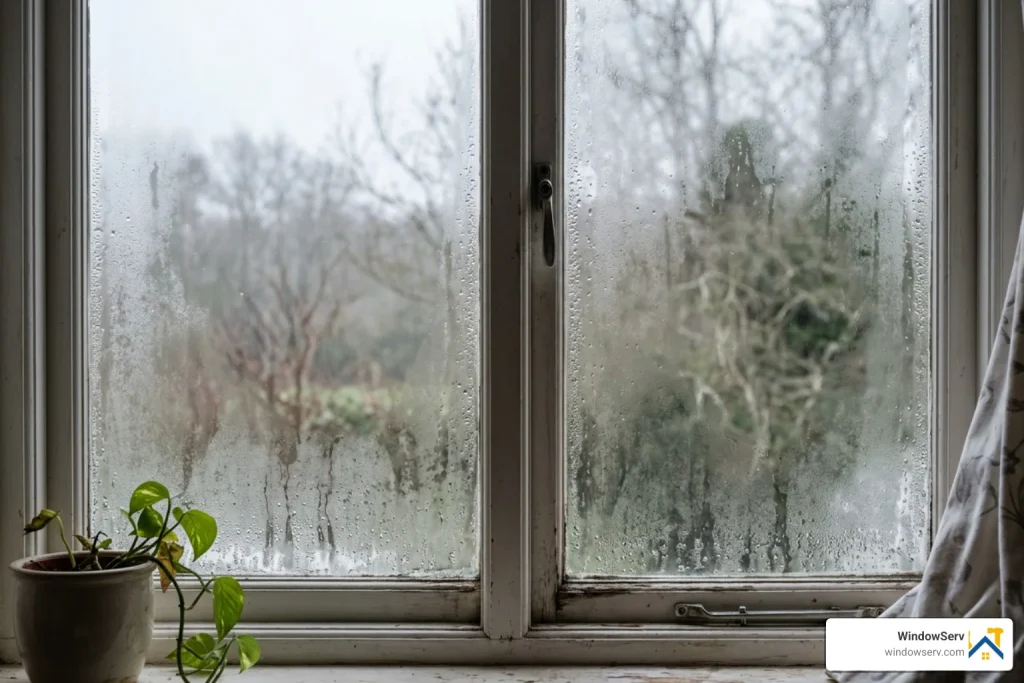
What is a Window Seal and Why Does It Fail? window seal repair insulation foggy double pane window interior Window seal repair insulation is one of the most cost-effective ways
What is a Window Seal and Why Does It Fail?
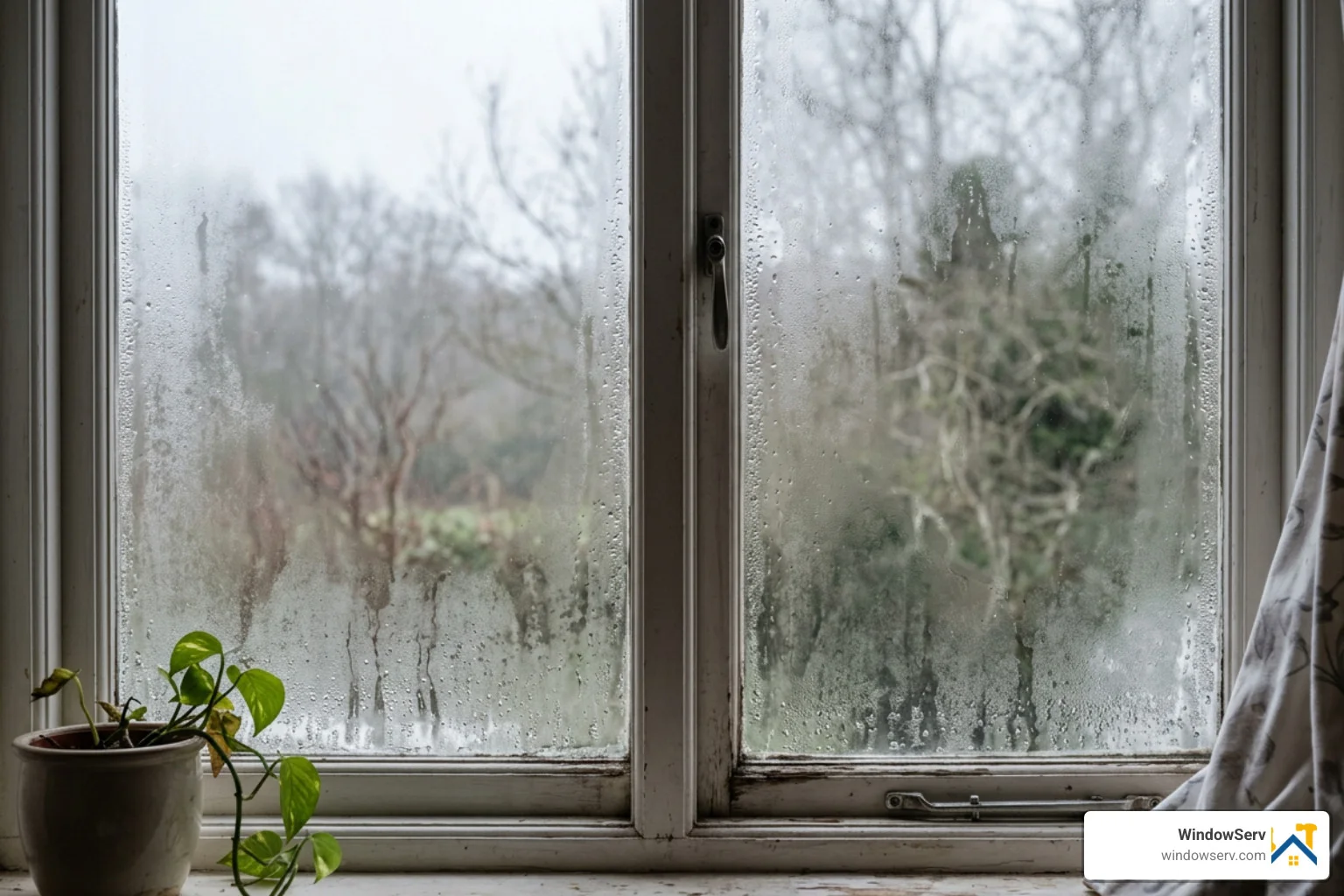
Window seal repair insulation is one of the most cost-effective ways to stop energy loss, clear up foggy glass, and restore comfort in your home. Here’s a quick summary of what you need to know:
Quick Answer: Window Seal Repair Insulation
| Situation | Best Option |
|---|---|
| Foggy glass, intact frame | Professional defogging or IGU replacement |
| Drafts around window edges | Weatherstripping or caulking replacement |
| Cracked frame or very old window | Full window replacement |
| Minor surface air gaps | DIY caulking or foam sealant |
| Failed inert gas insulation | Professional IGU replacement |
If you’ve noticed fog or haze trapped between your window panes, a sticky film that won’t wipe off, or rising energy bills you can’t explain — your window seal has likely failed. A broken seal turns your double-pane window into the thermal equivalent of a single pane of glass, pushing your heating and cooling system to work much harder.
The good news? In most cases, you don’t need to replace the entire window.
I’m Feiruz Gabibov, Chief Operating Officer of WindowServ, a New Jersey-based window repair company where I’ve overseen hundreds of window seal repair insulation projects across the state. In this guide, I’ll walk you through everything you need to know — from spotting the signs of seal failure to choosing the right fix for your budget.
To understand why window seals fail, we have to look at how modern windows are built. Gone are the days when a window was just a single sheet of glass held in place by wood putty. Today, we rely on Insulated Glass Units (IGUs) to keep our New Jersey homes warm during freezing winter nights in Ridgewood and cool during muggy July afternoons in Jersey City.
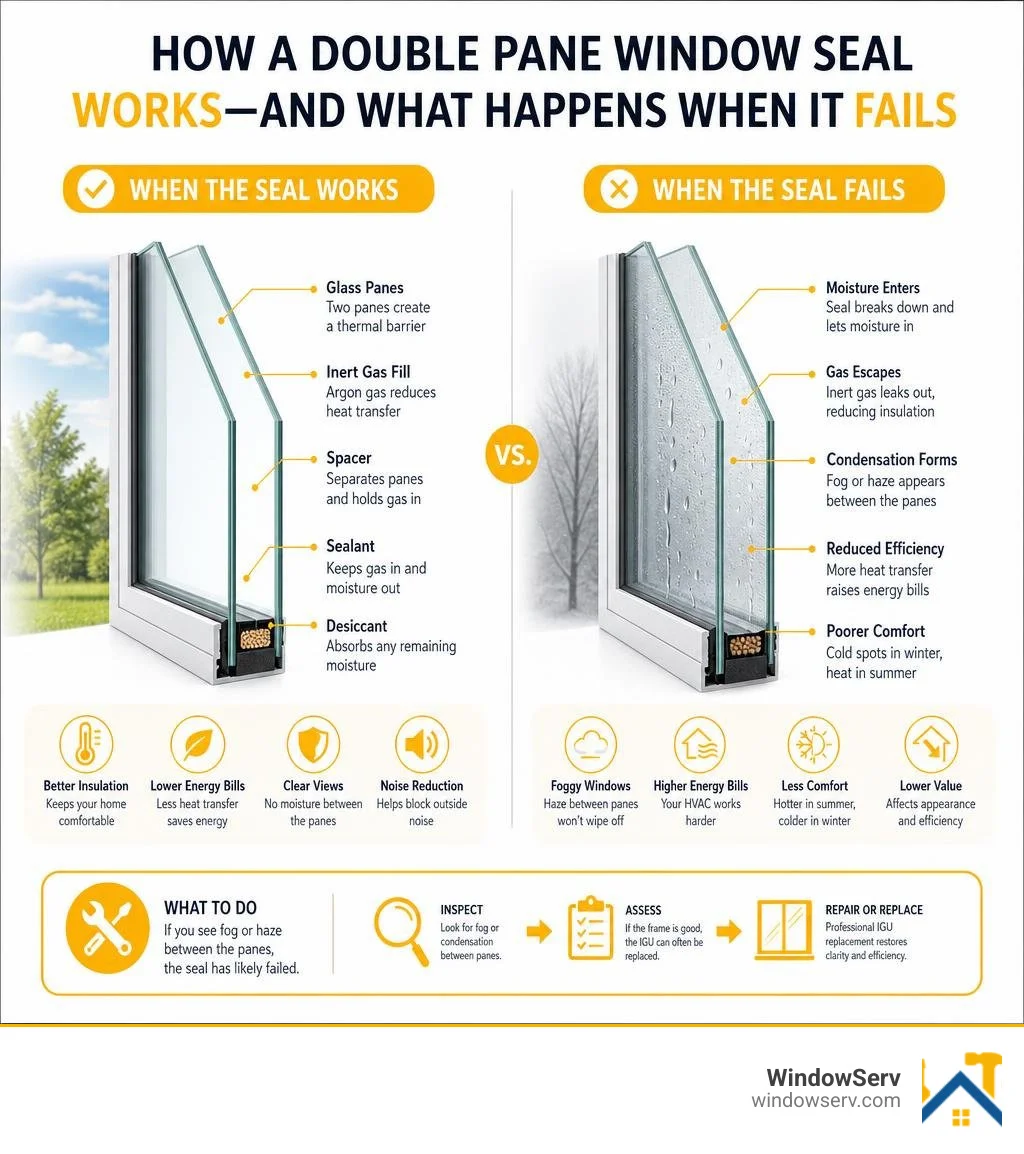
An IGU consists of two or three panes of glass separated by a sealed space. This space isn’t filled with ordinary air; instead, manufacturers pump in dense, non-toxic inert gases like argon or krypton. These gases have much lower thermal conductivity than regular air, meaning they act as a heavy blanket that slows down heat transfer.
The “window seal” is the hermetic barrier running along the outer edge of the glass assembly. It has one job: keep the insulating gas inside and keep the moist outside air out. When this seal is compromised, the gas escapes, humidity enters, and your window’s thermal performance plummets.
But why do these durable seals fail in the first place? In June 2026, we are seeing older double-pane windows installed in the early 2000s reach the end of their natural lifespans. Over time, constant exposure to ultraviolet (UV) radiation from the sun degrades the chemical bonds of the sealants. Additionally, daily temperature fluctuations cause the glass and frame materials to expand and contract at different rates—a physical process that constantly stresses the edge seal.
At WindowServ, we specialize in diagnosing these failures early. Our local NJ technicians understand how our coastal humidity and seasonal temperature swings accelerate seal degradation, and we design our solutions to withstand these exact local climate pressures.
The Anatomy of an Insulated Glass Unit (IGU)
If you were to slice an IGU in half, you would see a highly engineered sandwich of materials:
- The Glass Panes: Two or more sheets of glass, often treated with Low-E (low-emissivity) coatings to reflect infrared heat.
- The Spacer Bar: A hollow metal or structural foam strip that runs along the perimeter to keep the glass panes at an exact, uniform distance.
- The Desiccant: Inside the hollow spacer bar lies a highly absorbent material (similar to those little silica gel packets you find in new shoeboxes) designed to suck up any microscopic trace of moisture that might be trapped inside during manufacturing.
- The Dual-Seal System: Most high-quality IGUs use a primary seal of polyisobutylene (PIB) to block moisture and gas migration, backed by a secondary structural seal made of polyurethane or silicone to hold the entire unit rigidly together.
Primary Causes of Seal Deterioration
While natural aging is inevitable, several environmental factors can cut your window seal’s life short:
- Solar Pumping: When the sun shines directly on your window, the air or gas inside the IGU heats up and expands, causing the glass panes to bow outward. At night, the unit cools down and contracts. This daily “breathing” cycle puts constant mechanical pressure on the rubberized seal. Over a decade, this cycle occurs thousands of times, eventually creating microscopic tears.
- Water Pooling and Poor Drainage: If your window frames have clogged weep holes (the tiny drainage slots at the bottom of the exterior frame), rainwater can pool along the bottom edge of the glass. Constant submersion in water will eventually dissolve the secondary seal of the IGU, leading to rapid failure.
- Improper Installation and Harsh Cleaners: Using high-pressure washers or highly acidic cleaning chemicals can strip away the protective caulking around your window frames, leaving the delicate edge seals exposed to direct environmental damage. To see how experts prevent these installation-related air leaks, check out this guide on Window Air Sealing Techniques | Ask This Old House – YouTube.
How Failed Seals Impact Home Energy Efficiency and Comfort
When a window seal breaks, it does more than just ruin your view of the backyard. It fundamentally changes how heat moves through your home.
In building science, we measure insulation performance using R-value (resistance to heat flow). A standard single-pane window has a dismal R-value of about 1.0. A properly functioning double-pane window filled with argon gas bumps that rating up to around 3.0 to 4.0.
Once the seal fails and the argon gas escapes, it is replaced by humid outside air. Your high-performance double-pane window is instantly downgraded to the thermal equivalent of a single-pane window. This means heat will rapidly escape your home during winter and pour inside during summer.
This thermal bridge creates noticeable drafts and cold zones near your windows, forcing your HVAC system to run continuously to maintain a stable temperature. The resulting strain on your furnace and air conditioner translates directly to higher utility bills and a significantly larger environmental footprint. For actionable advice on managing your home’s thermal envelopes, explore our Energy Efficiency Insulation Tips for Homeowners.
The Financial Cost of Blown Seals
The financial impact of ignored window seal failure accumulates quickly. According to energy audits, heating and cooling account for over 50% of the average homeowner’s energy consumption. By addressing drafts and thermal leaks, homeowners can achieve a 10% to 20% reduction in their annual heating and cooling bills just by properly weatherstripping and caulking windows.
| Window Type & Condition | Estimated Annual Energy Savings | Estimated Carbon Footprint Reduction |
|---|---|---|
| Replacing Single-Pane with Energy Star Double-Pane | $100 – $500 | ~1,000 lbs CO2 / year |
| Replacing Blown Double-Pane with New Clear Double-Pane | $27 – $197 | 246 – 2,000 lbs CO2 / year |
| Proper Weatherstripping & Caulking | 10% – 20% of HVAC bills | Varies by home size |
Note: Savings depend on local utility rates, climate zone, and home insulation levels.
Environmental Impact and Carbon Footprint
Our homes have a direct relationship with global emissions. The average homeowner’s energy use accounts for approximately 6,400 lbs of CO2 per year from heating alone, with an additional 4,700 lbs of CO2 generated by air conditioning.
Leaving broken window seals unaddressed means your home will continuously leak energy, requiring more fossil fuels to keep you comfortable. Upgrading to energy-efficient glass or restoring your window seals is a powerful way to reduce your personal carbon footprint while keeping your hard-earned money in your wallet.
Identifying the Signs of a Broken Window Seal
How do you know if you are dealing with a failed seal or just a dirty window? It helps to know what to look for. In many cases, homeowners mistake exterior surface condensation for a failed seal, leading to unnecessary worry.
If condensation forms on the outside of the glass on a humid morning, or on the inside of the glass while you are boiling water in the kitchen, your seals are actually doing their job. That moisture is simply water vapor condensing on cold glass surfaces.
However, if you spot fog, water droplets, or a hazy film between the two panes of glass where you cannot reach to wipe it away, you are dealing with a classic broken seal. For residents in our service areas, you can find localized help through our page on Window Condensation Repair NJ.
The Visual Indicators of Seal Failure
Keep an eye out for these visual warning signs:
- The “Ghostly” Fog: A light haze that appears and disappears depending on the time of day or the weather.
- Water Droplets and Pooling: Visible beads of water running down the inside surfaces of the glass panes.
- Milky or Rainbow Sheen: As moisture sits inside the unit, it reacts with the glass and the Low-E coatings, leaving behind permanent mineral deposits or a hazy, rainbow-like film that cannot be cleaned off.
- Glass Distortion: In some cases, as the gas escapes, a partial vacuum is created inside the unit, causing the glass panes to bend inward and look slightly warped or distorted when viewed from an angle.
Physical and Performance Warning Signs
Aside from visual clues, you might notice physical changes in your home’s comfort:
- Drafts Next to Closed Windows: If you feel a distinct draft of cold air while standing near a closed window in your living room, the seal or surrounding weatherstripping has failed.
- Unusually Cold Glass: In winter, the interior pane of a healthy double-pane window should feel relatively close to room temperature. If it feels ice-cold, the insulating gas is gone.
- Increased Outdoor Noise: Because the insulating gas barrier also dampens sound, a failed seal will often make your home feel noticeably noisier, allowing street and neighborhood sounds to pass through easily.
Evaluating Your Options: Window Seal Repair Insulation Solutions
When you discover a failed seal, you have several options ranging from quick temporary fixes to a complete window overhaul. The right choice depends on the age of your window, the condition of the surrounding frame, and your budget. To understand the financial breakdown of these choices, you can review our guide on Window Seal Replacement Cost.
Professional Window Seal Repair Insulation Methods
If your window frames are in excellent condition but the glass is cloudy, you do not need to buy a whole new window. Professionals use two main methods to solve this problem:
- Professional Defogging (Moisture Remediation): This cosmetic process involves drilling tiny, microscopic holes into the outer pane of glass, injecting a specialized cleaning and drying solution to clear out the condensation and mineral deposits, and installing one-way micro-valves to allow future moisture to escape. While this restores your view, it does not replace the lost argon gas. Learn more about this process in our guide to Fixing Foggy Double Pane Windows.
- IGU Replacement (Glass-Only Replacement): This is our preferred and most sustainable solution at WindowServ. Instead of replacing the entire vinyl or wood frame, we carefully remove the failed glass unit, clean the frame channel, and install a brand-new, factory-sealed, argon-filled IGU. This restores your window to its original energy efficiency at a fraction of the cost of a full window replacement.
DIY Window Seal Repair Insulation and Its Limitations
We love a good DIY project, but when it comes to the hermetic seal of an IGU, amateur repairs usually fall short.
Some homeowners attempt to use retail DIY defogging kits, which involve drilling holes in the glass themselves. Without professional-grade suction equipment and specialized cleaning agents, this often results in cracked glass or permanent, ugly scratching inside the unit.
Other common DIY attempts include running a bead of standard silicone caulk or applying window seal tape along the exterior edge of the glass. While this might temporarily slow down water infiltration, it cannot restore the lost insulating gas or remove the moisture already trapped inside the unit.
For sealing the drafty gaps around your window frames (where the frame meets the drywall or exterior siding), high-quality low-expansion foam sealants can be highly effective. For technical details on choosing the right foam sealant, refer to the Window & Door product specifications. For broader guidance on sealing air leaks around your home, you can also consult the Energy.gov Air Sealing Guide.
When to Repair the Seal vs. Replacing the Window or IGU
Deciding whether to repair or replace comes down to a simple inspection of your window frames.
If you have beautiful, high-end wood frames in a historic Montclair home, or sturdy, modern vinyl frames in a Paramus townhouse, replacing the entire window just because of a foggy pane is a waste of money. In these cases, opting for glass-only IGU replacement is the smartest move. It preserves your home’s architectural character, avoids messy construction, and saves you thousands of dollars.
However, if your window frames are warped, rotting, or structurally damaged, a new glass unit won’t solve your problems. In those situations, a full window replacement is necessary.
If you are trying to decide which route is best for your home, you can explore our specialized services for Double Pane Window Repair and Replacement and Window Glass Replacement.
Cost-Benefit Analysis of Repair vs. Replacement
Let’s look at the numbers. A professional window seal repair or IGU replacement typically costs between $100 and $200 per window, depending on the size and type of glass. In contrast, a full professional window replacement can easily range from $500 for a basic vinyl window to well over $1,000 for a wood-frame window.
If you have ten windows with failed seals, choosing IGU replacement over full window replacement can save you upwards of $3,000 to $8,000. Furthermore, if you do choose to invest in full window replacements down the road, studies show that a vinyl window replacement project can yield an impressive 85% return on investment (ROI), making it a highly valuable upgrade for home resale value. To learn more about how we can help you maximize these savings, check out our Window Insulation and Sealing Service.
The Role of Weatherstripping and Caulking in Window Maintenance
While the IGU seal keeps the glass insulated, weatherstripping and caulking keep the rest of the window airtight.
- Caulking: Applied to the stationary joints where the window frame meets your home’s siding or interior trim. Over time, caulk shrinks and cracks, allowing drafts and water to seep in.
- Weatherstripping: The flexible rubber, foam, or felt gaskets placed along the moving parts of your window sash. When you close the window, the weatherstripping compresses to block air leaks.
Replacing worn-out weatherstripping is an easy, budget-friendly way to boost your home’s comfort and protect your window seals from excess moisture. For a step-by-step walkthrough, check out our Window Weatherstripping Replacement Guide.
If you live in northern New Jersey and need help with drafty or foggy windows, we offer professional services across Hudson, Essex, Bergen, and Union counties, including specialized window repair in Hoboken, NJ to address the unique challenges of historic brownstones and high-wind waterfront condos.
Frequently Asked Questions about Window Seal Repair
How much does professional window seal repair typically cost?
On average, homeowners pay between $100 and $200 for professional window seal repairs or glass-only IGU replacements. The final cost depends on the size of the glass pane, whether it is double or triple-paned, any specialized Low-E coatings, and how easy the window is to access (for example, second-story windows may require extra labor).
Does professional defogging restore the window’s original R-value?
No. Professional defogging is primarily a cosmetic fix. It successfully removes the ugly condensation and prevents mineral etching, but because it does not refill the unit with pressurized argon or krypton gas, the window’s R-value will remain lower than its original factory rating. For true restoration of energy efficiency, we recommend a full IGU (glass) replacement.
What preventive measures can extend the life of window seals?
To get the most life out of your window seals, we recommend keeping your home’s indoor humidity levels between 30% and 50% using dehumidifiers and exhaust fans. Regularly inspect your window frames for clogged weep holes, clean your windows gently without high-pressure washers, and avoid using dark-colored paints on vinyl frames, as dark colors absorb excess solar heat and accelerate thermal pumping.
Conclusion
Dealing with broken window seals can be frustrating, but you don’t have to face drafty rooms and foggy views alone. At WindowServ, we believe in providing smart, sustainable home improvement solutions. By focusing on targeted window seal repair insulation and glass-only replacements, we help our fellow New Jersey homeowners save their original frames, keep waste out of landfills, and enjoy up to 30% energy savings on their utility bills.
Whether you are located in Bergen, Hudson, Essex, Middlesex, Monmouth, or Union county, our local team of NJ experts is ready to restore the beauty, clarity, and efficiency of your home’s windows with a 100% satisfaction guarantee.
Ready to clear your view and lower your heating bills? Contact us today to schedule your professional inspection, or visit our Window Repair page to learn more about how we can help you protect your home.