
Why Block and Tackle Window Balance Replacement Matters for Your Home Block and tackle window balance replacement is one of the most common window repairs homeowners face — and if
Why Block and Tackle Window Balance Replacement Matters for Your Home
Block and tackle window balance replacement is one of the most common window repairs homeowners face — and if your sash slams shut, won’t stay open, or feels unusually heavy to lift, a worn balance is almost always the culprit.
Here’s what you need to know at a glance:
Symptom Likely Cause Fix Window won’t stay open Worn or broken spring inside balance Replace the balance Sash feels heavy to lift Cord or pulley has failed Replace the balance Window slams shut Balance tension lost Replace the balance (both sides) Sash tilts or sits unevenly Broken pivot shoe or guide Replace balance + shoe
The short answer: Measure your existing metal channel length, check the weight stamp on the balance, and order a matching replacement. For most double-hung windows, you’ll need two balances per sash. Keep reading for the full step-by-step guide.
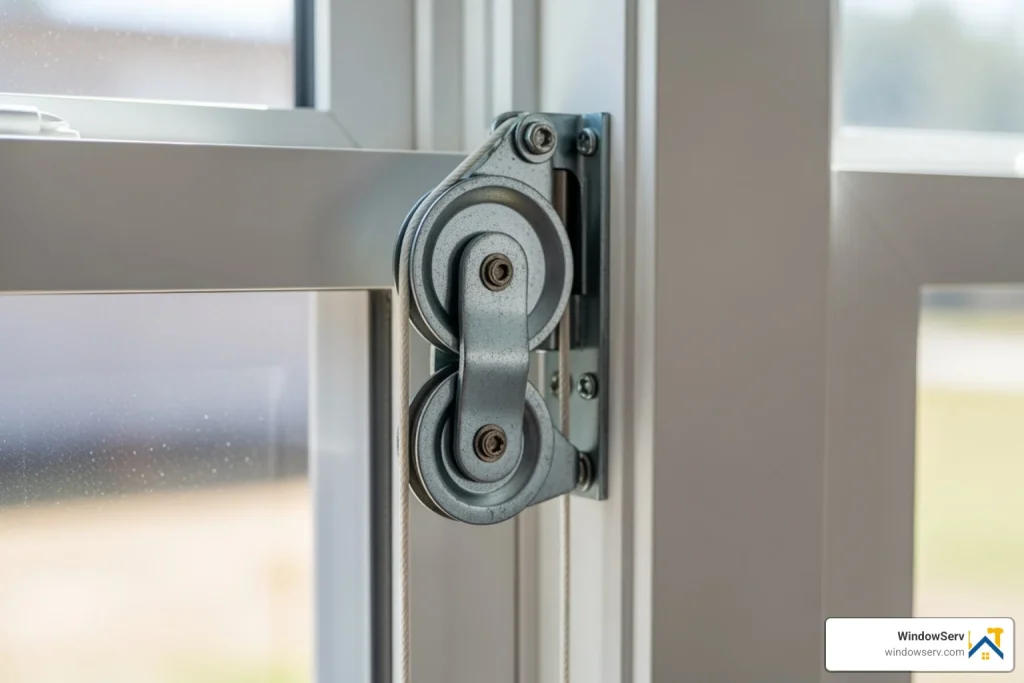
Block and tackle balances are currently one of the most widely used window balance systems in single and double-hung windows. They use a set of pulleys (the “block”), a cord (the “tackle”), and a spring — all housed inside a U-shaped metal channel — to counterbalance the weight of the sash so it stays exactly where you put it. When that system fails, your window becomes a safety hazard and an energy drain.
I’m Feiruz Gabibov, Chief Operating Officer of WindoServ, and I’ve overseen hundreds of block and tackle window balance replacement jobs across New Jersey, giving me insight into exactly where homeowners get stuck and what gets the job done right. Let’s walk through everything you need to know.
Understanding Block and Tackle Window Balance Replacement Parts
To successfully tackle a block and tackle window balance replacement, we first need to understand the anatomy of the part we are dealing with. Often referred to as “channel balances,” these systems are ingenious pieces of engineering designed to make heavy glass sashes feel light as a feather.
A standard block and tackle balance consists of a U-shaped metal channel (usually steel or aluminum) that houses three main components:
-
The Spring: A high-tension coil that provides the lifting force.
-
The Block: A series of pulleys that multiply the spring’s force, allowing a relatively small spring to handle a heavy window sash.
-
The Tackle: A durable cord that runs through the pulleys and connects to the window sash.
These components work in tandem. When you close the window, the spring stretches; when you open it, the spring contracts, assisting the lift. Because these systems involve moving parts and high tension, they typically have a lifespan of 10 to 15 years. In our experience servicing homes from Montclair to Tenafly, we find that salt air in coastal areas or heavy usage in busy households can shorten this lifespan.
When you are looking for Window Balance Replacement and Repair parts, you’ll encounter two primary configurations. Understanding the difference is vital for a smooth DIY project. Check out our Professional Grade Window Hardware Guide for more technical details, or refer to the comparison table below:
Feature Non-Tilt (Side-Load) Balances Tilt-In Balances Sash Removal Sash must be lifted and slid sideways out of the frame. Sash tilts inward 90 degrees and lifts out. Connection Usually uses a metal hook that fits into a hole in the jamb. Uses a “terminal clip” that connects to a pivot shoe. Common Brands Older vinyl or aluminum windows. Modern vinyl windows (e.g., Silverline). Ease of DIY Moderate – requires steady hands to avoid dropping the sash. Easier – designed for homeowner maintenance.
How to Identify the Correct Block and Tackle Window Balance Replacement
One of the biggest hurdles in block and tackle window balance replacement is simply buying the right part. You can’t just walk into a hardware store and ask for “a window spring.” There are hundreds of variations based on length, weight capacity, and the specific plastic “shoes” or “guides” attached to the ends.
If you are feeling overwhelmed, you can always look into our Window Channel Balance Replacement services, but if you’re determined to DIY, follow these identification steps. For more help Identifying Window Hardware Components, keep the old part handy—it contains all the clues you need.
Measuring Your Block and Tackle Window Balance Replacement
The most critical measurement is the length of the metal channel.
-
The Rule: Measure the length of the metal U-channel only.
-
The Trap: Do not include the plastic guides or the “T-lock” shoes at either end in your measurement.
For example, a 28″ Window Block and Tackle Sash Balance will have a metal housing that is exactly 28 inches long. Common lengths range from 10 inches all the way up to 44 inches. If you measure 27.5 inches, you likely have a 28-inch balance, as some manufacturers measure slightly differently—always round to the nearest whole inch or check for a stamp.
Selecting the Right Stamp for Block and Tackle Window Balance Replacement
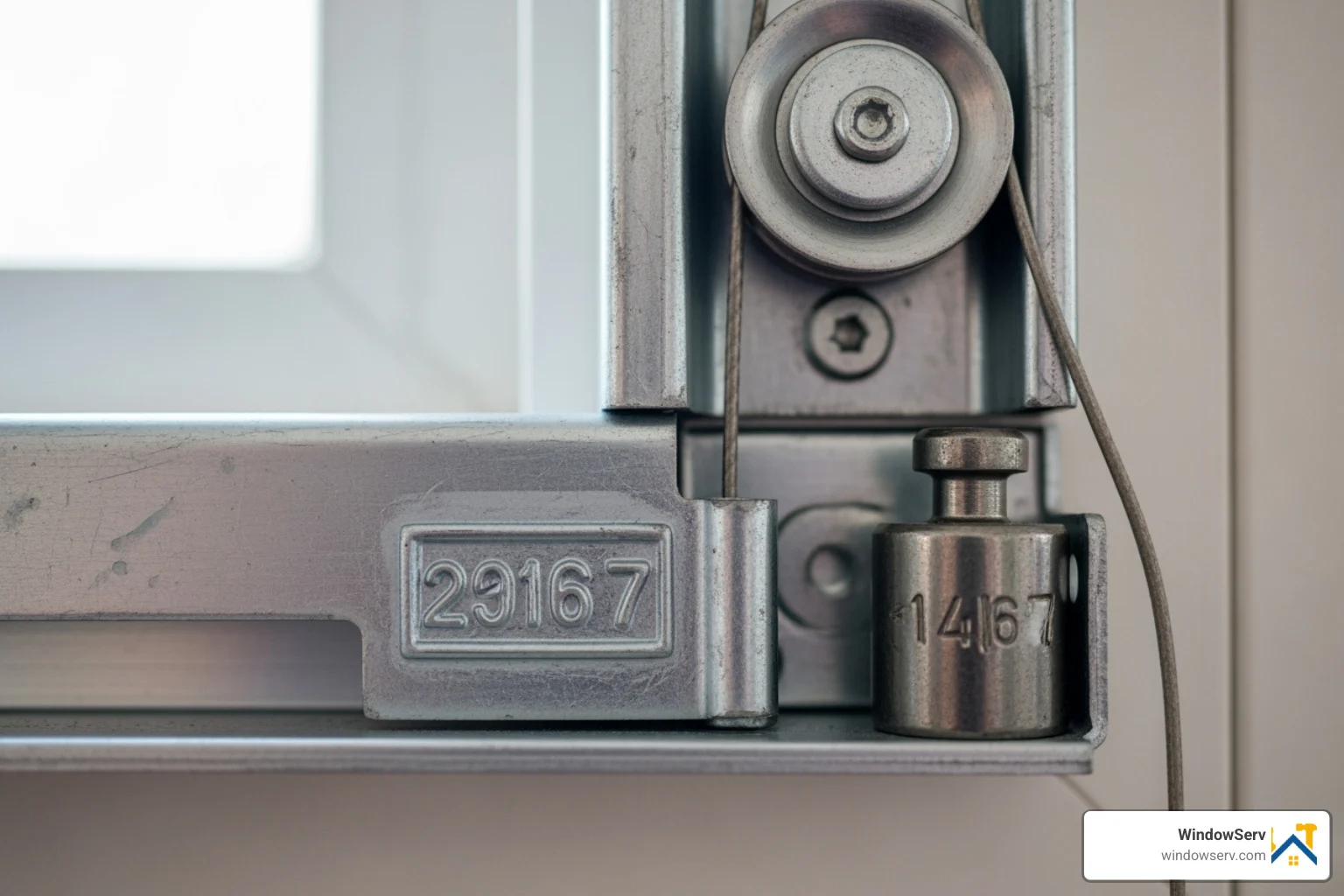
On the back or side of the metal channel, you will see a four-digit “stamp” (e.g., 2730, 2210, or 3540). This code tells you the weight capacity of the internal spring.
-
The first two digits usually refer to the length (e.g., “27” for a 28-inch balance).
-
The last two digits refer to the weight class.
This is crucial because a balance designed for a 10-pound sash will fail immediately if installed on a 30-pound sash. Conversely, if the spring is too strong, the window will dangerously fly open on its own. If your stamp is missing or unreadable, you must weigh your window sash on a bathroom scale to ensure you get the right Double Hung Window Balance Spring Replacement. Weight ratings are often calculated for a pair of balances, so if your sash weighs 20 lbs, you need a pair rated for that weight range.
Step-by-Step Installation Guide for Homeowners
Before you begin, grab your safety gear. We always recommend safety glasses because window balances are under high spring tension. If a cord snaps or a hook slips, parts can fly. You’ll also need a flathead screwdriver and perhaps a pair of needle-nose pliers.
For a visual walkthrough, we recommend checking out this Expert Video: How to Replace a Block-and-Tackle Balance, which mirrors the professional Double Hung Window Balance Repair methods we use at WindowServ.
Removing the Old Balance System
-
Open the Window: Raise the sash about 6 to 10 inches.
-
Engage Take-out Clips: If your window has small metal clips in the side tracks (jambs), pop them out using your screwdriver. These clips “catch” the balance so you can remove the sash.
-
Remove the Sash:
-
For Tilt Windows: Engage the tilt latches at the top of the sash, tilt it toward you until it’s horizontal, and lift one side to disengage it from the pivot shoes.
-
For Side-Load Windows: Lift the sash until it clears the bottom, then push it firmly into one side of the track to “pop” the other side out.
-
-
Detach the Balance: With the sash out of the way, the balance will be visible in the jamb. For non-tilt windows, the balance is held by a hook at the top. For tilt windows, you may need to unscrew a mounting screw at the top of the channel. Carefully lower the balance to release the tension before pulling it out. This is a key part of Window Channel Balance Repair.
Installing the New Hardware
-
Check Your Shoes: Ensure the plastic guides on your new balance match the old ones. If they don’t, you may need to swap them over (though we recommend buying balances with the guides pre-installed to save a headache).
-
Seat the Balance: Slide the new balance into the jamb. If it’s a non-tilt version, hook the top into the designated slot. If it’s a tilt version, secure the top with the original screw.
-
Attach the Terminal: For tilt windows, pull the cord down (you’ll feel the tension!) and hook the terminal clip into the pivot shoe.
-
Replace the Sash: Reverse the removal process. Slide the sash back into the tracks or click it back into the pivot shoes.
-
Test: Close the take-out clips and move the window up and down. It should move smoothly and stay put at any height. If the sash feels “wonky,” you might need a Window Sash Replacement or a realignment of the tracks.
Troubleshooting and Maintenance for Longevity
Once your block and tackle window balance replacement is complete, a little maintenance goes a long way. We see many balances fail prematurely in NJ homes because of grit and lack of lubrication.
-
Clean the Tracks: Use a vacuum attachment to remove dust, dead bugs, and debris from the side tracks.
-
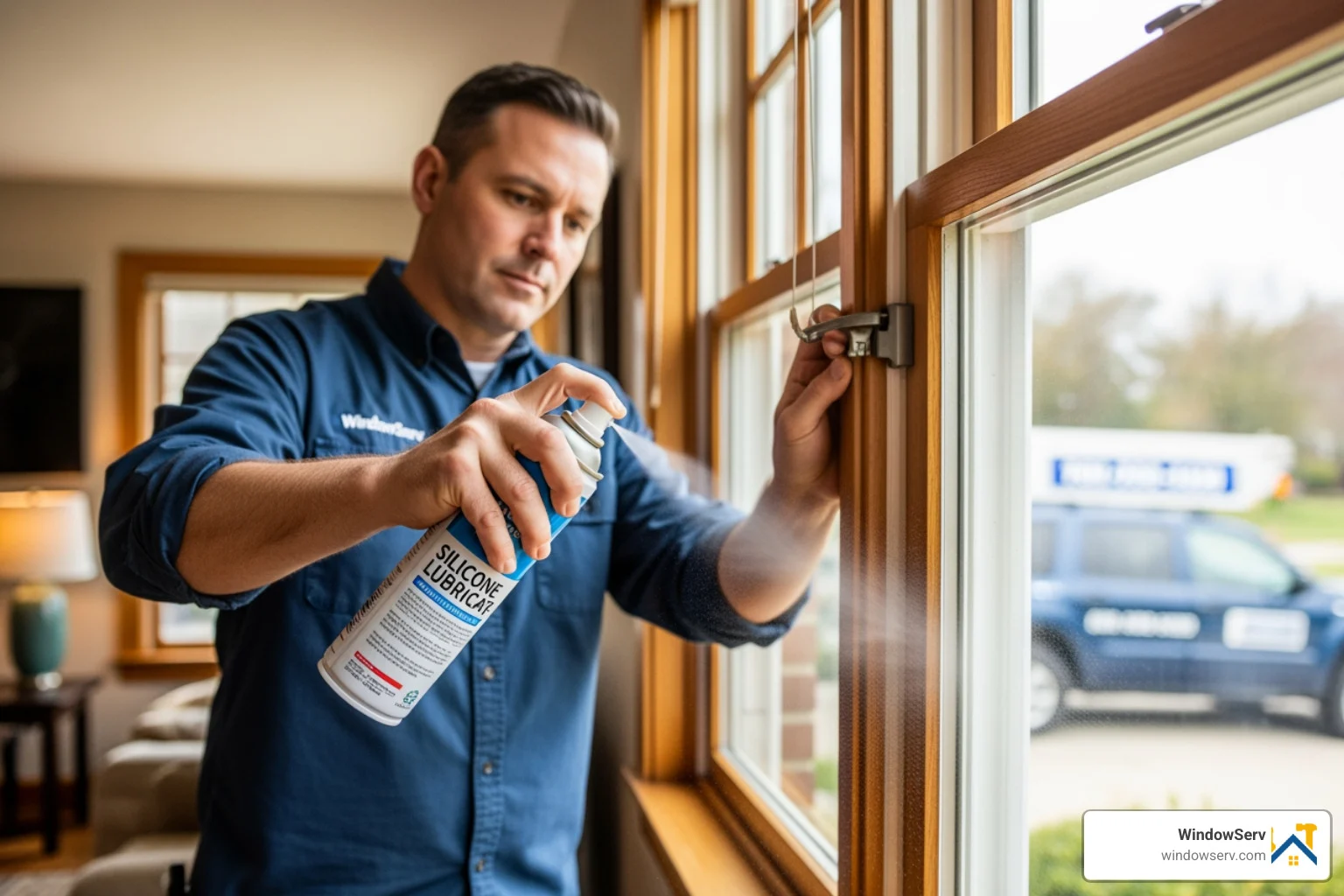
Lubricate: Use a dry silicone spray on the tracks. Never use WD-40 or oil-based lubricants, as these attract dust and create a “sludge” that actually grinds down the plastic components.
-
Replace in Pairs: Even if only one side is broken, the other side has likely suffered the same wear and tear. Replacing both ensures the sash stays level and prevents the new balance from overworking.
If you find that your windows are still sticking after a replacement, it might be time for a professional Window Repair assessment. Sometimes the frame itself has shifted, or the weatherstripping is creating too much friction. Our Window Balance Repair Service can diagnose these deeper issues.
Frequently Asked Questions about Window Balances
Why does my window slam shut unexpectedly?
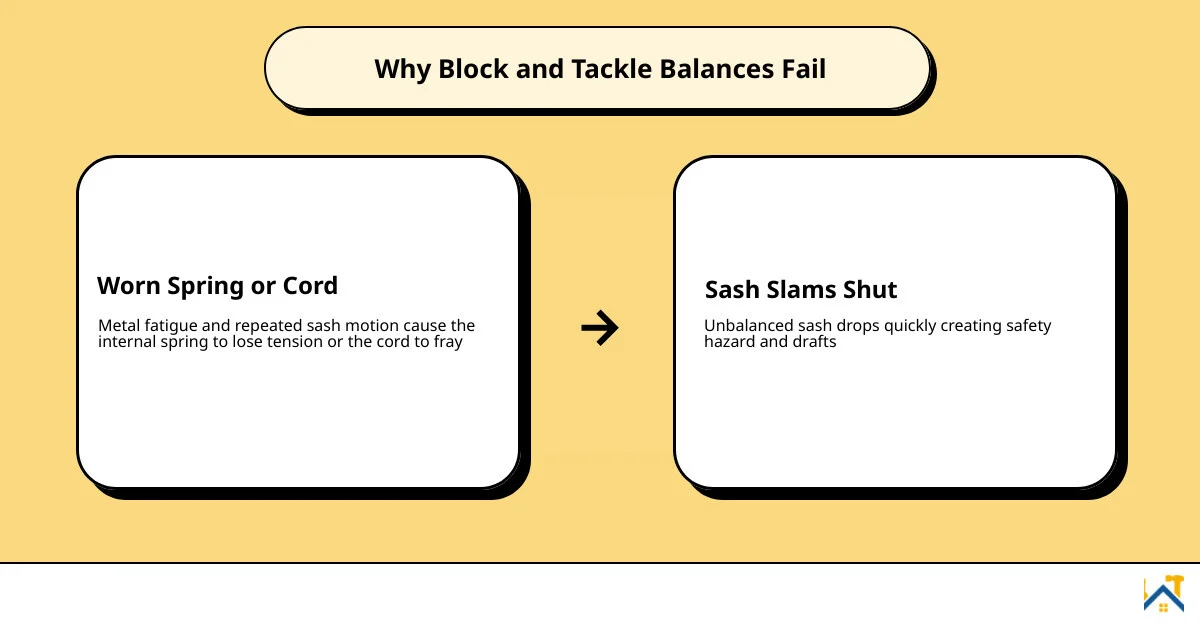
This is the classic sign of a “blown” balance. Either the internal spring has snapped, or the tackle cord has frayed and broken. When this happens, there is zero counter-weight holding the glass up, and gravity takes over. This is a safety hazard, especially for children and pets, and should be fixed immediately.
Should I replace both window balances at the same time?
Yes, absolutely. Window balances typically wear out at roughly the same rate. If you only replace one, the older, weaker spring on the other side will cause the sash to tilt, putting uneven pressure on your new balance and potentially breaking it.
How do I know if I have a tilt or non-tilt window?
Look at the top of your window sash. Do you see two plastic slides that you can pull inward to fold the window toward you for cleaning? If yes, you have a tilt window. If your window only moves up and down and requires you to go outside to clean the exterior glass, it is a non-tilt (or side-load) window.
Conclusion
Mastering block and tackle window balance replacement is a fantastic way to restore the function of your home’s windows without the massive expense of a full window replacement. By correctly identifying your parts and following a careful installation process, you can save money and improve your home’s safety.
However, we know that window hardware can be finicky. If you’ve measured three times and still aren’t sure, or if you’ve encountered a stuck sash that won’t budge, WindowServ is here to help. As professional NJ experts serving Bergen, Essex, Hudson, and beyond, we provide comprehensive Window Balance Replacement and Repair services. We don’t just swap parts; we ensure your windows are energy-efficient and operate like new, backed by our satisfaction guarantee.
Whether you are in Jersey City, Ridgewood, or Westfield, don’t let a faulty window balance ruin your day. Give us a call, and let’s get your windows back in balance!
Ready for a smooth-operating home? Explore our Window Repair Services | Get a Quote for Balance Replacement